In a significant development, India and Pakistan have agreed to a full and immediate ceasefire, halting military hostilities that had escalated in recent weeks. The agreement, confirmed by officials from both countries, comes after intense diplomatic efforts and a night of negotiations reportedly mediated by the United States. According to India’s Foreign Secretary Vikram Misri, the ceasefire took effect at 5 pm local time, covering all military action by land, air, and sea. Misri added that military officials from both sides had communicated earlier in the day to formalize the understanding, with plans to resume discussions on May 12.
Pakistan’s Deputy Prime Minister Ishaq Dar also announced the ceasefire, describing it as a reaffirmation of his country’s commitment to peace and security in the region, while underscoring that Pakistan would not compromise its sovereignty or territorial integrity. The United States played a central role in brokering the truce, with President Donald Trump publicly taking credit for mediating the talks. Posting on Truth Social, Trump declared that India and Pakistan had reached a “full and immediate ceasefire” following “a long night of talks mediated by the United States,” congratulating both countries for “using common sense and great intelligence.”
US Secretary of State Marco Rubio further elaborated on the diplomatic efforts, revealing that he and fellow senator JD Vance had spent the previous 48 hours in discussions with senior officials from both India and Pakistan, including Prime Ministers Narendra Modi and Shehbaz Sharif. Rubio praised the leadership of both countries for choosing the path of dialogue and confirmed that talks would begin soon at a neutral venue to address broader issues.
The ceasefire comes after a period of heightened tensions marked by military strikes and accusations from both sides. Earlier this week, India launched airstrikes on targets in Pakistan and Pakistan-administered Kashmir, claiming retaliation for a deadly militant attack on Indian tourists in Pahalgam last month. Pakistan denied involvement in the Pahalgam incident and responded with its own military operations, including missile strikes and drone attacks on Indian targets. Both nations accused each other of cross-border shelling and aerial assaults, raising fears of a wider conflict in the region.
Indian External Affairs Minister S. Jaishankar said that while India and Pakistan had reached an understanding to stop hostilities, New Delhi remained steadfast in its stance against terrorism. “India has consistently maintained a firm and uncompromising stance against terrorism in all its forms and manifestations. It will continue to do so,” he stated.
Meanwhile, Pakistan’s Airport Authority confirmed that the country’s airspace had been fully reopened to all flights after temporary closures during the military escalation. Normal operations resumed at airports across Pakistan, easing travel disruptions that had stranded passengers.
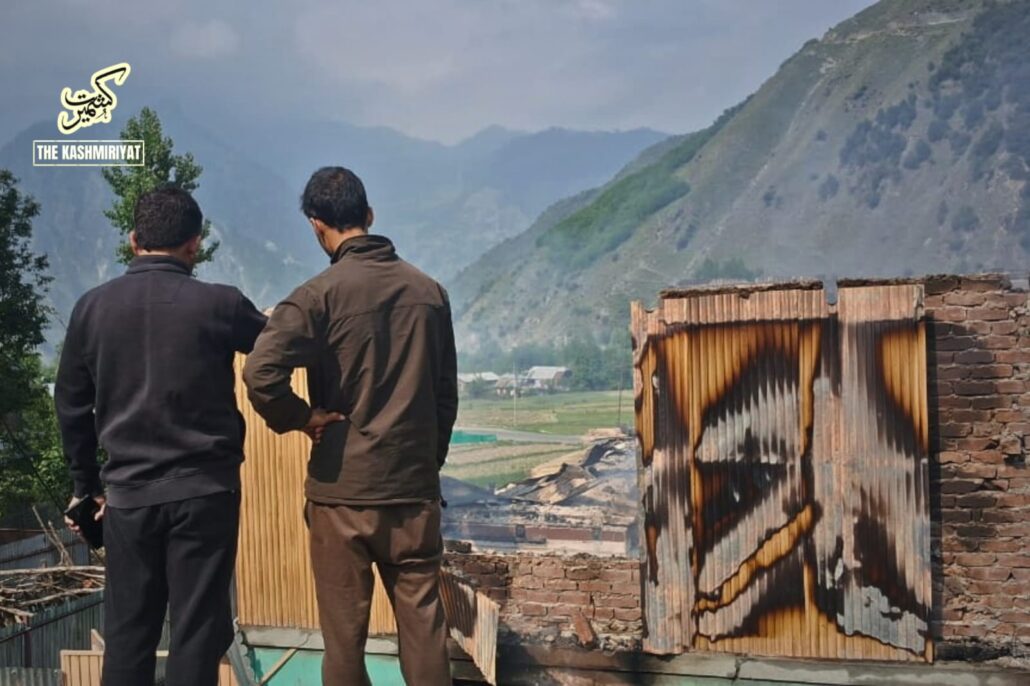
On the ground, civilians in both countries continued to grapple with the aftermath of the hostilities. In the Indian state of Punjab, residents of Pathankot described powerful explosions that shattered windows and left a giant crater in the area. A family in Jammu’s Janipur colony recounted how their home was struck early in the morning, forcing them to escape through thick smoke as their roof collapsed. In Islamabad, Pakistani citizens expressed mixed emotions, with some describing the current conflict as the worst they had witnessed in decades and fearing for the future, even as they carried on with daily life.
Diplomatic rhetoric remained heated despite the ceasefire. India’s High Commissioner to the UK, Vikram Doraiswami, accused Pakistan of harboring terrorist infrastructure and dismissed Islamabad’s claims of Indian aggression as lies. “Ask yourself where Osama Bin Laden was,” he remarked, referencing the al-Qaeda leader’s hideout in northern Pakistan. Pakistan’s Prime Minister Shehbaz Sharif insisted that his military had delivered a “befitting response” to Indian actions, saying that Pakistan had avenged the blood of innocent lives lost in recent attacks.
Observers noted that the conflict marked one of the most expansive confrontations between India and Pakistan in decades, with both sides targeting military installations beyond Kashmir and employing modern warfare tools such as drones. Analysts warned that while the ceasefire provided a crucial pause, underlying tensions remained, and the possibility of future flare-ups could not be ruled out.
Both nations, nuclear-armed and historically adversarial over the disputed Kashmir region, have been under international pressure to de-escalate. While the ceasefire offers a temporary respite, regional and global actors will closely watch the upcoming dialogue to see whether it leads to a more durable peace or merely delays further conflict

- News Deskhttps://thekashmiriyat.co.uk/author/kashmiriyat/
- News Deskhttps://thekashmiriyat.co.uk/author/kashmiriyat/
- News Deskhttps://thekashmiriyat.co.uk/author/kashmiriyat/
- News Deskhttps://thekashmiriyat.co.uk/author/kashmiriyat/


