U.S. President Donald Trump, addressing the escalating conflict between Iran and Israel, declared on Tuesday that he was not seeking a ceasefire but “complete surrender” from Tehran. “I’m not looking for a ceasefire, we’re looking at better than a ceasefire,” he told reporters after returning from the G7 summit, signaling full U.S. backing of Israeli military operations.
This declaration came even as intelligence findings from both American agencies and international bodies concluded that Iran was not manufacturing nuclear weapons — the very accusation being used to justify the current military assault. Israeli officials claim the operation was aimed at halting what they allege to be Iran’s imminent pursuit of nuclear weapons. However, mounting evidence from international agencies and even U.S. intelligence paints a different picture—one that has stirred memories of the 2003 Iraq invasion and its unfounded claims about weapons of mass destruction (WMDs).
The Israeli strikes, which reportedly caused significant damage to Iran’s underground centrifuge halls and an above-ground enrichment facility, have been described by Israel as necessary “preemptive defense.” A senior Israeli military official said the strikes were designed to cripple Iran’s nuclear program and deter further ballistic missile launches, claiming Iran had already launched hundreds of drones and missiles targeting Israeli military and civilian sites.
However, the International Atomic Energy Agency (IAEA), the UN’s nuclear watchdog, expressed concern over the attacks but made no confirmation that Iran was weaponizing its enriched uranium. “There is no current indication that Iran is building a nuclear weapon,” said an IAEA spokesperson. The agency, which monitors Iranian nuclear sites under the terms of the now-defunct Joint Comprehensive Plan of Action (JCPOA), stated that while Iran has enriched uranium up to 60%, this is still below weapons-grade (90%) and that no diversion toward weaponization has been observed.
U.S. intelligence assessments echo this stance. According to a CNN report citing four intelligence officials, Iran is not actively building a nuclear weapon and is believed to be “up to three years away” from being able to deliver one, even if it chose to do so. The U.S. Director of National Intelligence, Tulsi Gabbard, earlier testified to Congress that Iran’s Supreme Leader has not ordered a weapons program revival.
These assessments raise uncomfortable parallels with the 2003 U.S.-led invasion of Iraq, which was justified by the claim that Saddam Hussein possessed WMDs—a claim later proven false. That war resulted in hundreds of thousands of deaths, destabilized the region, and discredited U.S. intelligence and international diplomacy for years. Critics argue that Israel’s latest operation risks repeating that tragic history: acting on assumptions, not verifiable facts.
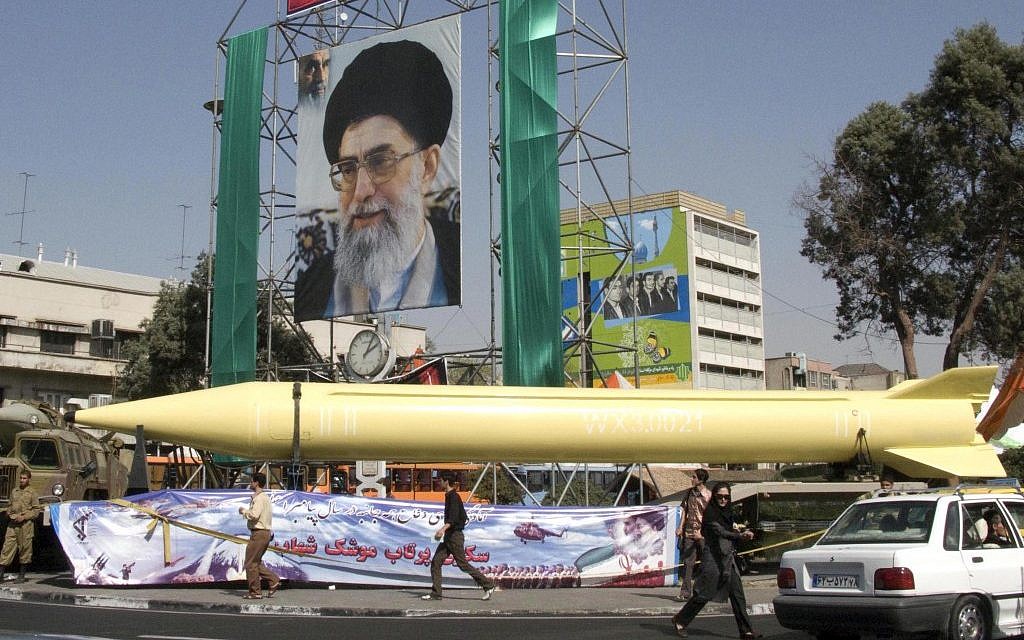
Meanwhile, the human cost of these strikes has begun to emerge. Iranian state broadcaster IRIB reported that its headquarters was struck, killing one journalist, Masoumeh Azimi, and injuring others. Though unverified independently, these reports and circulating social media footage suggest civilian infrastructure may have also been impacted. Iranian presenter Sahar Emami, who was live on air when the blast occurred, has been turned into a national symbol of resistance, with her image now displayed on banners across Tehran.
Iran has retaliated with its own missile barrage, reportedly hitting Israeli intelligence and military sites, including what Iranian media claim were Mossad facilities. While these claims are hard to independently verify, footage shared widely online—showing explosions and chaos in Tel Aviv and Haifa—has undercut the long-standing Western media narrative that Iran is always on the offensive and Israel always defensive.
In diplomatic corridors, the European Union has reiterated its position that diplomacy, not escalation, is the only sustainable way forward. EU Foreign Policy Chief Kaja Kallas criticized the attack and called for a return to negotiations. “Iran cannot have a nuclear bomb—but there is no proof it is trying to,” she said.
This widening credibility gap has reignited debates about media bias, Western hegemony, and the role of international law. Critics from across the Global South have pointed out that Iranian state media is often labeled “propaganda” while Israeli or American claims are taken as factual reporting—even in the absence of evidence. Social media has helped erode that monopoly, with users sharing footage and local reports that challenge mainstream narratives.
As the dust settles, one thing is clear: claims of an Iranian nuclear threat remain contested. Without clear evidence, the Israeli strikes risk undermining international law, further destabilizing the Middle East, and repeating a history the world cannot afford to relive.

- News Deskhttps://thekashmiriyat.co.uk/author/kashmiriyat/

- News Deskhttps://thekashmiriyat.co.uk/author/kashmiriyat/

- News Deskhttps://thekashmiriyat.co.uk/author/kashmiriyat/
- News Deskhttps://thekashmiriyat.co.uk/author/kashmiriyat/
