Alima Altaf
What should have been a routine visit to SMHS Hospital for pending blood tests turned into a troubling reminder of how easily suffering is brushed aside in a system weighed down by apathy.
On Saturday, I accompanied my father to the hospital, hoping everything would go smoothly. But the brief interaction at the ticket counter revealed a different reality — one where negligence and casual indifference to duty overshadow the pain of those seeking help.
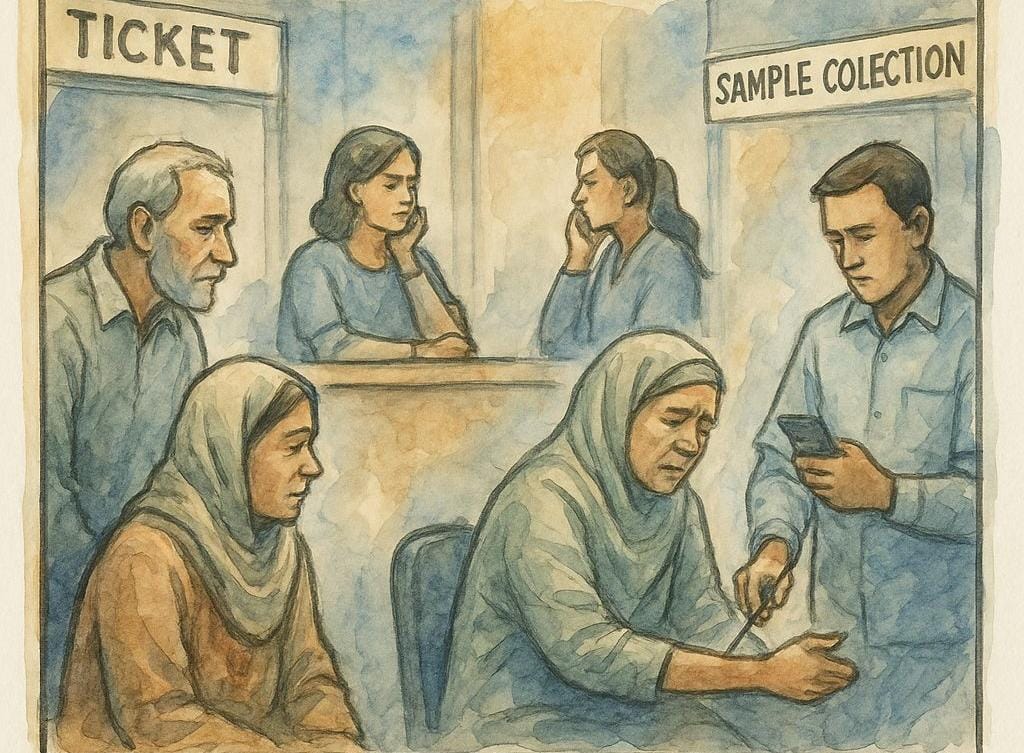
While waiting in line to pay for the tests, I noticed a woman ahead of us who had already been waiting over ten minutes. The staff member at the counter, however, seemed completely unbothered — engaged in light-hearted banter with colleagues about silver rings, footwear, outfits, and even lunch orders.
Everything, it seemed, was more important than the patients standing in line.
When our turn finally came, my father had to call the staff member three times before she even acknowledged him. The room felt more like a social lounge than part of one of the region’s most critical healthcare institutions.
It made me wonder how many emergencies are delayed, how much pain is prolonged, simply because those entrusted with public health treat their responsibilities so lightly.
Things were no better at the sample collection center. A female staff member, tasked with attending to patients, was deeply engrossed in a phone call — seemingly unaware of the waiting crowd.
Meanwhile, a male staffer was drawing blood from an elderly woman with one hand while scrolling through his phone with the other. It was disheartening.
In that moment, it didn’t feel like we were patients in a place of healing. We felt like helpless individuals begging for attention in what should have been a Shifa Khana — a house of healing.
We read reports of medical negligence almost every day — stories of delays, of lives lost, of families broken. But we scroll past them, feel bad for a moment, and move on. It has become normal. Only when it happens to us or someone close do we realise the weight of what we’ve normalized.
This is where we fail — where our training, our education, and most of all, our basic humanity seem to break down. A hospital is not just a building with walls and machines; it’s a place where people arrive carrying fear, pain, and hope, trusting that someone will care.
It is my humble hope that those in positions of responsibility pause and reflect — because someday it could be their loved one waiting in that same queue, hoping — as we all do — for dignity, compassion, and timely care.
Alima Altaf is a journalism student at Amar Singh College, Srinagar.

- News Deskhttps://thekashmiriyat.co.uk/author/kashmiriyat/

- News Deskhttps://thekashmiriyat.co.uk/author/kashmiriyat/

- News Deskhttps://thekashmiriyat.co.uk/author/kashmiriyat/
- News Deskhttps://thekashmiriyat.co.uk/author/kashmiriyat/
