Prerna Bhat
During the early morning hours (fajar time), a man encountered a figure resembling a Pasikdar, a benevolent spirit or guardian in Kashmiri folklore, and his wife, who was wearing a Dejhoor. The Pasikdar was described as having a long beard and attire similar to that of the narrator’s father. This brief but striking encounter left a lasting impression, underscoring the Dejhoor’s significance within the Kashmiri Pandit community’s traditions.
In Kashmiri folklore, the Pasikdar is considered a guardian spirit, believed to protect households from evil forces. In some interpretations, the Pasikdar is associated with the eldest male of the household and is regarded as a benevolent entity that watches over the family. While this anecdote originates from a personal account, it reflects the rich tapestry of Kashmiri folklore, where cultural symbols like the Dejhoor intertwine with spiritual beliefs and stories, bridging the tangible and the mystical in the community’s heritage.
The Dejhoor, a slender, almost ascetic earring of gold, once swayed gently from the ears of Kashmiri Pandit women like a small sun held close to the face. It glinted in wedding courtyards, in kitchens scented with noon chai and dried fish, and in the slow winters of Srinagar where frost clung to windowpanes. It has been part of the Kashmiri Pandit woman’s body for more than a thousand years, linking birth, marriage, and death.
Today, in scattered geographies from Delhi to Houston, the Dejhoor is quietly vanishing, a disappearance mirroring the community’s slow retreat from its homeland.
Beyond jewelry or ritual, this fading tells a story of resilience: continuity under pressure, womanhood refracted through history, and identity surviving displacement’s corrosion.
To understand the Dejhoor is to understand a civilisation’s grammar. The object is minimal, no flamboyance, no display of wealth, a small hexagonal gold pendant, a yantra symbolizing the union of Shiva and Shakti, suspended from the upper ear by a red silk thread called the nairwan. When a bride crosses into her new home, the nairwan is replaced by a gold chain, the ath, gifted by her in-laws, completed by a dangling atahur. This transition marks the shift from daughter to wife, from her mother’s house to her husband’s.
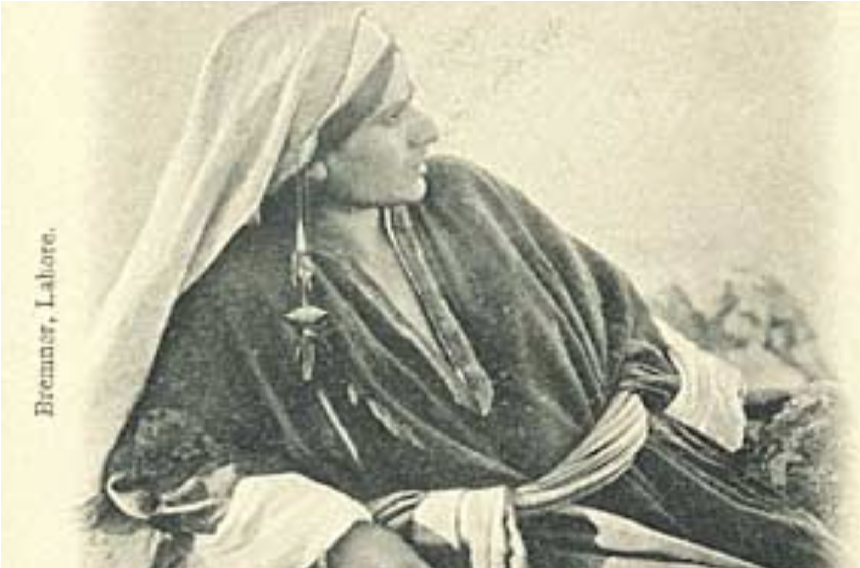
For centuries, it carried a language of belonging: to see a woman wearing it was to recognize her faith, lineage, and world. In photographs from the 1940s, grandmothers in embroidered pherans show faces half-shadowed by winter sun, the Dejhoor catching a gleam near the temple. During the 1990 exodus, women carried it even as they fled with children, trunks, and photo albums; in the refugee camps of Jammu, it became more than ornament—it became testimony, a quiet gold relic of home, memory, and survival.
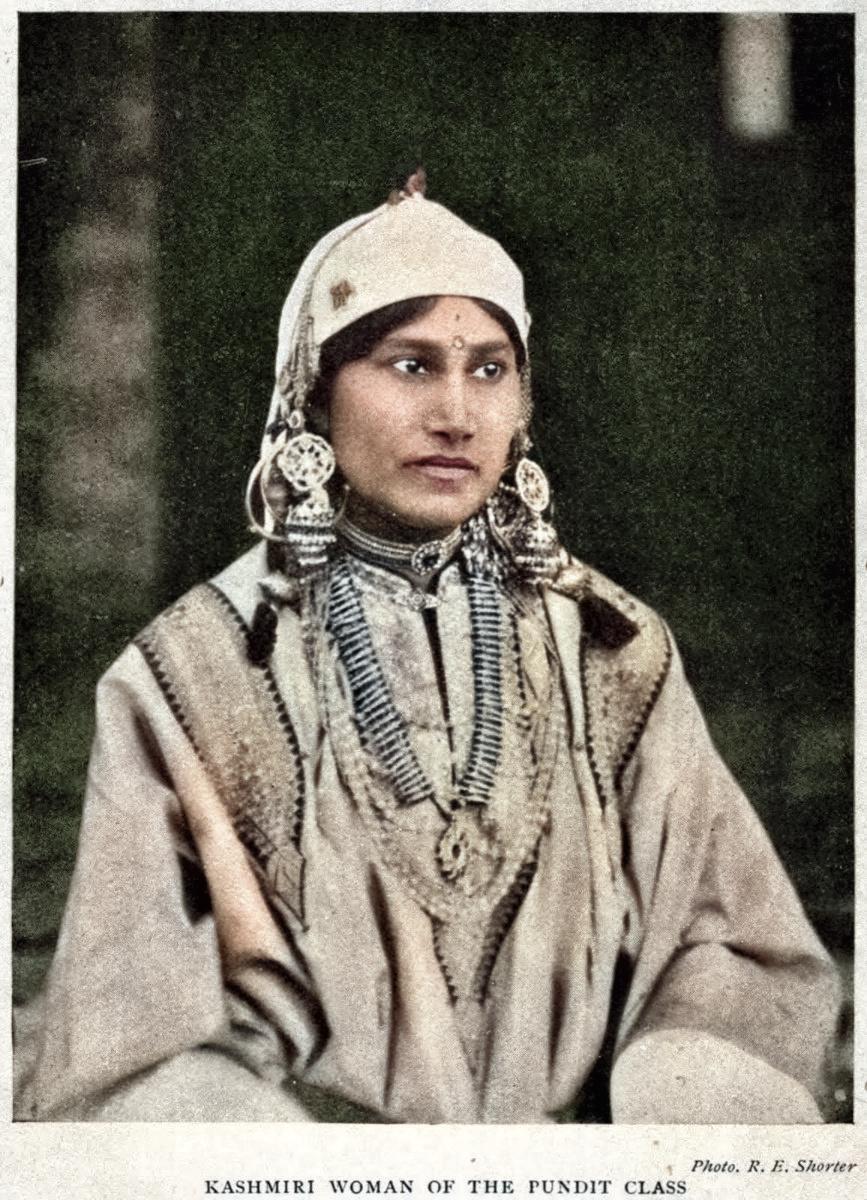
The Dejhoor: Heritage, Exile, and Transformation
Time in exile thins memory and erases context. Daughters born in Delhi or Noida, granddaughters in Toronto or Bengaluru, inherit stories but not landscapes. The ritual of Devgoan, where mothers tie the red nairwan before weddings, has become symbolic rather than lived. The chants, once resonant in the valley, are now recited from transliterations rather than instinct. Once a daily sign of womanhood, the Dejhoor now rests in jewelry boxes, worn occasionally for nostalgia or cultural festivals. Its disappearance is not rebellion but adaptation—an instinctive response to modern urban life where heritage feels heavy.
The erosion of the Dejhoor reflects a broader shift in identity. In the valley, a woman’s role was anchored in family, faith, and the rhythms of daily life, preparing haakh and nadru yakhni, listening to temple bells, living alongside seasonal patterns of snow and saffron fields, and weaving together household and spiritual routines. In exile, she navigates education, work, and modern relationships.
The gold that once symbolized protection now risks theft; marital permanence feels out of step with contemporary realities. A younger woman working in Gurgaon or Pune may avoid wearing it for safety or practicality. Yet even amid pragmatism, the Dejhoor carries memory: of kitchens scented with noon chai and dried fish, of frost clinging to windowpanes, of temple bells and the rhythm of ancestral life. It becomes a silent witness to journeys of displacement, a reminder of the homes left behind and the resilience required to survive.
For older women, the Dejhoor was invocation, connecting them to ancestors, divine feminine power, and the sacred geography of Kashmir. Seeing daughters choose simpler earrings evokes a rupture, not of faith, but continuity.
“If we do not wear it,” one elderly woman said, “how will anyone know who we are?”
Here, the question is internal: the self’s ability to remember itself in diaspora. Women interpreting their heritage anew are continuing the Dejhoor’s original dialogue: between sacred and self, belonging and becoming. Even when the ornament no longer swings from ears, its essence informs everyday acts, teaching, cooking, storytelling, where cultural memory is embodied rather than displayed.
The Dejhoor is also a cultural archive. Its hexagon and central bindu mirror the Sri Yantra, mapping cosmos and feminine principle. To stop wearing it is to step outside an ancient metaphysical grammar. Anthropologists see in it a microcosm of what occurs when culture is displaced: rituals transform or fossilize. Contemporary designers are reimagining it as silver pendants, necklaces, or tattoos.
These adaptations allow the past’s shape to persist, even when its form cannot. Through these transformations, the Dejhoor becomes both memory and living practice, a bridge between vanished landscapes and lives rebuilt elsewhere, a dialogue between what was inherited and what is chosen.
Even as its physical presence fades, the philosophical essence persists. The yantra represents balance, the union of male and female principles, the still point at the center of movement. In exile, Kashmiri Pandit women embody this balance daily: between remembering and surviving, between continuity and change.
The Dejhoor may no longer hang visibly from the ear, but it has internalized itself, etched into memory, identity, and resilience. Its story is no longer only of ornamentation, but of survival, continuity, and adaptive reinvention, a testament to the ways culture evolves without losing its soul.

Continuity, Reinvention, and Modern Identity
In contemporary India, symbols of womanhood; mangalsutra, bindi, sindoor, are being renegotiated. For Kashmiri Pandit women, however, the stakes are higher: continuity relies on memory rather than numbers. Every ritual abandoned feels like history fading. The Dejhoor’s decline resonates beyond aesthetics, it questions the survival of meaning itself.
Even in disappearance, there is assertion. The Kashmiri Pandit woman exists between two worlds: one remembered, one real. She may not wear the Dejhoor, but she carries its symbolism in education, public presence, and reclaiming autonomy. The resilience that once made women tie gold talismans in exile now drives them to define heritage in modern life.
Revival campaigns and exhibitions emphasize that this is not merely nostalgia. Disappearance results from migration, insecurity, linguistic erosion, and subtle patriarchal structures. Traditionally, the Dejhoor marked transfer, from mother to in-laws, validated by ritual. Modern women define themselves differently, reshaping its meaning. Yet, grandmothers who continue wearing it convey the quiet power of heritage as a living current: the gold becomes language, the yantra a pulse of survival, and the ornament itself an archive of belief, family hierarchy, and cosmology.
In exile, home is defined by ritual rather than geography.
Dejhoors in velvet-lined boxes carry the stories of women crossing thresholds to temple bells and simmering wazwan, artifacts of interrupted lives.
Second-generation women inherit a culture of memory, often encountering curiosity when wearing the ornament, a reminder of invisibility in mainstream India. Identity today is constructed, not inherited. Rituals tied to the Dejhoor may feel like transfers of identity from one household to another, sometimes in tension with autonomy.
Yet reinterpretation continues. Young designers and women create minimalist silver pieces, geometric ear cuffs, or tattoo motifs inspired by the hexagonal yantra, engaging with heritage without reenacting ritual. Culture survives through adaptive reinvention. Exile has made the community conscious of preservation, which now requires evolution. Language loss, altered rituals, and shifting social norms transform symbolism, yet the Dejhoor’s metaphysical essence persists: balance of male and female principles, resilience, and continuity. Its yantra, the hexagon and central bindu, maps not just the cosmos but the feminine principle itself, a reminder that identity is both sacred and self-constructed.
During modern weddings, mothers perform Devgoan with synthetic threads, recorded chants, or temple visits. The ritual adapts, intent intact. Public visibility, safety concerns, and curiosity influence choices. The Dejhoor, once a protective talisman, paradoxically signals vulnerability. Women choosing not to wear it do so to preserve both heritage and self, creating a new kind of protective symbolism.
The exodus of 1990 remains living memory; the Dejhoor was the one ornament refused for removal amid loss. Its current absence reflects exhaustion from carrying survival symbols, not indifference. Digital documentation and storytelling shift it from body to discourse. It now flickers in pixels and prose, a digital gold resisting tarnish, preserving meaning beyond material presence.
Ultimately, the Dejhoor represents continuity and reinvention, memory surviving exile, and identity negotiating tradition and modernity. Though gold no longer glints daily, its shape, symbolism, and spiritual resonance endure through retelling rituals, ancestral stories, and the inner landscapes of women navigating between worlds.
The Kashmiri Pandit woman is both custodian and innovator, keeping the Dejhoor alive as a testament to survival, continuity, and agency. In quiet modern spaces, it speaks softly but insistently, echoing a thousand years while charting the future of Kashmiri Pandit womanhood, where heritage is not merely worn, but lived, imagined, and redefined.

Prerna Bhat
- Prerna Bhat#molongui-disabled-link

- Prerna Bhat#molongui-disabled-link

- Prerna Bhat#molongui-disabled-link

- Prerna Bhat#molongui-disabled-link
