A political storm has erupted in Jammu and Kashmir following Friday’s Rajya Sabha elections, as suspicions of cross-voting and invalid ballots have cast a shadow over the results.
While the National Conference (NC) secured a sweeping victory by winning three of the four seats, the Bharatiya Janata Party (BJP) managed to clinch one seat—reportedly with support from four independent MLAs, raising serious questions about political loyalties within the newly elected Assembly.
According to official results, NC’s Chowdary Mohammad Ramzan, Sajad Ahmad Kitchloo, and Sammi Oberoi won their seats comfortably. The fourth seat, however, went to BJP’s Sat Sharma, who defeated NC’s Imran Nabi Dar in a close contest.
All 86 legislators cast their votes in the election, including incarcerated Doda MLA Mehraj Malik, who voted through postal ballot.
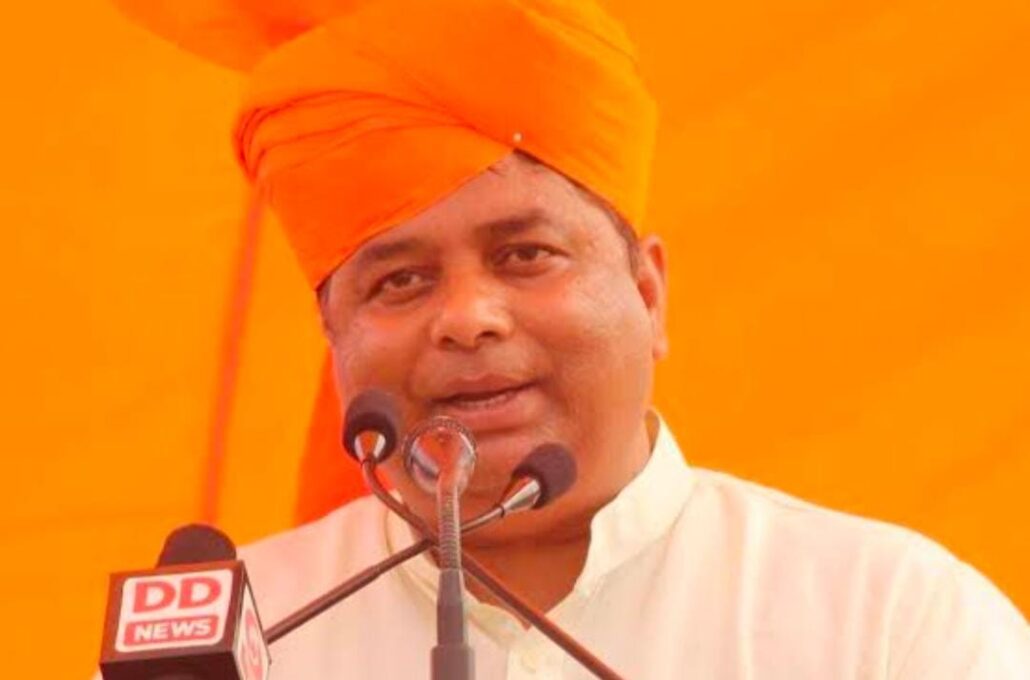
BJP leader Sat Sharma secured the fourth Rajya Sabha seat from Jammu Kashmir by receiving 32 votes, surpassing the 28 votes held by his party.
His opponent, NC’s Imran Nabi Dar, received 22 votes. The BJP’s higher vote count suggests cross-voting from MLAs outside the party, contributing to Sharma’s victory.
Soon after the results were announced, NC Vice President Omar Abdullah took to social media platform X to question the BJP’s unexpected tally.
“All of @JKNC_ votes remained intact across the four elections, as witnessed by our election agent who saw each polling slip. There was no cross-voting from any of our MLAs. So the question arises—where did the four extra votes for the BJP come from?” Omar wrote.
He further accused unnamed MLAs of deliberately invalidating their ballots by marking incorrect preferences to indirectly benefit the BJP.
“Do they have the guts to own up to helping the BJP after promising us their votes? What pressure or inducement helped them make this choice? Let’s see if any of the BJP’s secret team own up to selling their souls!” he added.
Sources said that the BJP’s vote count exceeded its official strength in the Assembly, suggesting that at least four independents or smaller party legislators may have crossed over.
Political observers described the result as a “mixed verdict”—one that consolidates NC’s position within the INDIA bloc but also exposes cracks in alliance discipline.
“The votes of individual MLAs in Rajya Sabha elections are not made public. The voting is done by secret ballot, so only the total number of votes each candidate receives is officially announced, not how each MLA voted,” an official told The Kashmiriyat.
In the 2024 Jammu Kashmir Assembly elections, seven independents had secured victories across both regions of the Union Territory.
They include Khursheed Ahmad Sheikh from Langate and Shabir Ahmad Kullay from Shopian in the Kashmir Valley, while the Jammu region elected Payare Lal Sharma from Inderwal, Dr Rameshwar Singh from Bani, Satish Sharma from Chhamb, Muzaffar Iqbal Khan from Thanamandi (ST), and Choudhary Mohammed Akram from Surankote (ST).
Political circles believe that a few among these independents may have tilted the balance in favour of the BJP during Friday’s Rajya Sabha polls, though none have publicly acknowledged switching sides. Their role has become central to the growing controversy around the mysterious four extra votes that benefited the saffron party.
The elections were held at the J&K Assembly complex in Srinagar under tight security, concluding with a late-evening count. Both the Peoples Democratic Party (PDP) and Awami Ittehad Party (AIP) had earlier declared support for the NC to “keep the BJP out,” a decision seen as key to the NC’s overall performance.
Reacting to the outcome, PDP President Mehbooba Mufti congratulated the NC, saying the results reflected “a united stand of regional forces to defend J&K’s interests in Parliament.”
The newly elected members, Ramzan, Kitchloo, Oberoi, and Sat Sharma, are expected to take oath during the next session of Parliament.
However, the controversy over cross-voting is likely to linger, with Omar Abdullah demanding transparency and accountability from those he accuses of “betraying regional unity for political favours.”
Political analysts say the episode underscores the unpredictability of the UT’s post-restoration politics. “This result shows both strength and vulnerability within the INDIA bloc,” one analyst said.
“The NC remains dominant, but the BJP has proven that it can still engineer surprises through backchannel support.”

- News Deskhttps://thekashmiriyat.co.uk/author/kashmiriyat/

- News Deskhttps://thekashmiriyat.co.uk/author/kashmiriyat/

- News Deskhttps://thekashmiriyat.co.uk/author/kashmiriyat/
- News Deskhttps://thekashmiriyat.co.uk/author/kashmiriyat/
