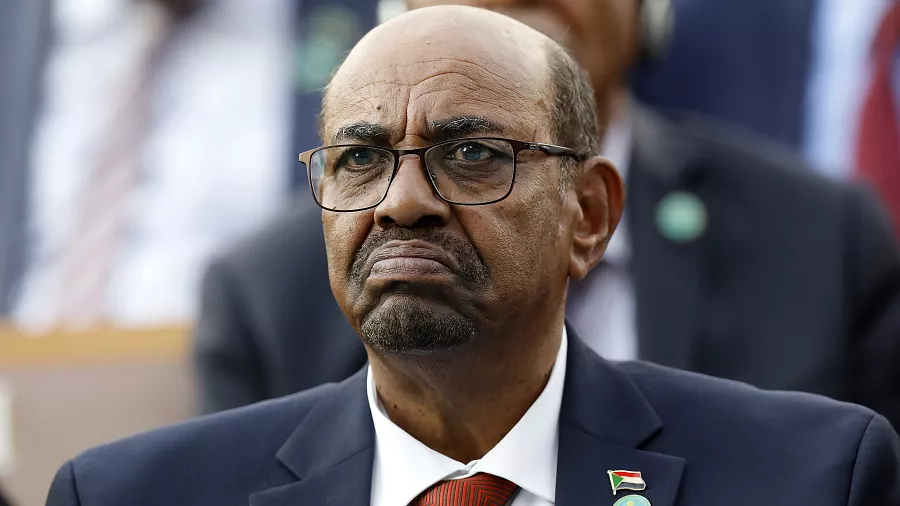
In Sudan’s long-running crisis, the main combatants are the Sudanese Armed Forces (SAF), commanded by Abdel Fattah al‑Burhan, and the Rapid Support Forces (RSF), led by Mohamed Hamdan Dagalo (also known as Hemedti). These two men once shared power after the 2019 removal of the dictator Omar al‑Bashir but their alliance fractured in April 2023 when the question of integrating the RSF into the national army and the timing of civilian rule triggered open conflict.
The RSF traces its roots to the tribal militias known as the Janjaweed, Arab-nomadic militias from Darfur that were armed during Bashir’s era, but over time evolved into a paramilitary formation with tanks, drones, and economic interests. The SAF remains nominally the national army, wielding air power and commanding the official military apparatus.
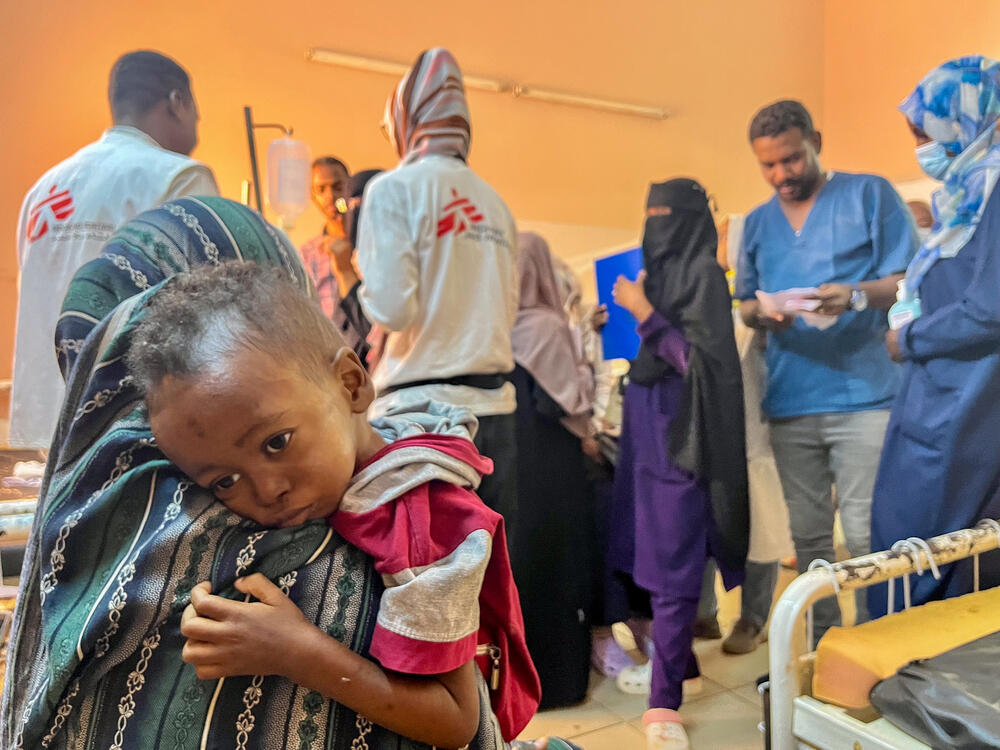
Non-combatants, including millions of Sudanese civilians, humanitarian workers, displaced persons and the remaining independent media, are caught amid this confrontation that local outlets describe as state collapse.
Local Sudanese media outlets such as Sudan Tribune, Radio Dabanga and the Sudan Media Forum report that the RSF has taken control of the city of El Fasher, capital of North Darfur, after heavy shelling and street fighting. Survivors now in nearby Tawila recount widespread killings, sexual violence, forced looting, humiliation, and extortion by RSF fighters.
One woman, Madiha al-Tom Bashir, told Sudan Tribune that RSF soldiers stripped her of her clothes as she fled and forced her to abandon her child’s body after he had been shot dead.
Another, Fatima al-Tom Abdulrahman, described lengthy abuse at RSF checkpoints, racial slurs, execution of male relatives, and chilling chants like “Falangai, you dogs!” directed at non-Arab civilians. A third survivor, Daoud Mohammed Abkar, said he watched young men lined up and machine-gunned outside El Fasher University, later beaten and forced into Tawila under escort. Beyond Darfur, Radio Dabanga’s researchers documented an RSF massacre in Shaq El Noum (North Kordofan) where satellite imagery and local sources show burned villages, drones, and indiscriminate killing, a report by the Yale Humanitarian Research Lab confirmed this pattern.
Humanitarian groups warn that entire towns are emptied, hospitals destroyed, and civilians dying of hunger or disease. Displaced communities now fluidly fill camps around Tawila, Abu Shouk and other arrival points, under conditions of dire humanitarian collapse.
When and where did it start
The latest major phase of the conflict began on April 15, 2023, when the SAF and RSF turned their arms on one another in Khartoum, triggered by disputes over military integration and transition politics. Sudan Tribune, however, traces the deeper roots back to the 2019 post-Bashir era when Burhan and Hemedti consolidated power while sidelining civilian governance.
By late 2022, the tension reached breaking point: the RSF mobilised around Khartoum, and within days the fighting spread across Darfur, Kordofan and the Gezira region.
The fall of El Fasher on October 26 2025 stands out as one of the most lethal milestones so far—marking the biggest city in Darfur to swing into RSF hands, with the exodus of thousands beginning the next day.
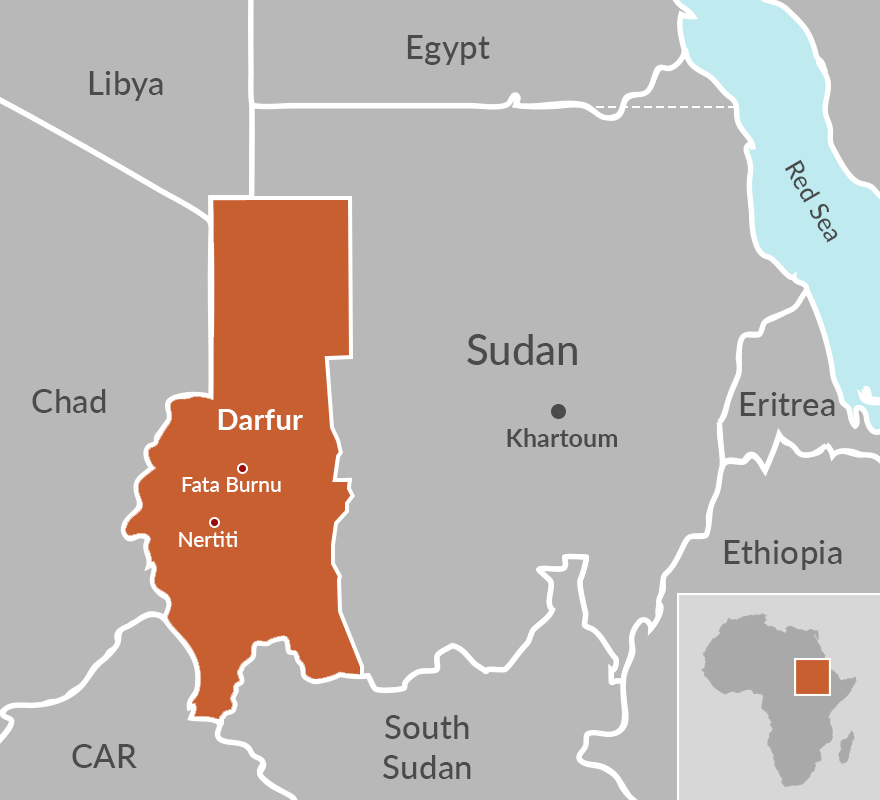
Sudan is located in northeast Africa, bordered by Egypt, Chad, Ethiopia, Eritrea, South Sudan and the Red Sea. In the current war the frontlines are large: the RSF controls much of Darfur, parts of central Kordofan and sections of Khartoum state; the SAF retains eastern and northern corridors, including the vital port city of Port Sudan.
In El Fasher, once a vibrant market and humanitarian hub, local sources speak of ruined neighbourhoods, pillaged hospitals, and roads to towns like Tawila and Gorni littered with bodies.
In North Kordofan’s Shaq El Noum and Bara regions, satellite data shows burned homes and thermal scarring confirming mass arson. The RSF has encircled displacement camps such as Abu Shouk and Zamzam, choking food, fuel and water. Across villages, markets, and roads the civilian fabric is being destroyed.
Why and How is it happening
From the perspective of Sudanese media commentators, the war is not merely a fight for power within the armed forces, it is a struggle over who defines the future of Sudan. Both SAF and RSF claim to protect national unity, yet local editorials argue the RSF pursues dominance in the vast western and central regions by mobilising tribal bases and economic networks.
The SAF positions itself as the institutional state defence, but its operations, blockades, sieges, aerial and artillery bombardments, have devastated civilians and infrastructure. Analysts at the Sudan Media Forum trace the causes to decades of neglect, impunity, broken peace deals and the legacy of the Darfur genocide (2003-2005).
One columnist wrote: “Sudan was allowed to rot from within. This war is the final unraveling.” In effect, civilians are paying the ultimate price for this power contest.
Local reportage describes a systematic pattern of violence by RSF forces and allied tribal units. Men accused of ties to the SAF are summarily executed; women and girls fleeing are raped or abducted; homes, schools and hospitals are looted, shelled or burned. At checkpoints, civilians are stripped, searched, beaten, robbed of phones, money or livestock.
Human rights lawyer Abdulbasit al-Hajj told Sudan Tribune that RSF operatives kidnap fleeing civilians, contact relatives abroad, demand ransoms of up to 100 million Sudanese pounds, and broadcast torture videos of captives.
In one documented case, five volunteers of the Sudanese Red Crescent Society were slain in North Kordofan while trying to deliver aid. Meanwhile, a shelter in El Fasher was shelled during breakfast service, six killed, two dozen wounded. Satellite images from Yale HRL confirm fire damage across villages in Kordofan. Reports say entire displacement camps have been converted into military bases with civilians trapped inside.
The stories of survival
In Tawila and other arrival towns, displaced families live beneath rusted metal sheets, torn tarpaulin, and open skies. Food is scarce, water unsafe, and medicine almost impossible to find. “We grind wild seeds and roots to eat,” said Halima, a mother of four who arrived in Tawila after walking for eight days. “My youngest stopped crying two days before we reached here — she had no strength left.”
Adam Rijal, a spokesman for displaced persons in Darfur, said: “At least two female children died today from hunger on the journey from El Fasher to Tawila.” Aid groups warn that over 250,000 civilians remain trapped inside El Fasher, encircled by RSF forces, while those who manage to escape arrive emaciated, their children’s eyes sunken and skin covered with dust.
One volunteer in Tawila described the roads as “a trail of death.” He said: “Bodies lay along the road between El Fasher and Tawila. We buried people we didn’t even know. We walked barefoot. The wells are dry, and there is no fuel for the pumps.”
Inside the makeshift camps, women collect rainwater in plastic containers and light small fires to cook whatever they can find. “We used to have farms, schools, and a market,” said Musa, a trader from El Fasher. “Now we count days not by the sun, but by how many children die each morning.”
Independent media infrastructure has collapsed: more than 90% of radio stations, print newspapers, and TV outlets are destroyed or silenced. Journalists operate from hidden rooms, relying on satellite phones or encrypted messaging. One Radio Dabanga reporter, speaking from an undisclosed location, said: “We record testimonies even when we have no internet. We send them whenever we find a signal. We speak so that the world cannot say it didn’t know.”
Another journalist, who fled El Fasher after his office was burned, added: “People used to come to us with their stories. Now we go to them — in the camps, in the ruins, in the desert. Because silence is what the killers want.”
Who are the Janjaweed militias?
The RSF, under Hemedti, evolved from the Janjaweed militias that terrorised Darfur in the early 2000s. The Janjaweed—literally “devils on horseback”—were Arab-tribal horsemen and vehicle-mounted fighter groups funded by Omar al-Bashir’s government to crush rebellious non-Arab groups in Darfur; their campaign resulted in hundreds of thousands of deaths and massive displacement.
In 2013 the Janjaweed were reorganised into the RSF, given formal status, and placed under Hemedti’s command. Over time, the RSF grew not just as a paramilitary force but also as an economic actor controlling gold mines, smuggling routes, livestock trade and border dealings. Regional investigations cited by radio and journalistic sources suggest that the United Arab Emirates (UAE) has provided financial and logistical backing to the RSF via Libya and Chad, supplying funds, weapons and training.
The SAF has been linked to support from Egypt and maintain limited ties with Iran for drones and logistics, though local outlets emphasise that both sides receive external backing. Ideologically, the RSF does not follow a coherent revolutionary or religious doctrine; rather, it is built on tribal loyalty, Arab identity in Darfur, paramilitary culture, and profiteering from war economies.
Its roots lie in the concept of Arab tribal dominance in western Sudan, combined with a business model of violence, control of territory, and extraction of resources.
The war in Sudan pits the state’s official army against a paramilitary force born of tribal militias, and the real casualties are civilians. The SAF and RSF fight not only for power but for the shape of the country’s future.
The result is mass killings, looting, displacement, hunger and the collapse of public life. Information is scarce because media are under assault, yet local outlets still document the horror: men shot, women abused, children starving. Sudan’s latest crisis shows how war, which began as a military revolt, has become a war on the Sudanese people themselves.
- News Deskhttps://thekashmiriyat.co.uk/author/kashmiriyat/
- News Deskhttps://thekashmiriyat.co.uk/author/kashmiriyat/
- News Deskhttps://thekashmiriyat.co.uk/author/kashmiriyat/
- News Deskhttps://thekashmiriyat.co.uk/author/kashmiriyat/


