
Murtaza Bilal/ Rufat Reshie
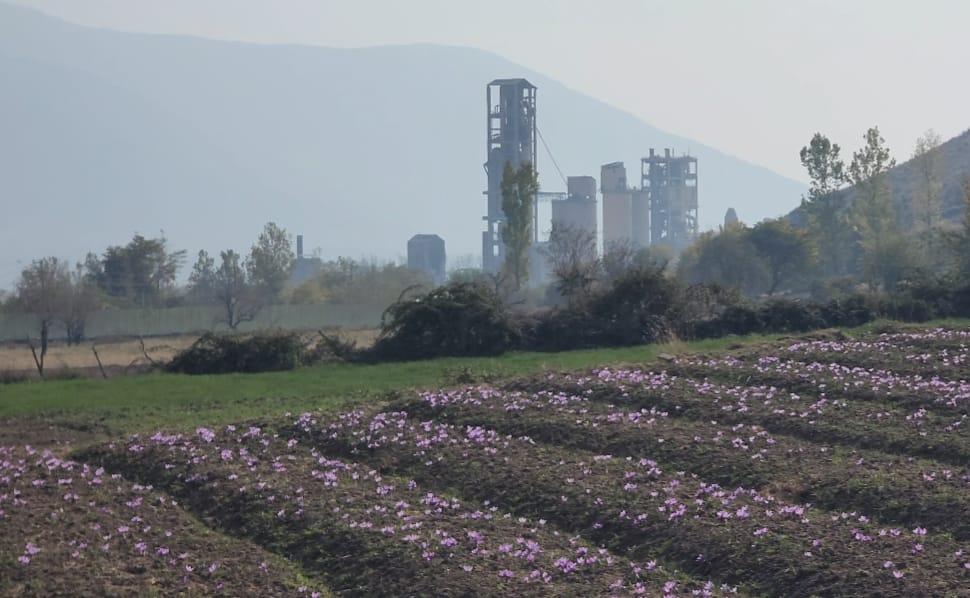
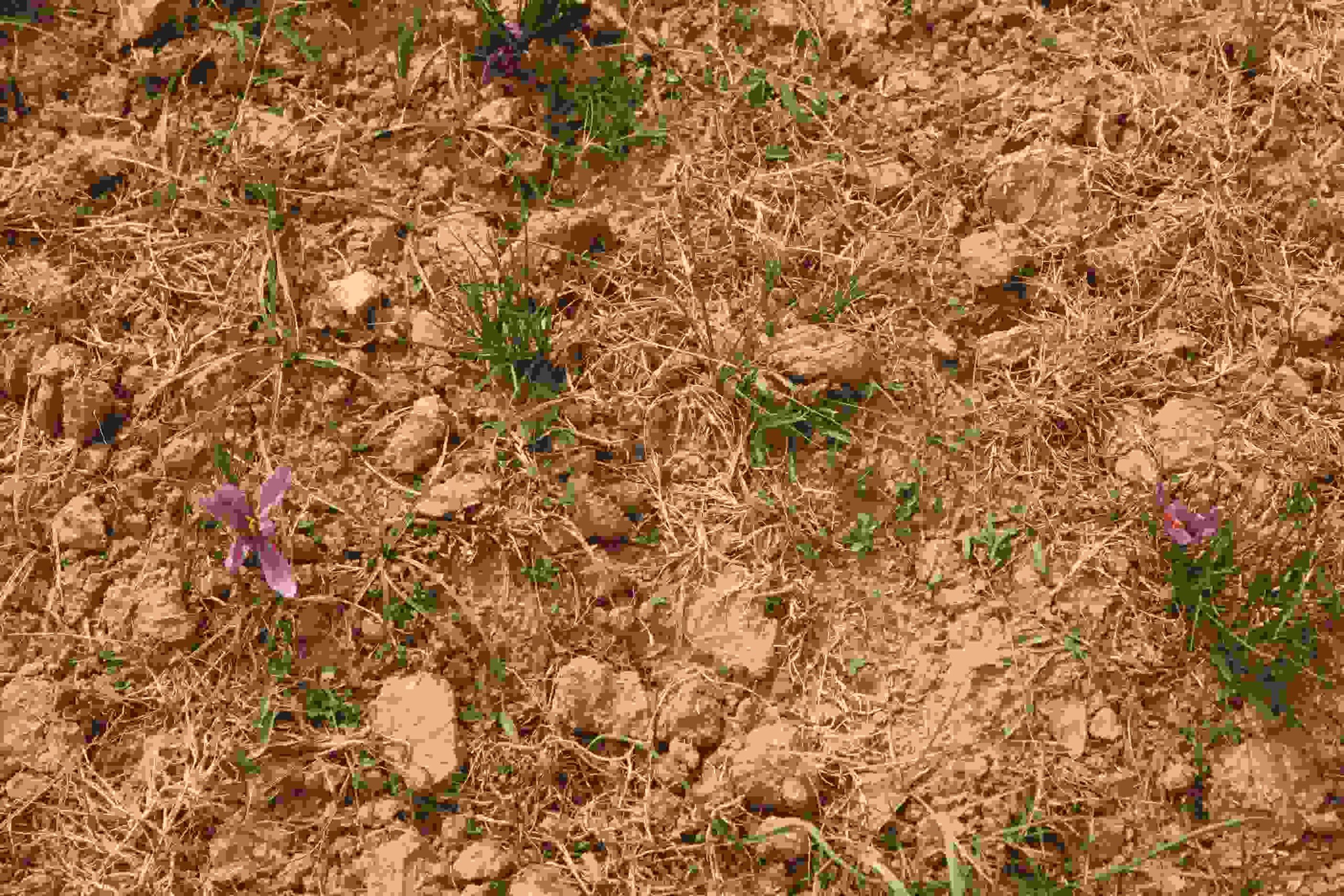
The morning light falls softly over Konibal village in Pampore, the heart of Kashmir’s “saffron bowl.” In the vast stretch of cracked, ochre earth, Ghulam Muhammad Sheikh, a 62-year-old farmer, bends low, parting the brittle clumps of soil with trembling fingers. For a long moment, he searches in silence. Then he sighs, holding up a single purple crocus flower, the only one he can find. “Earlier, one kanal gave 40 tolas of saffron,” he says, shaking his head. “Now even 20 kanals barely give 50 tolas.”
Once the pride of Kashmir, Pampore’s saffron fields lie silent, yields down 90%, the sharpest fall ever recorded.
Drought and decay threaten to erase centuries of heritage.
Will the world’s most precious spice survive in its homeland?
🎥 @Murtazabilal__ pic.twitter.com/dpPYeF5W2L
— The Kashmiriyat (@TheKashmiriyat) November 4, 2025
“It’s finished,” he adds quietly. “The land that once smelled of saffron now smells of dust.”
Once, this entire plateau between Pampore, Chandhara, and Konibal was known for its deep, loamy karewa soil, aerated, well-drained, and rich in organic carbon. The unique topography of the Pampore karewas, uplifted plateaus formed by ancient lake sediments, made them perfect for saffron cultivation. Each October, the first cold breeze from the Pir Panjal would trigger the delicate crocus blooms, and the entire landscape would shimmer violet under the morning sun.
That delicate cycle has now broken. Repeated dry spells, erratic rainfall, and vanishing snow cover have disrupted the soil’s moisture regime. The corms that lie dormant underground for most of the year now rot in parched or compacted soil. Once-planned irrigation canals have fallen into disrepair, and most tube wells installed under government schemes either run dry or clog with silt.
“Earlier, we could predict the weather,” Sheikh says. “Rain would come before the bloom. Now, it comes when we are done plucking, or not at all.”
Only three years ago, his fields blazed purple every November, filling the air with the scent of zafran and the chatter of seasonal workers who came from Pulwama and Shopian to harvest the flowers. Each family here lived by a rhythm, digging corms in June, planting in August, and picking flowers in October and November. Today, the rhythm has fallen silent.
According to growers, Kashmir’s saffron production has fallen by nearly 90 percent over the past decade. What once brought colour, identity, and livelihood to thousands of families now teeters on the edge of extinction. “Production this season is barely 10 to 15 per cent of normal,” said Abdul Majeed Wani, president of the Saffron Growers Association of Jammu Kashmir. “Every year it is decreasing, and the government doesn’t seem serious about safeguarding this sector.”
Official records support that fear. The area under saffron cultivation has shrunk from 5,707 hectares in 1996–97 to just 2,387 hectares in 2020, a 65 percent loss in less than three decades. Production, once exceeding 15 tonnes a year, now hovers below ten.
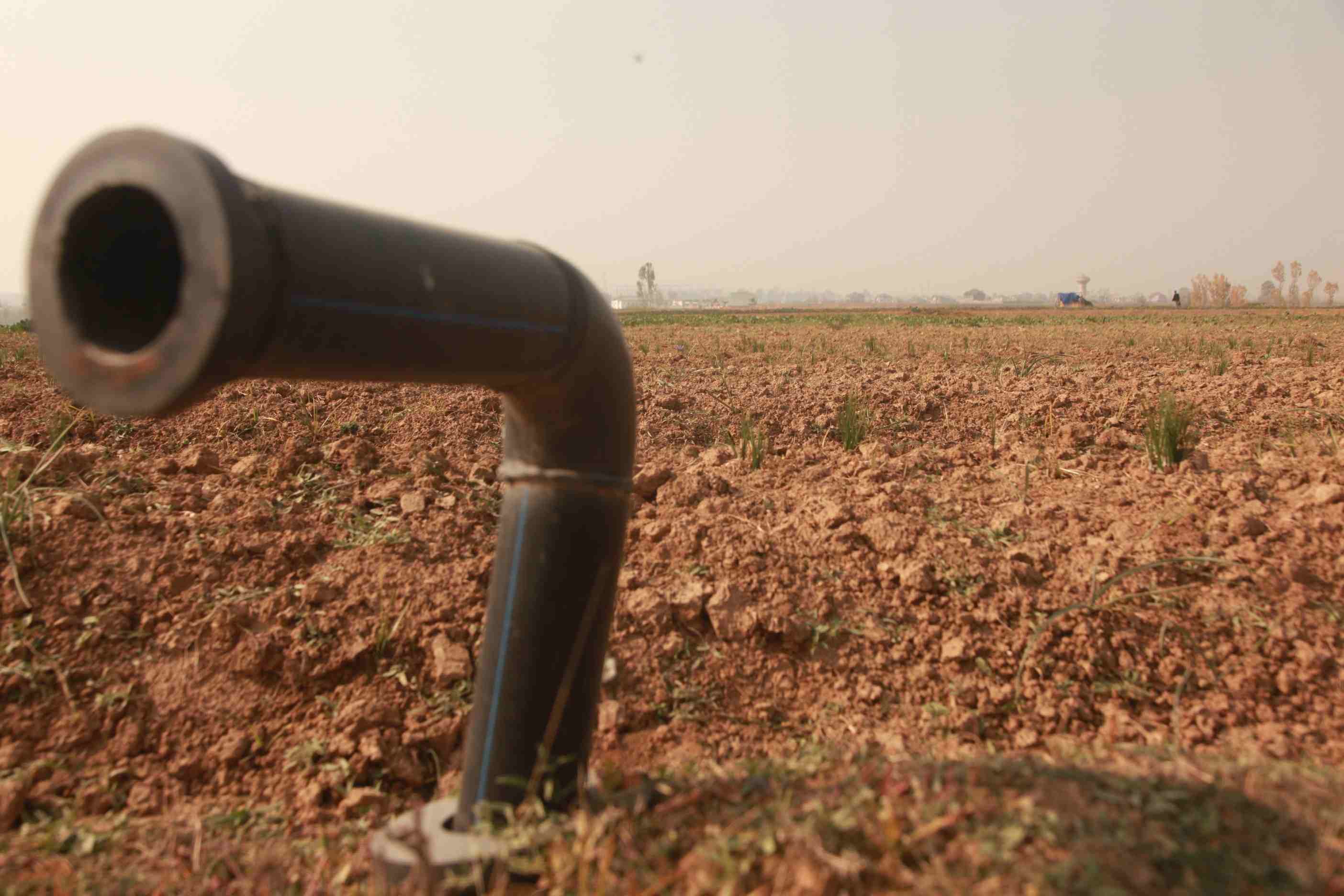
The government’s National Mission on Saffron (NMS), launched to rejuvenate irrigation and provide better corms, has done little to reverse the trend. Dozens of tube wells and sprinkler systems lie defunct, either due to faulty construction or lack of maintenance. “They dug tube wells, but water doesn’t reach the corms,” Sheikh said. “The soil is thirsty. Unless the fields are deeply watered, saffron won’t come back.”
Agricultural scientists agree that saffron needs deep percolation irrigation, not surface sprinkling. Without sustained soil moisture, the corms fail to multiply, and the next season’s yield collapses. The problem, farmers say, is not only mismanaged infrastructure but also the gradual transformation of Pampore’s landscape, where industrial dust, housing expansion, and unplanned roads have eaten into the very karewas that once fed Kashmir’s most fragrant crop.
Ground-breaking research
In July 2025, scientists at Sikkim University published a landmark study in Scientific Reports (Nature Portfolio), revealing that saffron, once thought to grow successfully only in Kashmir’s ancient karewas, can flourish under fully organic conditions in the Eastern Himalayas.
The discovery came from a two-year experiment led by Dr. Laxuman Sharma and Dr. Shanti S. Sharma, who sought to determine whether the fragile, climate-sensitive crop could adapt to new terrain. They planted Kashmiri saffron corms, sourced from Pampore’s traditional fields, across nine experimental sites in Sikkim, stretching from Khamdong in East Sikkim to Kyongnosla near the Indo-China border, at altitudes between 1,404 and 3,300 metres.
The results were striking. All nine sites flowered in the first growing season, marking a significant biological success for a crop that responds poorly to even minor shifts in temperature or soil texture. Even more remarkably, five of those sites flowered again in the second year, this time from daughter corms that had multiplied in Sikkim’s own soil. For scientists, this meant saffron had not only adapted but had begun to establish a self-sustaining reproductive cycle, something no other region outside Kashmir had previously achieved.
The researchers found that the soil composition of Sikkim mirrored the best physical attributes of Kashmir’s karewa terraces, loose texture, moderate drainage, and fine silt content, but with one defining difference: fertility.
Laboratory analysis revealed that Sikkim’s soils contained far greater reserves of nitrogen and organic carbon, the two nutrients most vital for saffron’s growth and flavour development. Nitrogen levels ranged from 214 to 778 kilograms per hectare, while organic carbon reached up to 2.6 percent, among the highest values recorded in any saffron-growing region worldwide.
By contrast, Pampore’s soil, once regarded as the global benchmark for saffron, now shows only 196 kilograms of nitrogen per hectare and significantly lower organic carbon levels. These findings confirm what Kashmiri farmers have long suspected: their soils, exhausted by decades of monocropping, erratic rainfall, and industrial dust, have lost the biological vitality saffron depends on.
“The decline in Kashmir’s saffron is linked to low soil organic content, falling moisture, and nutrient imbalance,” Dr. Shabir Khan, a microbiologist from Bandipora told The Kashmiriyat. “In contrast, ” he said, “Sikkim’s long-term organic regime has built a healthy soil system capable of sustaining saffron growth without chemical support. The soil there breathes; it’s biologically alive.”
The Sikkim study traces Kashmir’s saffron decline through hard numbers, 15.95 tonnes of annual output in 1997, shrinking to 9.6 tonnes by 2015, a loss of nearly 40 percent in less than two decades and in 2025, the story is the worst. The authors of the paper attribute the fall to a combination of climate stress, shrinking irrigation channels, overworked soil, and poor organic management, warning that without intervention, the crop could vanish from the Valley altogether.
In contrast, the researchers, describe Sikkim’s success as a blueprint for sustainable revival, where ecological integrity replaces chemical dependence. “If saffron has a future in South Asia,” Dr. Shabir noted, “it may look more like Sikkim than the Kashmir of today.”
Industrialisation and the Slow Death of Soil
While the Sikkim study highlights the strength of organic soil systems in sustaining saffron, the reality in Kashmir’s Pampore region tells an opposite story, one of steady degradation. Over the last two decades, the karewa plateau, the elevated tableland that once produced the world’s most aromatic saffron, has come under growing pressure from rapid industrialisation.
A cluster of cement factories, brick kilns, and industrial units has expanded across the Pulwama–Pampore belt, particularly in Khrew, Wuyan, Chandhara, and Lethpora, areas that were once synonymous with high-quality saffron. The industrial spread began in the early 2000s and has accelerated with new mining leases and construction demand. Farmers say the change is visible in every harvest, fewer flowers, drier soil, and a layer of fine grey dust that now settles on rooftops, trees, and fields.
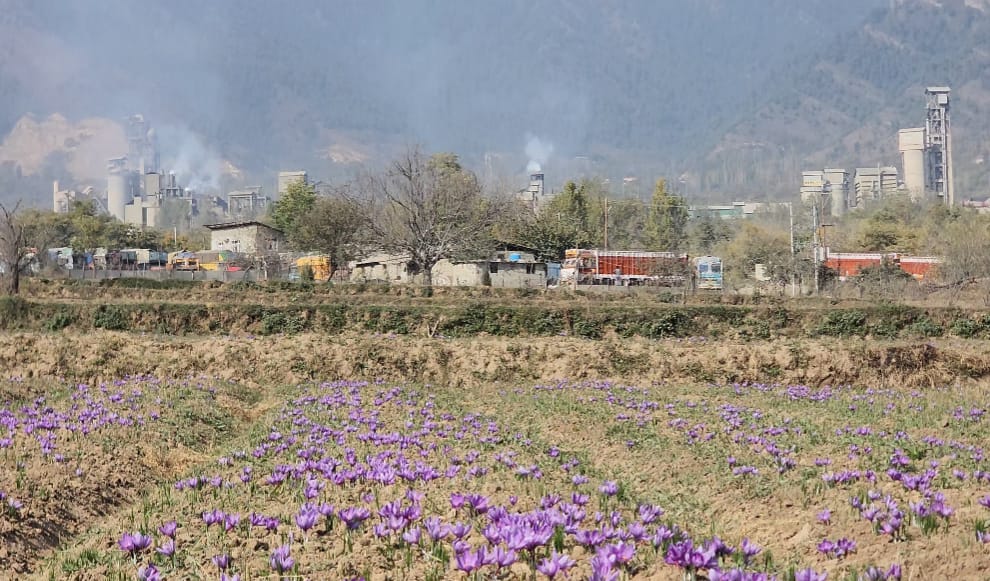
“We can feel the dust when we turn the soil,” said Ghulam Muhammad Sheikh, the Pampore farmer. “Even after rain, the surface turns white and hard the next day. The land doesn’t breathe like it used to.”
When farmers talk about “Pampore saffron,” they don’t mean the town alone. The term embraces a much wider belt of saffron-producing villages, Khrew, Chandhara, Ladoo, and Konibal. that together once formed the vibrant heart of Kashmir’s saffron plateau.
Khrew, located about ten kilometres from Pampore, was once among the largest contributors. In the 1980s, thousands of acres there bloomed each autumn, producing some of the region’s finest saffron. Today, that legacy has almost disappeared. Barely 20 to 30 kanals remain under cultivation, tended by only two landowners who continue the struggle to keep saffron alive.
“Back then, every family here grew saffron,” said a local farmer. “Now only two of us still try. Year after year, the yield drops, and soon, even these last fields may vanish.”
Farmers in Khrew point to one overwhelming reason: pollution. Seven cement factories now operate in the area, all within proximity to the former saffron fields. Of these, two claim to have pollution-control systems, though locals doubt their effectiveness. The remaining five, farmers allege, operate without any emission filters.
The result is a choking cloud of cement dust and toxic gases, sulphur dioxide, nitrogen oxides, and fine lime particles, that settle directly over the fields. “These pollutants have poisoned the soil,” said another farmer. “The same land that once produced saffron now struggles to grow even grass.”
If the situation continues, residents warn, Khrew’s centuries-old saffron may vanish entirely, erased by the industrial sprawl that rose on its soil.
Environmental scientists attribute the decline to cement dust deposition, which subtly but steadily alters soil chemistry. Microscopic particles emitted from kilns and crushers contain high concentrations of lime, calcium, potassium, and trace heavy metals such as chromium and nickel. When these particles settle on cropland, they dissolve into the upper soil layer, raising its pH and alkalinity, while simultaneously killing the microorganisms responsible for decomposing organic matter.
“Cement dust is extremely alkaline and rich in calcium, potassium, and heavy metals,” explained Dr. Dr. Shabir Khan. “When this dust settles on farmland, it raises the pH and disrupts the soil’s biological system. The microbes that recycle organic matter and fix nitrogen are the first to disappear.”
The loss of microbial activity, he said, sets off a chain reaction. Without decomposers, the organic carbon content of the soil begins to fall. Nitrogen, which saffron requires for healthy corm multiplication, declines next. Meanwhile, calcium and potassium levels increase, creating what soil researchers describe as nutrient inversion: a soil rich in minerals, but poor in life. “It looks chemically strong but biologically dead,” Dr. Shabir told The Kashmiriyat. “That’s the irony. The mineral readings appear adequate in lab tests, yet saffron won’t grow. The corms suffocate because the soil no longer exchanges gases or retains moisture properly.”
Abdul Majeed Wani, president of the Saffron Growers Association of Jammu Kashmir confirmed the reduced shelf life of corms stating that, “Earlier, corms lasted for years if we rotated them properly. Now, even new corms die. We have to replant every season, and even then, half of them fail.”
Pointing out to the callousness of government, Dr. Shabir said, “Despite saffron being part of Kashmir’s heritage and the lifeline of thousands of families, there is an alarming scarcity of research on how industrial activity and soil degradation are impacting its survival,” said a senior agricultural scientist at SKUAST-K, requesting anonymity.
The physical transformation of the karewa is unmistakable. What was once a loose, porous mix of silt and clay, ideal for aeration, has turned dense and crusted. “The rain that once soaked gently into the saffron beds now runs off quickly, eroding the fragile topsoil. The ground is like baked clay. The change is so visible that older growers can identify industrially exposed fields by colour alone, a paler, greyish-brown that no longer darkens with moisture,” another farmer said.
Despite the mounting evidence, government monitoring reports remain largely silent on the impact of industrial emissions on saffron fields. There is no continuous soil health monitoring mechanism for the karewas, and emission checks for cement plants are sporadic. Officials at the Jammu and Kashmir Pollution Control Committee (JKPCC) have often cited “lack of manpower and equipment” for limited enforcement.
Experts warn that inaction could have irreversible consequences.
“Once the microbial and organic structure of the karewa collapses, it takes decades to rebuild,” Dr. Shabir said. “You can add fertilizers, you can irrigate, but without living carbon, the soil cannot recover. What is happening in Pampore is a slow death, the death of soil itself.”
For the farmers who have lived on these plateaus for generations, the loss goes beyond yield or income. It is the erosion of a landscape that has defined their identity. Saffron once connected families, seasons, and festivals. Today, it connects only dust, debt, and despair.
Farmers on the Brink
According to official data, Kashmir’s saffron output dropped from 17.33 metric tonnes in 2021 to 14.87 tonnes in 2022, and barely 14.9 tonnes in 2023. But growers say these figures don’t capture the full extent of collapse. “On the ground, it’s not 30 or 40 per cent less, it’s 80 or 90,” said Abdul Majeed Wani. “We’re watching the saffron vanish in front of us.”
From over 5,000 hectares of active cultivation in the 1990s, only a small fraction remains productive. The rest has either gone barren or been converted into housing colonies, orchards, and brick kilns. In Konibal, veteran grower Ghulam Muhammad Sheikh, who has farmed saffron since childhood, describes the crisis as both economic and moral. “Earlier, one kanal produced 40 to 50 tolas of saffron. Now, even 20 kanals hardly give 50 tolas,” he said. “That’s not farming, that’s survival.”
Sheikh blames a mix of poor seed quality, government missteps, and failing irrigation. “They gave subsidies and told people to plant new seeds, but those seeds would die,” he recalled. “The fertilizers didn’t work; the soil wasn’t getting enough moisture. The corms were too sensitive, they failed as soon as they were planted.”
He believes only about five percent of land in the Pampore area still grows saffron successfully. The rest, he says, lies dormant. Asked what might help, Sheikh’s answer is simple. “New seeds should be brought from Iran and planted again. People are ready to buy if the government makes them available.. not free money, just real corms that survive,” he said.
But he insists that without water, no intervention will work. “The way they manage water now isn’t effective,” he said. “They drilled tube wells, sprayed a little water, but it never reached the roots. The fields need deep watering, like in Letpora where the irrigation channel still works. If that channel were extended here, farmers could take water when needed, then saffron could live again.”
Among those still holding on is Bilal Ahmad Dar, a farmer from Konibal who has cultivated saffron for four decades. He says this year’s yield is “barely five percent” of what it used to be. “I spent one lakh rupees on my saffron land,” he said, “and got only ten tolas of saffron. Even if I sell it for two thousand rupees per tola, I’ve lost eighty thousand. Compare that to an Italian apple orchard, that earns one lakh a year. Tell me which farmer would still choose saffron?”
Dar believes irrigation failure is at the root of the crisis. “We’ve told the authorities many times: if you can’t provide water, let us shift this land to horticulture. We’ll grow apples or plums, build boundary walls, survive somehow. But they don’t agree.”
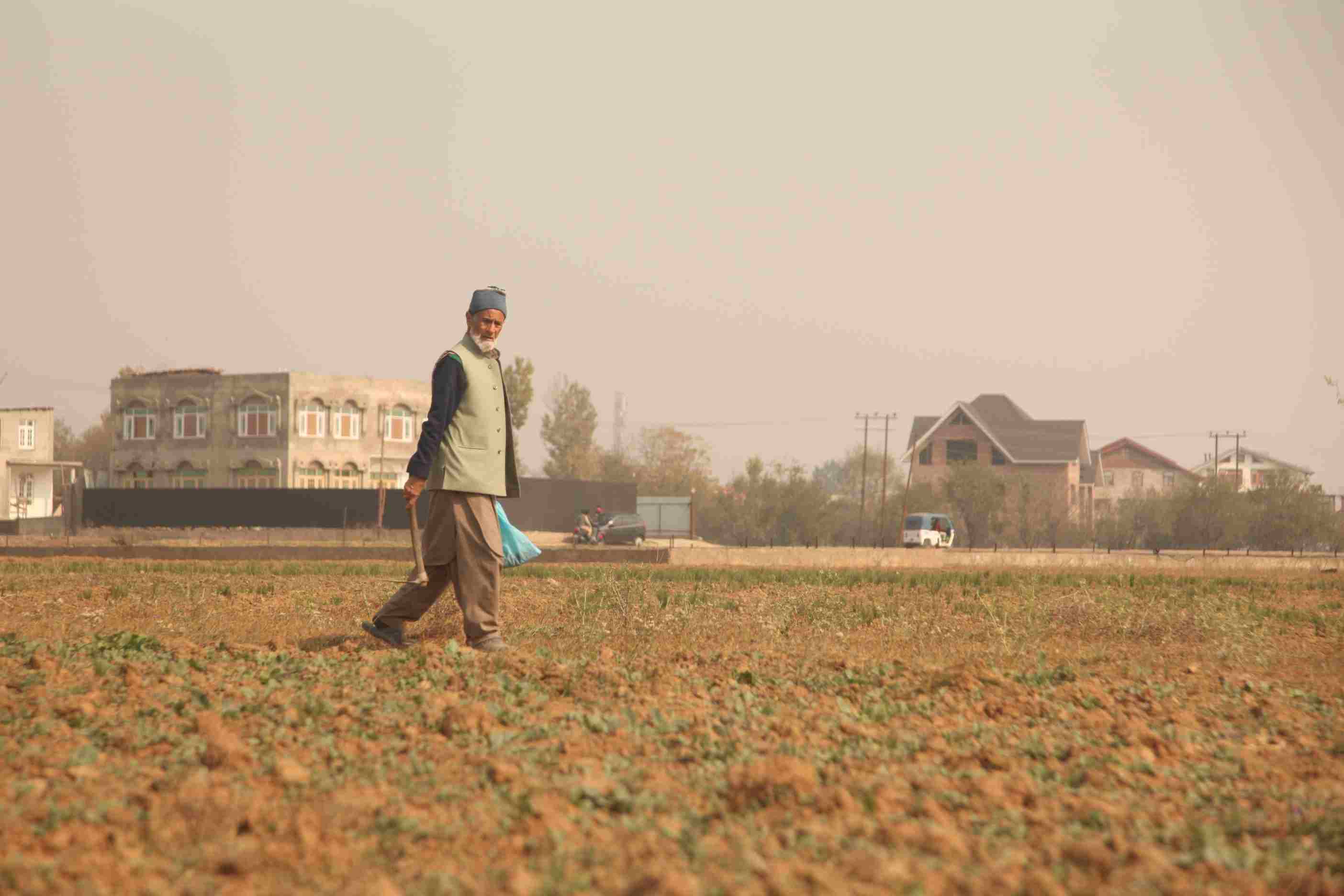
The frustration runs deep. “When floods come, people get relief. We face droughts, but no one comes. Officers sit in offices, no one visits the fields. We’ve even requested our MLA, Mr. Hasnain Masoodi, but nothing has changed.” For many, the mounting losses have led to despair. “Farmers are finished,” Dar said.
“Some have KCC loans of two or three lakhs and no way to repay. The irrigation pipes are broken, the tube wells dry, the market dead. The saffron factory at Dusoo is full of last year’s unsold stock.” He paused, looking across his fields. “We can’t even fence our land to protect it from porcupines. They don’t allow orchards, they don’t allow tubewells, they don’t even allow us to fence. What should we do? We’re trapped.” Still, Dar insists his appeal is not for sympathy but survival.
“Let the government form a team, see our loss, give us relief or permission to plant other crops. We want to work, not beg. But if things continue like this, farmers will lose not just saffron, they will lose hope itself.”
Still, like most in Pampore, Dar’s hope is tethered to both nature and faith. “It depends on Allah,” he said, looking across the dry expanse. “Today things are bad, but if nature supports us, it won’t take long to recover. If not, even the name of saffron will disappear from Pampore.”
For families who have cultivated saffron for generations, the loss is not just agricultural, it is cultural. The spice that coloured Kashmiri wazwan, perfumed Khanqahs, and marked every festival has become a symbol of endurance under strain. “Reviving saffron isn’t just saving a crop,” said Shabir Khan. “It’s saving a tradition, a culture, and a way of life rooted in this land.”
In Sikkim’s green terraces, saffron has found a new beginning under organic soil and mountain mist. In Pampore, it endures as memory, a faint fragrance clinging to a soil that once defined Kashmir itself.

Rifat Reshie
Rifat Reshie ia a video journalist from Srinagar. A fresher from Cluster University, Rufat works as video journalist for The Kashmiriyat.

Murtaza Bilal
Murtaza Bilal is a photojournalist with The Kashmiriyat. He is a journalist graduate from Cluster University.