
Rayees Shah
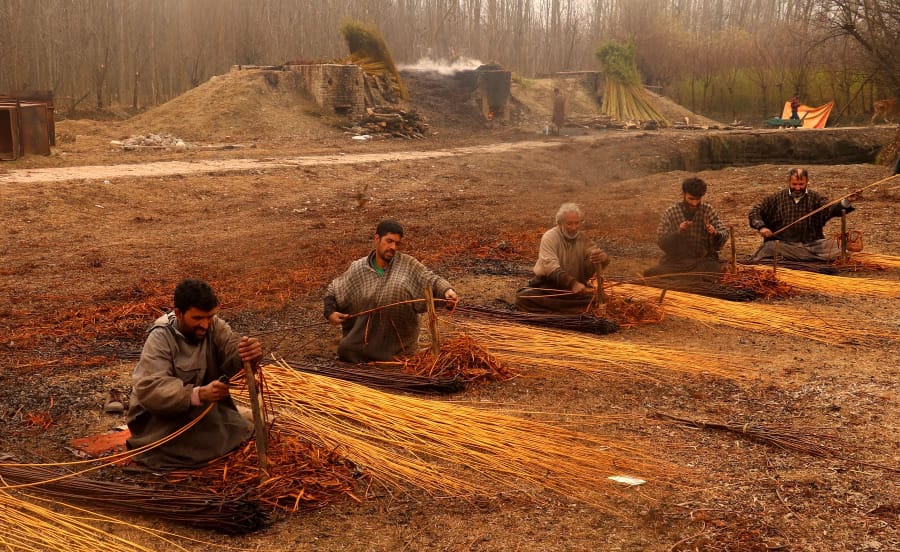
Wickerwork, a well-known art in Kashmir, is slowly fading away as many artisans associated with the industry are switching to other jobs to earn their livelihood.
Wicker, species of tree also known as Shallows, are found in a Shalabug village of central Kashmir’s Ganderbal district. In Shalabug village, which won the title of Model Village back in 2002, nearly 6000 people depend on wickerwork to earn a living.
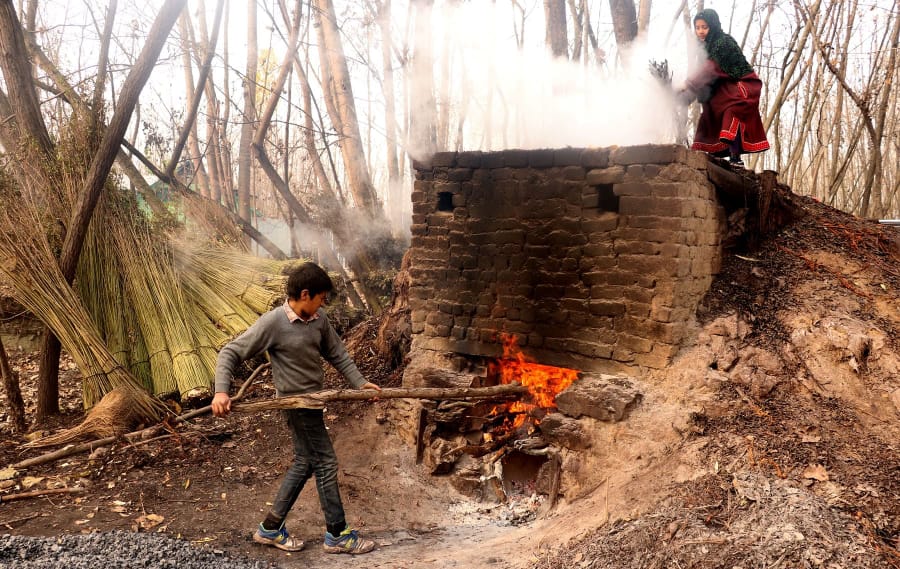
Since the wicker sticks are grown in murky waters, it takes Muhammad Yusuf Lone and his workers four days to prepare these twigs in order for them to be able to use them to prepare various products. After these twigs are taken out from the mud, these twigs are washed and cleansed. Then the water is boiled in a huge container made of iron. The outer structure of this container is formed of bricks.

The fire is ignited and prepared under the structure for one day and one night and the willow twigs are put inside the structure, colloquially known as ‘Boiler.’
These straws are put inside the boiling water to soften the cover and after six hours are taken out from the boiler. In the last phase, when the straws are cooled off and the outer cover is softened, these straws are skinned off and bundled, ready to be used for making kangris (firepots) and other wicker products.

- News Deskhttps://thekashmiriyat.co.uk/author/kashmiriyat/

- News Deskhttps://thekashmiriyat.co.uk/author/kashmiriyat/

- News Deskhttps://thekashmiriyat.co.uk/author/kashmiriyat/
- News Deskhttps://thekashmiriyat.co.uk/author/kashmiriyat/
