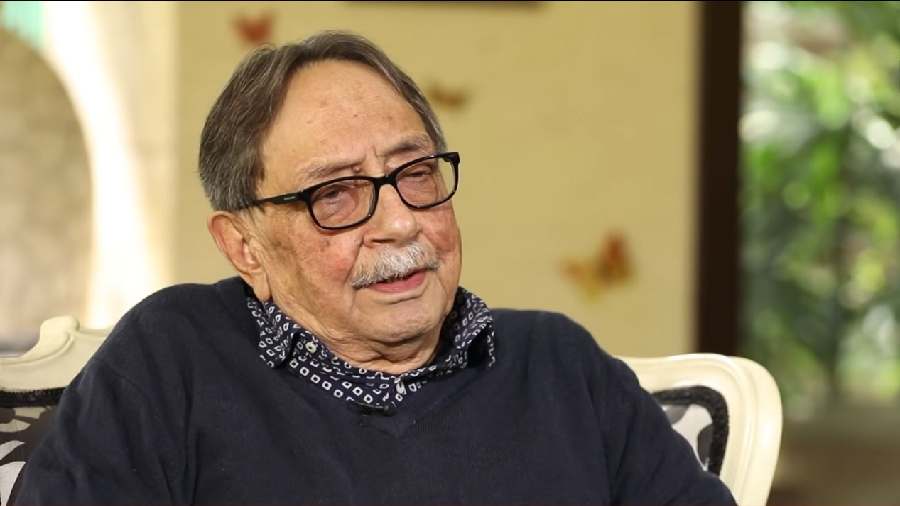
A.S. Dulat, the former chief of India’s external intelligence agency RAW, has once again found himself at the center of a political storm — this time over a claim in his latest book The Chief Minister and the Spy, which was reported to suggest that veteran Kashmiri leader Dr. Farooq Abdullah had “privately supported” the abrogation of Article 370.
The report, published in the Hindustan Times, sparked immediate uproar in Kashmir’s political circles. Leaders across party lines lashed out, accusing the national media of twisting facts and “mischievously” attributing support to Abdullah for the controversial 2019 decision to revoke Jammu Kashmir’s special status.
A.S. Dulat has made a name for himself not just as a top intelligence officer but as an unusually outspoken figure in India’s otherwise reticent spy community. His books and interviews offer rare glimpses into the backchannel world of Kashmir politics, often peeling back the curtain on relationships that many would rather leave undisturbed.
But with his candor has come controversy — and with his latest book, The Chief Minister and the Spy, Dulat is once again in the headlines. While he maintains that his intentions are honest and his narratives grounded in fact, the political implications of his words often reverberate far beyond the page.
As Kashmir continues to grapple with the aftershocks of Article 370 and an uncertain political future, one thing is clear: Dulat’s observations, whether welcomed or reviled, will continue to provoke discussion — and discomfort — in equal measure.
Dulat Clarifies: “Yeh Badmaashi Hai”
Responding to the controversy, Dulat issued a categorical clarification in a phone interview with a Srinagar-based media outlet. “Yeh badmaashi hai,” he said, condemning the interpretation of his writing as dishonest and misleading.
He clarified that Farooq Abdullah never supported the abrogation of Article 370. “What Dr. Abdullah actually said was that he was deeply hurt by the abrogation and felt that the leadership in Jammu and Kashmir should have been consulted before such a monumental decision was made,” Dulat explained.
This isn’t the first time the former intelligence chief has stirred political waters in Kashmir. In fact, Dulat has made a career of candid and often controversial revelations about the region’s key players.
Past Controversies Sparked by Dulat’s Disclosures
On Mufti Mohammad Sayeed
In an interview with Karan Thapar, Dulat shared an anecdote about the former Jammu and Kashmir Chief Minister Mufti Mohammad Sayeed’s fondness for whiskey — a seemingly trivial detail that nevertheless made headlines due to the conservative image Mufti projected publicly. Critics accused Dulat of being needlessly personal, while others saw it as another example of his unfiltered style.
On Syed Ali Shah Geelani
In his earlier memoir Kashmir: The Vajpayee Years, Dulat made a stunning claim about the late separatist icon Syed Ali Shah Geelani. He alleged that Geelani, widely regarded as a hardliner and India’s staunchest critic, had in fact been close to Mufti Mohammad Sayeed and had even played a role in helping him form the People’s Democratic Party (PDP).
Dulat went further, saying that the Indian government had on numerous occasions paid for Geelani’s airfare, medical treatment, and other expenses — a revelation that sparked outrage among nationalists and incredulity within separatist circles.
On Jagmohan and the Exodus of Pandits
Dulat’s comments on Jagmohan, the controversial former Governor of Jammu and Kashmir, also attracted criticism. In Kashmir: The Vajpayee Years, he wrote, “There is no doubt that Jagmohan must have felt relieved when Kashmiri Pandits were leaving because… he knew that if there was a massacre of the community, he would be held responsible.”
While Dulat clarified that there was no “massacre” of Pandits, his remarks were seen by some as downplaying the trauma of the exodus, while others viewed it as a rare admission of the state’s complicity — or at least passivity — during a dark chapter in Kashmir’s history.
On Bollywood movie- Kashmir Files
In 2022, Dulat dismissed the film The Kashmir Files as a “propaganda movie” without having seen it. He expressed his reluctance to watch it, stating that he did not engage with propaganda. This stance drew criticism from various quarters, with some accusing him of downplaying the significance of the Kashmiri Pandit exodus.
On Syed Salahudin
In his 2015 book Kashmir: The Vajpayee Years, Dulat revealed that in the early 1990s, Hizbul Mujahideen leader Syed Salahuddin had contacted the Intelligence Bureau to secure a medical seat for his son. Dulat claimed that Abdullah, then Chief Minister of Jammu Kashmir, facilitated this request. The Hizbul Mujahideen rejected this account, calling it a “Himalayan lie,” and asserted that Salahuddin’s son gained admission based on merit.
On Jamaat e Islami
Dulat has also said that during 1990s, he personally facilitated a secret dialogue process between the Indian government and key separatist leaders. This dialogue, led by Dulat himself, included then-Jamaat Amir Ghulam Muhammad Bhat, who, in 1997, made a groundbreaking call to end the “gun culture” that had dominated Kashmir’s separatist struggle.
Dulat stated that in 2004, the Jamaat-e-Islami took another major step in its evolving political approach. At its Majlis-e-Shura (central consultative council) meeting, the organization publicly committed itself to a “democratic and constitutional struggle,” effectively renouncing the use of violence in its pursuit of Kashmir’s political aspirations. This shift marked a departure from the organization’s previous more radical stance, aligning it more with the political mainstream and away from the armed militancy that had defined much of the separatist movement, the claim was rejected by Jamaat.

- News Deskhttps://thekashmiriyat.co.uk/author/kashmiriyat/

- News Deskhttps://thekashmiriyat.co.uk/author/kashmiriyat/

- News Deskhttps://thekashmiriyat.co.uk/author/kashmiriyat/
- News Deskhttps://thekashmiriyat.co.uk/author/kashmiriyat/
