


Suhail Dar
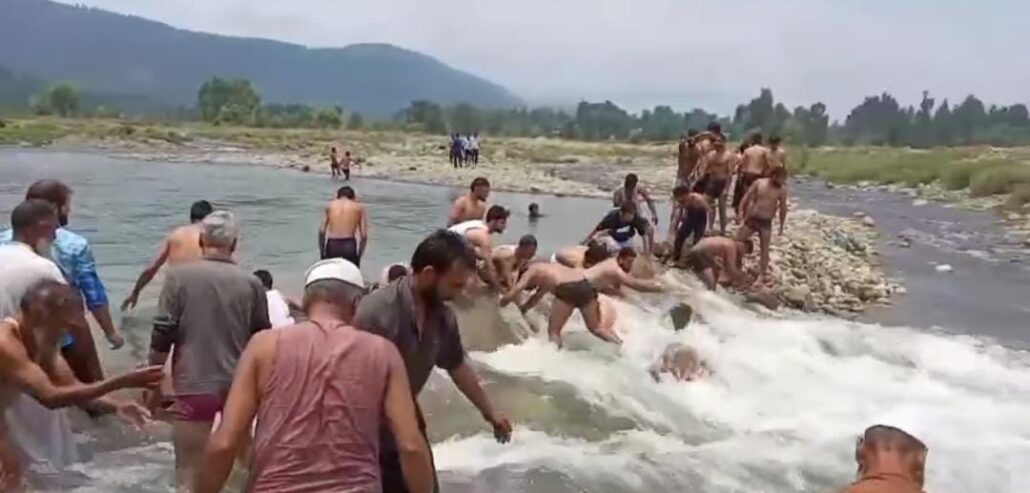
In a remarkable act of collective resolve, residents of several areas of south Kashmir’s Anantnag and Kulgam districts took it upon themselves to restore irrigation water to the Nandi canal, one of the largest traditional irrigation channels in the region, after years of official apathy and destructive mining practices rendered it nearly dry.
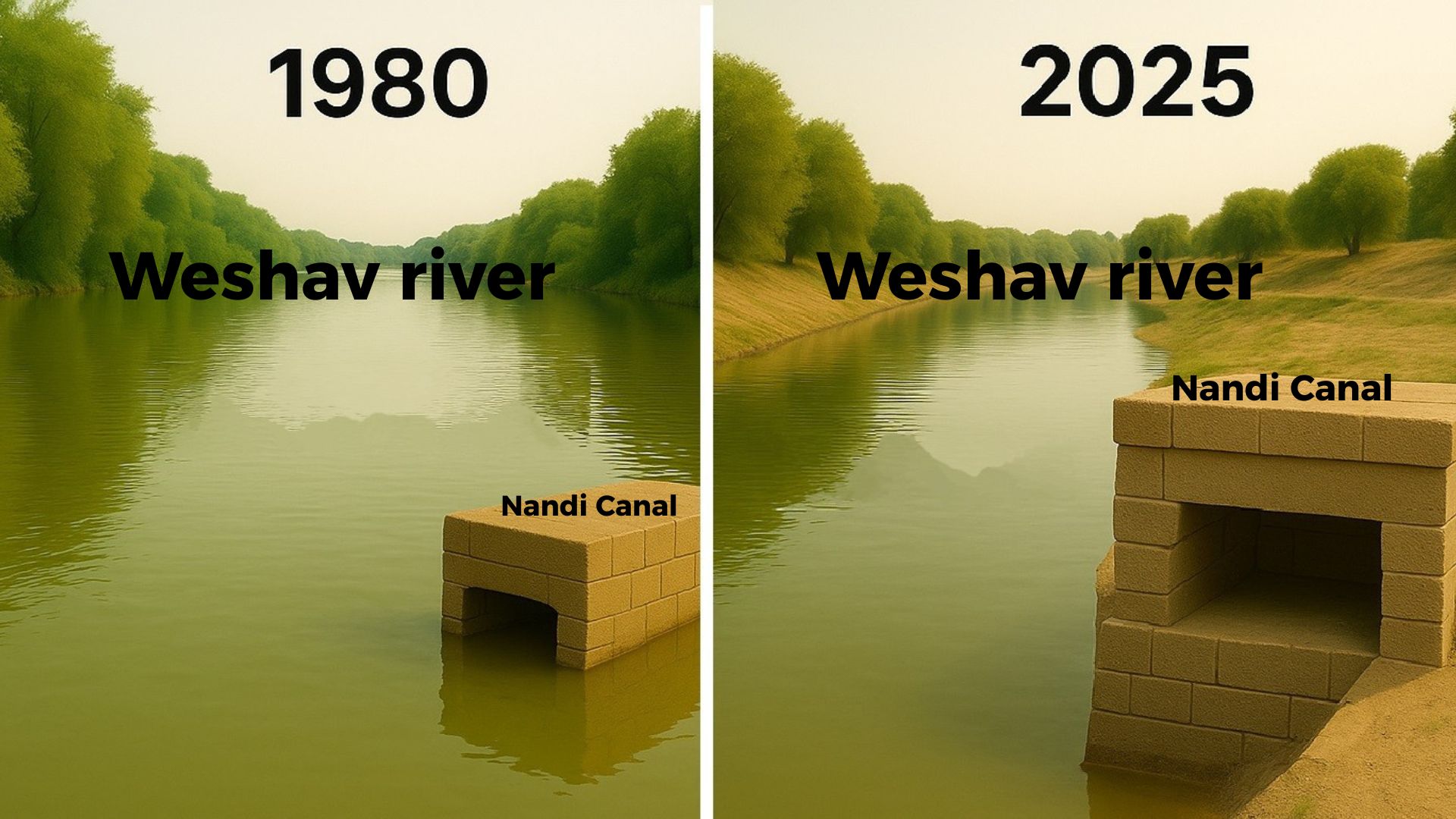
The water for the Nandi is drawn from the Weshav river, a once reliable source, which has seen a dramatic drop in water levels in recent years. Locals have blamed unregulated mining and extraction of riverbed materials, stating it has caused the riverbed to sink far below the canal’s traditional intake point.
MLA Devsar, Feroz Ahmad Shah recently said, “Unregulated and illegal mining has degraded the natural water catchments. This is not just an environmental issue, but a crisis that directly affects people’s lives, particularly farmers and rural households.”
An official from the Flood and Irrigation Department, Javid Ahmed, AEE Kulgam division, also acknowledged the mining crisis while speaking to The Kashmiriyat. “It is not just illegal mining, the whole mining is a problem. They go unchecked. There’s not just illegal, but legal mining is an issue,” he said. “We are also taking action against illegal constructions along the river banks.”
The situation has been worsened by less precipitation in the area, with farmers complaining that rainfall has become increasingly scarce and unreliable.
For weeks, fields lay parched while the canal, which serves hundreds of villages in Kulgam, Anantnag and beyond, remained abandoned by the authorities. But this week, it was the elderly farmers of the region who led the way, calling meetings in their villages and urging action when repeated pleas to the Irrigation & Flood Control Department were ignored.
“We wrote letters, we met officials, but nothing changed. Then our elders stepped forward and said — if the water won’t come to us, we’ll find a way to bring it back,” said Mohammad Aslam, a farmer from Batengoo, Anantnag.
On Monday, residents from the villages of Shamsipora and Sadsuna, hundreds of them, gathered together, guided by experienced indigenous farmers, to bring the Nandi canal back to life.
Near the intake point of the Nandi, where the Weshav’s flow had dropped too low to enter the canal naturally, they used traditional knowledge passed down through generations to build earthen and stone bunkers, temporary check-dams, across the river, raising the water level just enough for it to touch the mouth of the canal once again.

The technique is centuries-old, simple yet effective: by blocking part of the flow, the river is forced to rise slightly, allowing gravity-fed irrigation to resume.
“This is the reality now,” said Abdul Ahad, a 75-year-old farmer. “The water is down, and Nandi is up.” His statement captures the growing mismatch between natural water levels and manmade infrastructure in Kashmir.
Most canals, like the Nandi, were built decades ago and have remained at the same intake height ever since, even as mining and environmental degradation have pulled rivers deeper and further away. Numberdar, a village head that the canal has never been dug deeper to match the decreasing water level in Weshav. “The canal is as it was fifty years ago,” he told The Kashmiriyat.
Another elderly farmer from Sadsuna, Ghulam Rasool, put it bluntly saying, “Even if the river has only ten percent of the water it once had, that’s still enough for our fields, but only if the level of our canals comes down to meet it. This is ironical that not even once has the canal been dug deeper to match the water levels. It looks like we are banking on flood waters for feeding the canal.”
“Nobody in the department cared,” she said. “Throughout the year they don’t bother to desilt the canals, they don’t clean them, and when the water doesn’t come, they shrug.”
The villagers say the department’s neglect is not new, the canal is rarely cleaned, and no adjustments have been made to account for the new water realities. “It’s not just the Weshav. Canals all over Kashmir are dying because the government won’t adapt,” said another farmer.
Thanks to the villagers’ efforts, water has started flowing again in the Nandi canal. Smiles returned to the faces of farmers who had feared losing their crops. “We don’t need engineers who won’t act. We’ll listen to our elders,” said one local youth, joining others in reinforcing the makeshift bunkers with mud and brushwood.
Javid Ahmed, the AEE from the Flood and Irrigation Department, told The Kashmiriyat that “ninety per cent water is available” in the canal now. He acknowledged the people’s initiative and added, “This is the last canal and before it there are nearly 19 canals in Devsar, Noorabad, DH Pora, Tongri and others.”
“When the water is less in Weshav, it naturally reduces the water flow in canals,” he said. “We cannot cut water from any village and give it to others. The villagers can do that, the officials cannot do that.”
“The canals are fully charged. The fields require a lot of water as we had a completely dry season. At least for four more days, we need similar water,” he added.
He also said the Nandi canal, which starts from Lassipora, feeds more than 34 villages till Sangam. On desilting, he said, “Desilting has happened as the department has no budget for desilting.”
While the crisis has been temporarily averted, the villagers are clear, this cannot be their job every year. They’re now demanding that the irrigation department not only intervene but also redesign and re-engineer the canals to reflect the changed landscape.


- News Deskhttps://thekashmiriyat.co.uk/author/kashmiriyat/

- News Deskhttps://thekashmiriyat.co.uk/author/kashmiriyat/

- News Deskhttps://thekashmiriyat.co.uk/author/kashmiriyat/
- News Deskhttps://thekashmiriyat.co.uk/author/kashmiriyat/

