


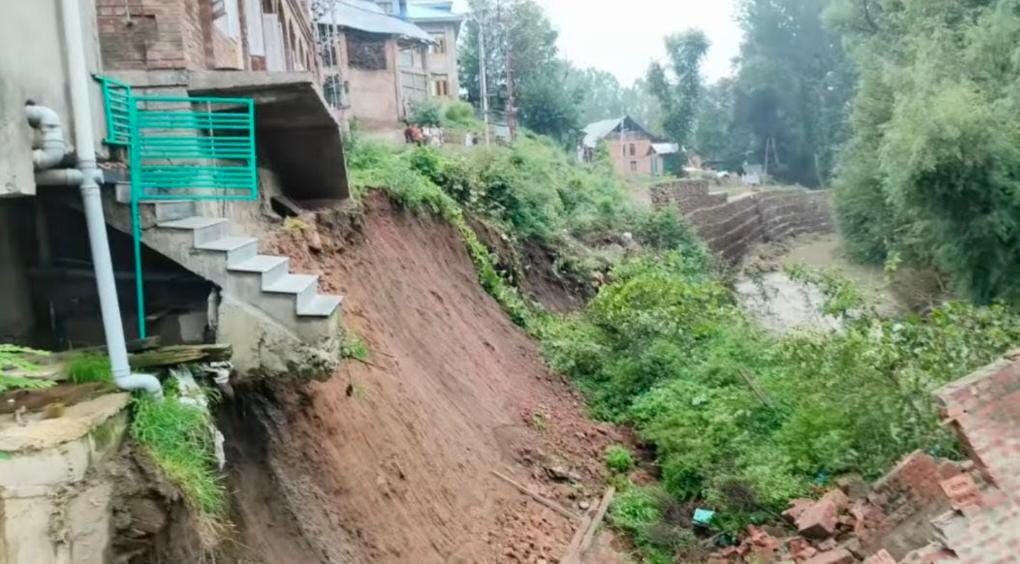
In the quiet slopes of Tanger in Ramban district of Jammu Kashmir, people wake up each morning unsure if the earth beneath their homes will still hold. Nearly four kilometers of land have started to sink, leaving around two dozen houses scarred with cracks. Some families have already been told their homes are unsafe; others continue to live inside walls that groan and shift.
“It feels like the mountain is breathing beneath us,” said Ghulam Qadir, a resident. “Every day the cracks get wider. We don’t know if we will make it through the night.”
Officials have moved in with survey teams and promises. The administration insists the situation is being monitored, but locals want more than assurances. They are asking for relocation and rehabilitation before disaster strikes. “We cannot wait for our homes to fall apart,” said Ghulam Qadir, standing outside his fractured kitchen wall.
What is unfolding in Tanger in September 2025 is not an isolated episode. The Chenab Valley has been steadily sinking into its own history of subsidence. In April 2024, Pernote village in Ramban was struck by sudden land sinking that forced dozens of families to leave their homes and ripped apart roads. The same year in Dalwa, heavy rains and water seepage triggered land movement, and experts warned that cutting steep slopes for roads and building multi-storey houses had amplified the danger.
In early 2025, Kalaban village in Poonch district saw more than seventy families uprooted after sudden subsidence swallowed their houses. In Doda, cracks appeared in houses and roads repeatedly in 2023, turning daily life into a struggle against an invisible, shifting ground.
Scientists have been warning about this pattern. “The soil here is water sensitive. Once seepage or rain increases hydrostatic pressure, the land starts to give way,” explained Professor Sahil Sharma of Jammu during the Dalwa incident. He also cautioned that reckless slope cutting for highways and tunnels has destabilized the mountains.
While natural geology has always made the Chenab Valley fragile, human activity has quickened the pace of collapse. The widening of the Srinagar-Jammu highway, tunneling for hydropower projects, and unplanned housing have all been pointed to in previous expert assessments.
For the families of Tanger, those expert debates feel distant. What matters to them is immediate safety, shelter, survival. As the autumn rains continue, their fear is simple: if the earth is already moving in dry weather, what will happen when the skies open?


- News Deskhttps://thekashmiriyat.co.uk/author/kashmiriyat/
- News Deskhttps://thekashmiriyat.co.uk/author/kashmiriyat/
- News Deskhttps://thekashmiriyat.co.uk/author/kashmiriyat/
- News Deskhttps://thekashmiriyat.co.uk/author/kashmiriyat/


