Arsalan Ahad Reshi
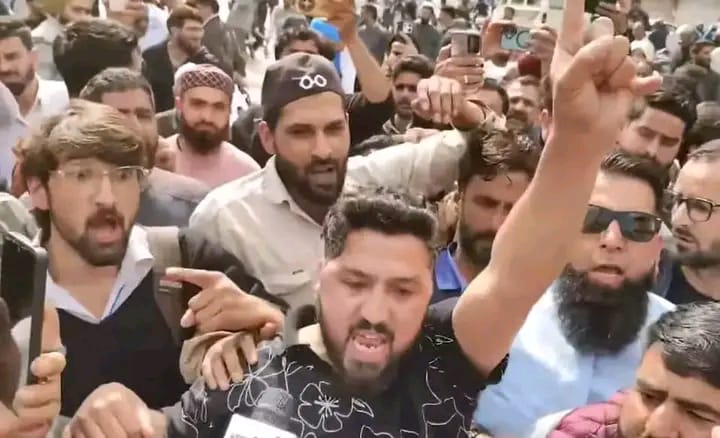
Days after the Pahalgam attack, random individuals with cameras are roaming around Kashmir, asking people provocative questions about the incident. They aren’t just asking out-of-context questions — they are deliberately trying to provoke people. One man, now viral on social media, was seen questioning a minor about the attack. The innocent boy, unaware of the situation or its implications, responded spontaneously.
A YouTuber — a woman previously expelled from Kashmir — returned after the attack and recorded a misleading and inflammatory video. Her intentions were clear, and her agenda of hate was transparent. These individuals are intentionally targeting those they know are unlikely or unable to answer confidently. They are selectively choosing interviewees, seeking reactions that fit their narrative.
Some self-proclaimed “ex-Muslims” in Lal Chowk went as far as to insult Islam on camera, later uploading the video to social media, where it quickly went viral. The intent was obvious: to create hysteria and disrupt public order. However, the people of Kashmir have learned how to respond maturely. Instead of reacting violently or causing unrest, a peaceful social media campaign was launched, leading to the arrest of the three individuals. They were made to apologize and were then sent home. Ironically, after returning safely, they uploaded a video accusing the Jammu and Kashmir Police of mistreatment — a claim that is now circulating online, with many demanding their re-arrest.
Another viral video shows a man confronting two women on a morning walk, pressuring them to chant “Bharat Mata Ki Jai.” When they refused, citing religious reasons, he used their response to accuse Kashmiris of disloyalty to India. These events, while disconnected from one another, serve a single purpose: to spread hate and keep tensions alive. That’s how some earn their fame — and money.
The real problem lies in how media has evolved. News is no longer about facts; it’s about chasing TRP ratings. Sensational, out-of-context stories take center stage during primetime, while issues that actually matter are ignored. Remember during demonetization when people were told that the ₹2000 note had a GPS chip? Now, those notes have disappeared from circulation — but no one is asking why. That’s because questioning such things would mean questioning the government, and, sadly, much of today’s media prefers pleasing those in power over practicing real journalism.
George Orwell once said, “Journalism is printing what someone else does not want printed; everything else is public relations.” Unfortunately, that’s all the media is doing today — public relations.
This country needs healing. The wife of the army officer who lost his life in the Pahalgam attack said, “We don’t want any hate against Muslims or Kashmiris; we want peace.” But even she wasn’t spared by the hate factory. A Twitter user cruelly wrote, “She should have been shot instead of her husband,” while another labeled her “more dangerous than the terrorists” — all because she spoke of peace. To them, hate is nationalism, and anyone advocating for love or peace is branded anti-national.
Despite the media’s efforts, their narrative didn’t succeed. Everyone they interviewed — even those who had lost loved ones — spoke positively about the people of Kashmir. No one blamed the common Kashmiri. In that, Kashmiris triumphed — over hate and in the hearts of many Indians.
In a televised debate, someone suggested a “Palestine-like solution” for Kashmir — a genocidal call cloaked in political language. Participants on the show even supported a Holocaust-like outcome. They claimed that the Pahalgam attack happened because of “insiders.” But any true insider in Kashmir would never harm a tourist — it would be self-destructive, damaging their own livelihood.
One Kashmiri man died trying to save a tourist — the sole breadwinner of his family. This act of bravery received no coverage in mainstream Indian media. Another Kashmiri saved 11 tourists, including a BJP leader — also ignored. These stories don’t fit the media’s agenda of hate, so they are conveniently omitted.
While tourism is slowly returning to normal, right-wing social media accounts continue to push divisive narratives. Their agenda has failed, and the people of Kashmir will ensure it continues to fail.
Hate lost. The right-wing narrative lost. The people of Kashmir won — against all odds. Hate must always lose, and love will always win.
Arsalan is a student of BBA and a political activist. The views expressed by him are his own.
- News Deskhttps://thekashmiriyat.co.uk/author/kashmiriyat/

- News Deskhttps://thekashmiriyat.co.uk/author/kashmiriyat/

- News Deskhttps://thekashmiriyat.co.uk/author/kashmiriyat/
- News Deskhttps://thekashmiriyat.co.uk/author/kashmiriyat/
