Friday, December 5Latest news and updates from Kashmir

WRITE-UPS

‘We only remember until the next outrage’— Attack on Ganderbal sisters shocks Kashmir

‘We only remember until the next outrage’— Attack on Ganderbal sisters shocks Kashmir

WRITE-UPS
Rayees Shah In the quiet village of Mirzapura, Sehpora, Ganderbal, a nightmare that no parent ever imagines unfolded at 10:15 a.m. A 14-year-old girl left home with her elder sister to gather vegetables, just 300 meters away. In those few steps, her childhood ended forever. A car pulled up, three men stepped out, and within moments the younger sister was gone, struck down so brutally that her body lay bleeding by the roadside, life stolen before anyone could even comprehend what had happened. Her elder sister, injured but alive, ran home screaming, her cries carrying the weight of a tragedy no words can contain. The village has fallen silent, disbelief written on every face. “Last year, a guest came into our house and parked his bike outside the gate. Someone came and burnt it. We fi...
‘The mountain came down on us’: Inside the aftermath of Kishtwar’s Chashoti cloudburst

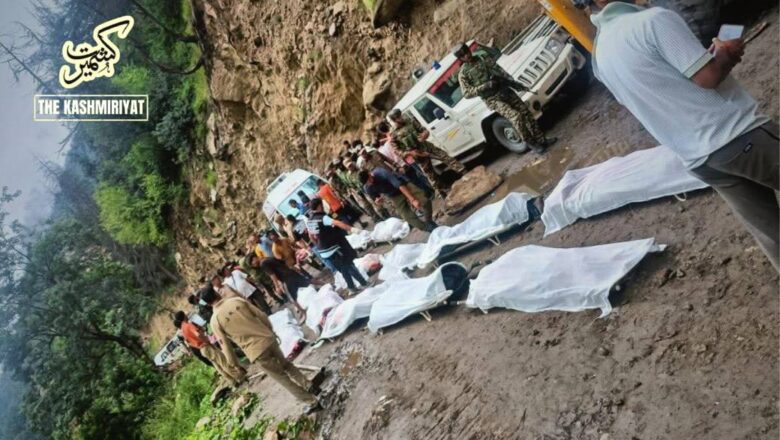
‘The mountain came down on us’: Inside the aftermath of Kishtwar’s Chashoti cloudburst

WRITE-UPS
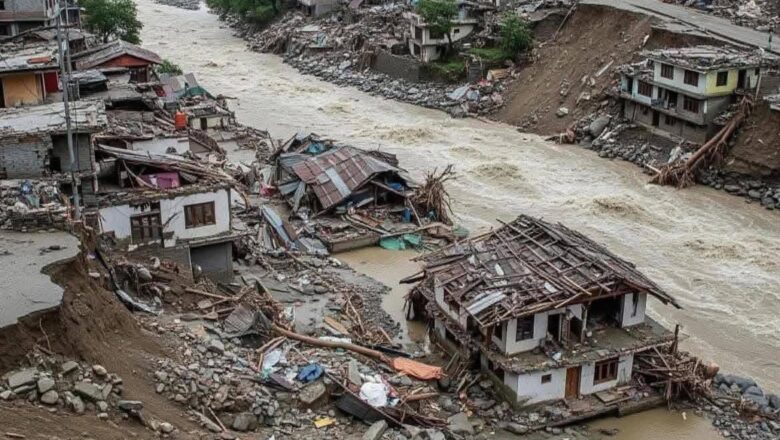
Qazi Shibli At 51, Sharma is a familiar face in Chashoti village, known for his dhaba that has long served as a resting point for pilgrims on their way to the Machail Mata shrine. On Thursday, his establishment was bustling with over 400 devotees when disaster struck. "I never imagined the ground beneath us could turn into a river in seconds. I lost my father and many others today,” he said, his voice breaking. https://twitter.com/TheKashmiriyat/status/1956047459815448654 The cloudburst hit around 11:30 a.m., on Thursday (August 14, 2025), unleashing torrents of water that swept away tents, makeshift kitchens, and even a CRPF post. Sharma’s dhaba, which had been serving food to hundreds, was engulfed by the flash floods. His father was pulled from the rubble, but many others remai...
The Himalayas are in revolt — when development becomes destruction

The Himalayas are in revolt — when development becomes destruction

WRITE-UPS
Lokendra Singh On a quiet Sunday afternoon in Dharali, a village nestled in Uttarakhand’s Uttarkashi district, the Kheer Ganga stream turned monstrous within seconds. What was once a gentle trickle became a roaring wall of water, mud, and boulders. It surged through the valley, demolishing homes, sweeping away bridges, and engulfing entire communities. “When we saw the huge amount of water flowing down, we panicked,” said Subhash Chandra Semwal, a 60-year-old from nearby Mukhba village. “We blew whistles to alert people, but they were swept away in moments.” The flash flood lasted less than sixty seconds, yet the devastation was immense. “This wasn’t just water. It was rage, mountain rage,” said Prateek Rawat, a 23-year-old student from Dharali whose family home barely survived a ...
Vanishing Verses: The disappearance of Henze, the Kashmiri Pandit women’s wedding chant

Vanishing Verses: The disappearance of Henze, the Kashmiri Pandit women’s wedding chant

WRITE-UPS
Prerna Bhat Henze (pronounced hen-zay) is the traditional opening chant of a Kashmiri Pandit Wanwun, a ritual folk song performed by women at weddings and other sacred ceremonies. The word itself comes from an old Kashmiri exclamation meaning “O ladies” and originally served simply to summon the women of the household at the start of the ceremony. Over time, Henze grew into a standalone genre: as noted by Kashmiri scholar P.N. Pushp, it is among the “oldest extant folk genres” of Kashmiri verse. In practice, Henze consists of a couplet sung in a measured rhythm, invoking blessings for the occasion. It belongs to the wider wanwun tradition chanted hymns based on Vedic formulas which in Kashmiri Pandit culture are “celebrated with pious chants or hymns” sung slowly by the women of t...
‘Wothya Chirag Beigh’: The folklore of fear and trauma in Afghan-era Kashmir

‘Wothya Chirag Beigh’: The folklore of fear and trauma in Afghan-era Kashmir

WRITE-UPS
Bhat Yasir One of the most enduring and chilling anecdotes from Kashmir’s Afghan period revolves around a man named Chirag Beigh. Though his historical existence remains disputed, the legend surrounding him offers a powerful metaphor for the terror that characterized Afghan governance in the region. According to oral tradition in Kashmir, when Beigh was appointed as governor and brought from Kabul by Kashmiri nobles in a bid to secure better governance after the decline of the Mughal order, he encountered a funeral procession on his entry into Srinagar. Without a trace of empathy, Beigh is said to have stopped the mourners, pulled off the corpse’s shroud, and sliced off the dead man’s ears. He declared, "Not only the living but also the dead should know that Chirag Beigh is coming to Ka...
‘New roads, lost livelihoods’: Bypass routes on Jammu-Srinagar highway choke local markets

‘New roads, lost livelihoods’: Bypass routes on Jammu-Srinagar highway choke local markets

WRITE-UPS
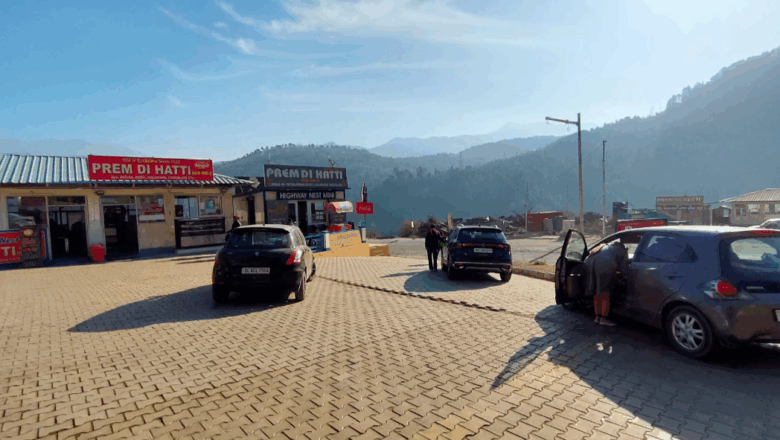
Danishwar Hameed In January 2024, Mughal Darbar in Ramban, a modest eatery run by Ghulam Hassan Dar, was so crowded that finding a table for lunch meant waiting in line. Truck drivers, tourists, and local commuters packed the small restaurant from morning till dusk. “Till last year, this place would be full. We served 400 to 500 plates daily. Now, barely 10,” Dar said, looking at the empty chairs around him. When I revisited the same place in July 2025, Dar sat idle for hours. I was his only customer all afternoon. “They built a road that doesn’t touch Ramban at all,” he said. “Smooth drive for cars, but we’re left behind, forgotten.” Dar’s story echoes through dozens of towns and stopovers along the Jammu Srinagar Highway (NH-44), especially in Qazigund, Banihal, Ramban, and B...
Three months after wedding youth shot dead in Jammu; Police say crossfire, family calls it murder

Three months after wedding youth shot dead in Jammu; Police say crossfire, family calls it murder

WRITE-UPS
Mohammad Parvez, a 21-year-old Gujjar youth from Nikki Tawi in Jammu, was shot dead on Thursday evening in what the police described as crossfire during a chase involving suspected drug peddlers. But his family has strongly rejected the police narrative, calling it a "cold-blooded murder." Parvez, a daily-wage labourer who had been married just three months ago, had left home around 3 p.m. with his brother-in-law to buy medicine for a sick family member. According to his family, they were passing through Surre Chak in the Phallian Mandal area when a group of men in plainclothes approached them. Mistaking them for cow vigilantes, the two grew scared and ran. Moments later, Parvez was shot. “My brother ran for his life, thinking he was being attacked. He didn’t even look back,” said Mo...
The incomplete return: Revisiting the home we never lived in

The incomplete return: Revisiting the home we never lived in

WRITE-UPS
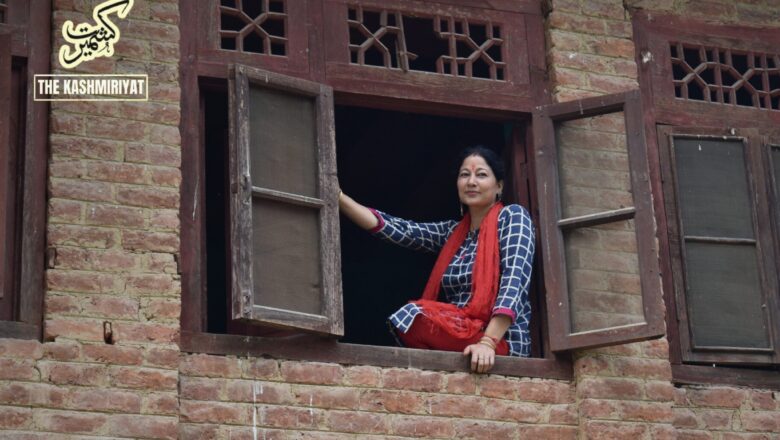
Prerna Bhat As the Jammu Kashmir administration rolls out fresh rehabilitation measures for displaced Kashmiri Pandits in mid-2025, the word “return” dominates headlines once again. New transit accommodations are under construction in Baramulla, Anantnag, and Shopian. Job packages, housing assistance, and priority identification for displaced families continue as part of the government’s ongoing effort to facilitate the community’s homecoming. But for a generation like mine, those born after the 1990 migration, this “return” is far more complex than a physical relocation. It is emotional, logistical, and perhaps most importantly, a reunion not only with land, but with memory, identity, and people. I have never lived in Kashmir, yet Kashmir lives deeply within me. For many of us bo...
Under Dogra rule, Kashmiri Muslims paid a tax to marry—’Zar-e-Nikah’ explained

Under Dogra rule, Kashmiri Muslims paid a tax to marry—’Zar-e-Nikah’ explained

WRITE-UPS
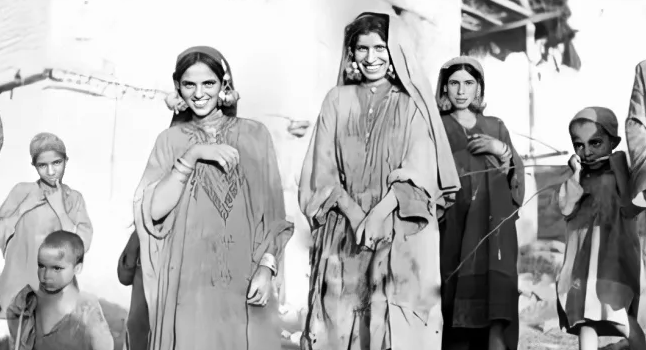
Under Dogra rule in Jammu and Kashmir from 1846 to 1947, the Muslim majority endured ritual and familial oppression through a matrix of exploitative fiscal policies. Among the most invasive of these was Zar-e-Nikah, a specific tax levied on Muslim marriages. This was not merely a matter of economic extortion; it symbolized the Dogra state's deliberate intrusion into the personal lives of Kashmiri Muslims. The tax served as a reminder that even the most sacred rituals of Muslim life could be regulated and monetized by the state. Folk memory in Kashmir continues to retain this burden. An oral couplet laments the anxiety that engulfed families during those years: Zamanas manz Musliman Keriyeli yenvol. Seryse! Veryyes Pareshan os asan gobre mol. Kiste Kiste; os horan Zalimas cheti daya...
Who is a Kashmiri? Rethinking identity in a fractured homeland

Who is a Kashmiri? Rethinking identity in a fractured homeland

WRITE-UPS
Shah Shahid Over the years, Kashmir’s intellectual discourse has thinned and faltered, collapsing into a singular question of identity that refuses to go away. In this narrowing, we have failed to even address the basic question of who a Kashmiri is! This question, for all its complexity, has not been handled with care or nuance. It has instead been flattened, instrumentalised, and rehearsed through a narrow script. Most academic and cultural circles have failed the public, not only by reducing Kashmiri identity to a linguistic lens, but by doing so often in service of personal legitimacy, political positioning, or cultural insecurities. The result is a sterile, self-referential debate that continues to dominate discussions, at the cost of more urgent, more layered conversations t...