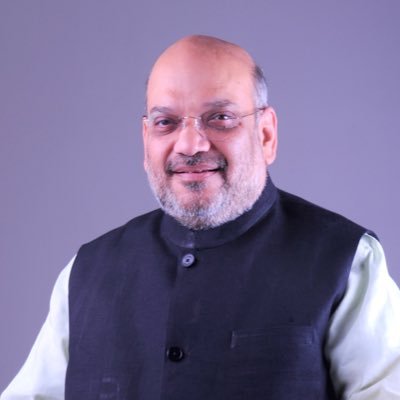
Union Home Minister Amit Shah is set to introduce the Jammu Kashmir Reorganisation (Amendment) Bill, 2025 in Parliament today, a move that has already triggered speculation about its intent and political consequences for the Union Territory.
The bill is part of a broader legislative push by the Centre, which has listed multiple important legislations for discussion during the ongoing Monsoon Session. However, the spotlight remains firmly on Jammu Kashmir, given the region’s sensitive political history and the long-standing debate over the restoration of its statehood.
The amendment bill proposes significant changes to the Jammu and Kashmir Reorganisation Act of 2019, the law that came into effect after the unilateral abrogation of Article 370 and the bifurcation of the former state into the Union Territories of Jammu and Kashmir and Ladakh.
According to the draft, Section 54 of the 2019 Act will be amended to introduce new provisions governing the conduct of elected representatives in the Union Territory.
The bill seeks to establish a “clear mechanism” for the removal of the Chief Minister or a Minister in situations where they are arrested and held in custody on account of serious criminal charges.
Under the proposed framework, a minister who remains in “custody for thirty consecutive days” in connection with an offence carrying a punishment of five years or more would automatically lose office. The removal, according to the bill, would be carried out by the Lieutenant Governor on the advice of the Chief Minister, with effect from the thirty-first day of detention.
In the case of the Chief Minister, the bill stipulates that resignation must be tendered by the thirty-first day of continuous detention. If such resignation is not offered, the individual would cease to hold office from the following day. Once released, however, there would be no bar on the reappointment of the Chief Minister or Minister by the Lieutenant Governor.
The government, in its statement of objects and reasons, has justified the amendment by emphasising that ministers embody the trust of the people and must conduct themselves in a manner that remains above suspicion.
It argues that individuals facing allegations of serious crimes cannot be allowed to continue in public office, as this undermines the principles of constitutional morality and weakens the framework of good governance.
The absence of such provisions in the existing law, the statement points out, necessitates an amendment to ensure that governance in Jammu and Kashmir is not compromised by prolonged legal entanglements of its elected leadership.
The introduction of this bill comes against the backdrop of six years of political uncertainty in Jammu and Kashmir.
On August 5, 2019, the Modi government revoked the state’s special constitutional status, scrapped Article 370, and reorganised it into two Union Territories.
While the BJP has consistently presented the abrogation as a major political achievement, questions about restoring statehood to Jammu Kashmir have lingered, with successive promises from the Centre but little clarity on timelines.

- News Deskhttps://thekashmiriyat.co.uk/author/kashmiriyat/

- News Deskhttps://thekashmiriyat.co.uk/author/kashmiriyat/

- News Deskhttps://thekashmiriyat.co.uk/author/kashmiriyat/
- News Deskhttps://thekashmiriyat.co.uk/author/kashmiriyat/
