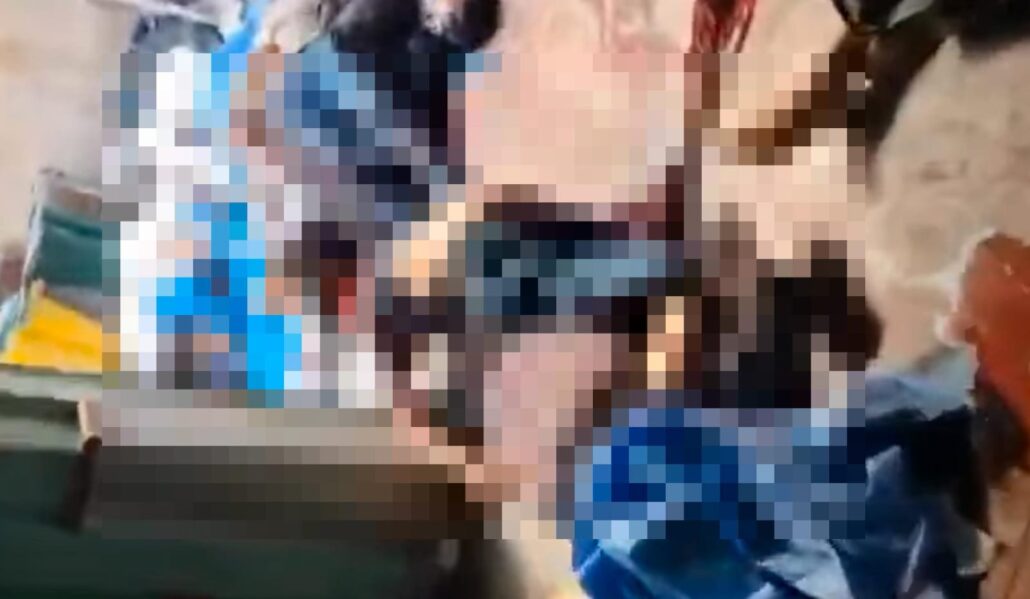
A harrowing video circulating widely on social media shows the bloodied bodies of patients, doctors, and nurses piled atop one another inside Suwayda National Hospital, their white uniforms soaked in blood, their faces eerily still.
The viral clip, whose authenticity is yet to be independently verified, has sparked outrage across Syria and beyond, highlighting the horror that unfolded over the past four days in the southern Syrian city of Suwayda.
According to Syrian Observatory for Human Rights (SOHR), at least 248 people have been killed in Suwayda since July 13 in intense clashes involving Druze militias, Bedouin tribal fighters, and Syrian regime forces. Among the dead are civilians, children, patients, and medical staff , many reportedly killed in or near the National Hospital, which was bombed, besieged, and left non-functional.
On Monday, the Syrian Ministry of Defence released a statement blaming “outlaw groups” for turning the hospital into a sniper base. It claimed its forces had “repeatedly appealed for the hospital to be evacuated and neutralized.” The ministry insisted it acted only after being fired upon and said it holds “these groups responsible” for the bloodshed inside the hospital.
However, SOHR categorically rejected the Syrian army’s claim. “Reliable SOHR sources confirmed that there are medical staff and patients only inside the National Hospital in Al-Suwayda, without the presence of any armed manifestations,” it said.
The group said that the third floor of the hospital was bombed by regime forces, who surrounded the facility and cut it off from all sides. “The hospital has been under military blockade, stripped of basic supplies, and turned into a death zone,” the watchdog added, warning that such an attack could amount to a war crime under international law.
The violence erupted after the abduction of a Druze merchant by suspected Bedouin fighters at a checkpoint. In the days that followed, full-scale conflict broke out, with the Syrian army reportedly deploying artillery, tanks, and drones into densely populated parts of the city, including near the hospital.
Though the government announced a ceasefire on July 15 and claimed to have withdrawn its heavy presence, the humanitarian situation remains critical. Medical infrastructure is decimated, and eyewitnesses say the scenes inside the hospital are too painful to describe.
One resident told SOHR: “They were treating the wounded, and they were bombed. There was no resistance, just doctors doing their duty. What crime did they commit?”
Rights groups are calling for urgent international intervention and independent investigations into what transpired inside Suwayda National Hospital. “We express our deep fear of targeting the hospital again and committing violations and crimes against medical staff and patients inside the facility,” SOHR warned.
- News Deskhttps://thekashmiriyat.co.uk/author/kashmiriyat/

- News Deskhttps://thekashmiriyat.co.uk/author/kashmiriyat/

- News Deskhttps://thekashmiriyat.co.uk/author/kashmiriyat/
- News Deskhttps://thekashmiriyat.co.uk/author/kashmiriyat/
