

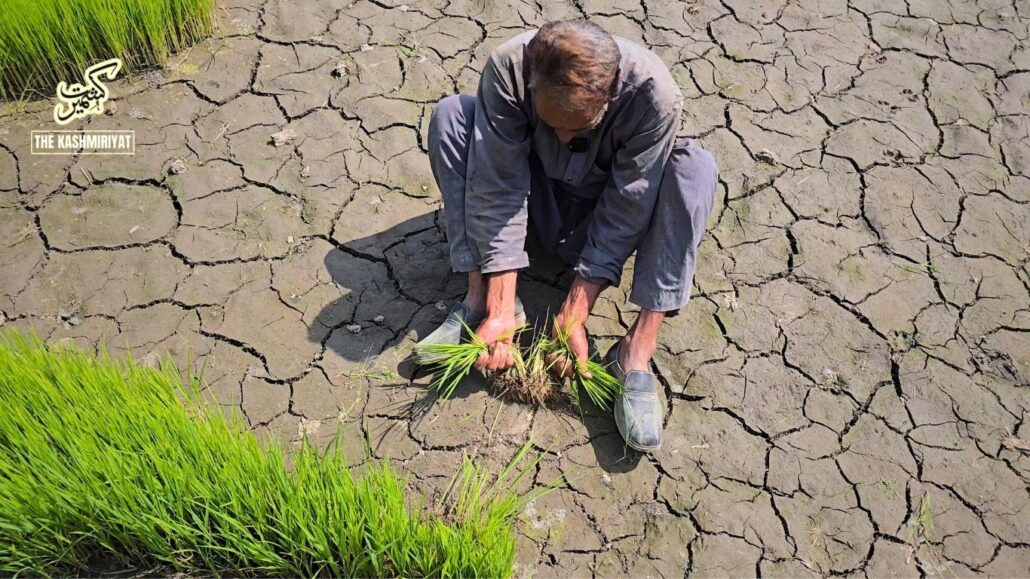
The Government of India has admitted that farmers in several regions, including Jammu Kashmir, are being forced to sell their produce below the cost of production, severely impacting their incomes.
Responding to a Starred Question in the Lok Sabha on Monday, Union Agriculture and Farmers Welfare Minister Shivraj Singh Chouhan said that despite a significant hike in Minimum Support Prices (MSP) since 2018-19, many farmers are unable to avail themselves of the scheme’s full benefits.
The response came after MPs Satpal Brahamchari and Chandra Prakash Choudhary raised concerns about farmers in states like Haryana, Jharkhand, and Jammu and Kashmir selling crops at prices lower than their input costs.
In a written reply, Chouhan said the Centre fixes MSPs for 22 mandated crops based on recommendations from the Commission for Agricultural Costs and Prices (CACP), with a guaranteed return of at least 50% over the weighted average cost of production.
However, the minister added that procurement is not universal and farmers often opt to sell in open markets or to government agencies depending on market dynamics.
Data shared in the Lok Sabha showed that up to June 30 this year, the government procured 1,175 lakh metric tonnes of crops valued at Rs 3.33 lakh crore under MSP.
In Jammu Kashmir, small landholdings and limited market infrastructure have made access to MSP-linked procurement difficult, especially for cereals and pulses. Fragmented agriculture and weak post-harvest systems in the region continue to pose barriers for farmers seeking fair prices.
To address such disparities, the Minister highlighted several government schemes, including the Pradhan Mantri Fasal Bima Yojana (PMFBY) for crop insurance, the Agriculture Infrastructure Fund (AIF) aimed at improving post-harvest facilities, and the promotion of Farmer Producer Organisations (FPOs) to enable collective bargaining power.
The Minister also pointed to digital platforms like the National Agriculture Market (e-NAM) and integration with commerce networks such as ONDC and GeM as tools to help farmers avoid distress sales.
For regions like Jammu Kashmir, where organic farming is being promoted, the government is implementing the Paramparagat Krishi Vikas Yojana (PKVY), which supports cluster-based organic production and marketing, particularly in hilly districts.
Despite these initiatives, concerns remain over the reach and implementation of such schemes in regions with limited infrastructure, leaving many farmers vulnerable to volatile market conditions.

- News Deskhttps://thekashmiriyat.co.uk/author/kashmiriyat/

- News Deskhttps://thekashmiriyat.co.uk/author/kashmiriyat/

- News Deskhttps://thekashmiriyat.co.uk/author/kashmiriyat/
- News Deskhttps://thekashmiriyat.co.uk/author/kashmiriyat/

