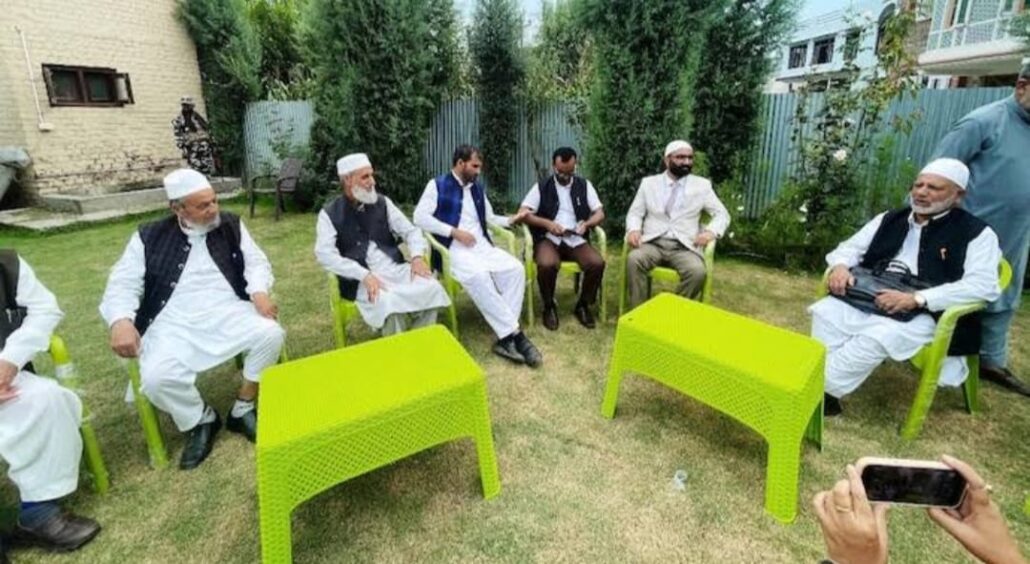
In a remarkable and courageous return to mainstream democratic politics after 35 long years, former Jamaat-e-Islami (JeI) members—many of whom are now aligned with the newly formed Justice and Development Front (JDF)—have taken part in last year held parliamentary and assembly elections in Jammu and Kashmir.
However, what should have been a moment of celebration for inclusive democracy has turned into a growing nightmare for these political aspirants, as they continue to live under constant fear, deprived of basic security cover.
Despite their active participation in the electoral process—marking a significant departure from a decades-long political boycott—the government has so far failed to provide personal or residential security to these poltical leaders, even in areas known for high militancy threats.
Several JDF members, formerly associated with Jamaat-e-Islami, have expressed serious concerns over their safety.
“We have chosen the ballot over bullets. We stepped into the political process after 35 years, leaving behind a legacy of resistance politics. But today, we are left unprotected and vulnerable, even after fulfilling our democratic duty,” said a senior JDF leader from South Kashmir who wished to remain anonymous due to security concerns.
The JDF, which positions itself as a pro-people, justice-oriented political platform, had fielded several candidates in the recent Lok Sabha elections and is gearing up for the upcoming Assembly elections. However, insiders say the reluctance of security agencies to acknowledge their legitimate political participation is causing immense distress within the ranks.
What’s more troubling, according to political analysts, is the selective allocation of security in the region. While mainstream party leaders are often seen with high-level protection, JDF members are being ignored—despite being more vulnerable due to their past affiliations and public perception.
“This is a litmus test for New Delhi’s claims of inclusive democracy in Kashmir,” said a political commentator. “If those who break away from separatist ideology and adopt the path of constitutional politics are not protected, what message are we sending to others contemplating a similar shift?”
Civil society activists and rights groups have also raised alarms over the possible repercussions of neglecting the safety of these individuals. Some fear that a lack of security may push many back into silence, disengagement, or worse—radicalized spaces.
“You cannot expect reintegration without responsibility. These leaders deserve not just appreciation but protection,” said noted academic and political analyst Dr. Arshad Ahmed.
The Justice and Development Front has now formally appealed to the Lieutenant Governor’s administration and Ministry of Home Affairs to immediately review the security status of its members and candidates, especially in volatile districts like Pulwama, Shopian, Anantnag, and Baramulla.

- News Deskhttps://thekashmiriyat.co.uk/author/kashmiriyat/
- News Deskhttps://thekashmiriyat.co.uk/author/kashmiriyat/
- News Deskhttps://thekashmiriyat.co.uk/author/kashmiriyat/
- News Deskhttps://thekashmiriyat.co.uk/author/kashmiriyat/


