
Suhail Dar
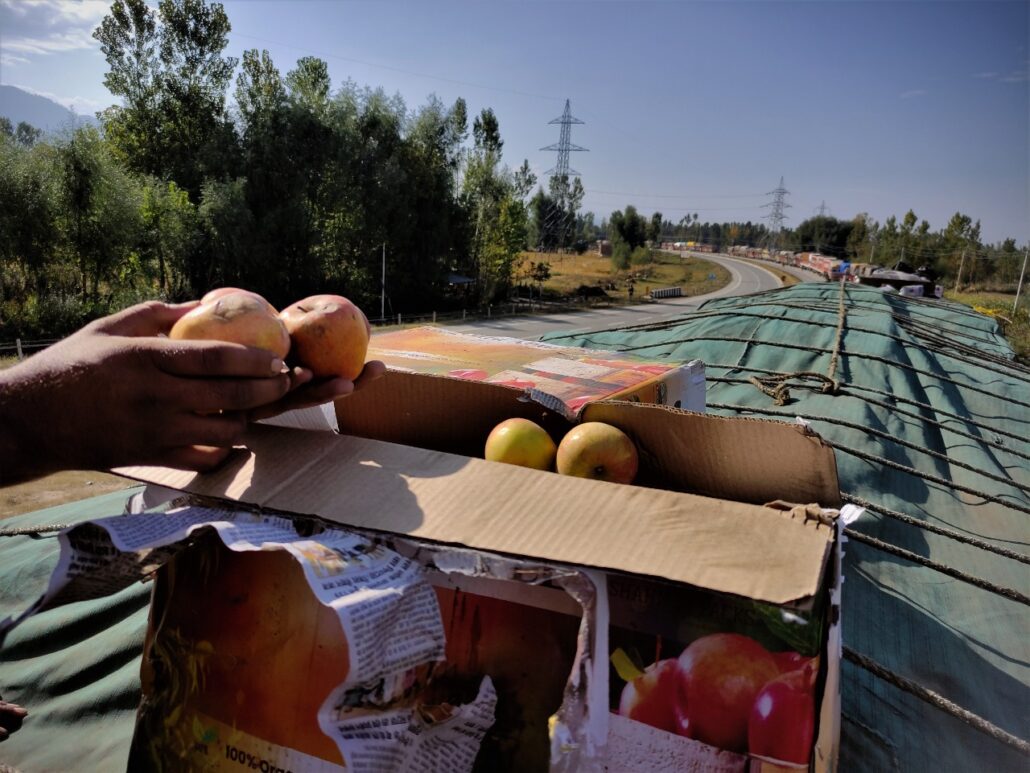
After an 18-day halt, fruit-laden trucks have finally been released and are moving along the Srinagar–Jammu highway. The trucks were cleared from Qazigund Toll Plaza on Wednesday morning, but the long blockade has already inflicted massive financial losses on farmers and truckers alike.
Locals from Ramban told The Kashmiriyat that there was heavy traffic as the trucks moved, with drivers visibly exhausted and frustrated. Many truckers reported that they had no option but to dump perishable fruit along the roadside to avoid total spoilage. Early estimates suggest that millions of rupees worth of apples and other fruits have been lost, with thousands of boxes rotting due to the delay.
Inspector General of Police (Traffic), M. Suleman Choudhary, had earlier announced that heavy vehicles, especially fruit-laden trucks, would be allowed to proceed towards Jammu from 11:00 AM on Wednesday, while light vehicles were advised to take the Mughal Road. “Our main priority is to clear fruit-laden trucks,” Choudhary told KNO, adding that authorities expected to clear most of the stranded trucks.
Over the past two days, around 2,800 trucks—mostly carrying fruit—had already moved via the Mughal Road. Despite this, large numbers of trucks continued to be stranded due to bottlenecks and the poor condition of the highway.
Farmers described the situation as a “disaster,” with some saying that a full season’s earnings had been wiped out in a matter of days. CM Omar Abdullah also said that the central government should hand over the management of the highway to the local government to ensure timely maintenance and prevent such losses in the future.
The National Highways Authority of India (NHAI) has been criticized for not widening and leveling a 300-metre stretch at Tahard in Udhampur, where debris buried the existing road, causing major traffic disruptions. The poor condition of this stretch reportedly caused trucks to get stuck and contributed heavily to the losses.
Union Minister Nitin Gadkari recently chaired a high-level meeting to review the situation on the Srinagar–Jammu highway, but fruit growers and truckers said relief came too late for thousands of farmers who were already forced to discard their produce.
Truckers described heartbreaking scenes along the highway: boxes of apples, plums, and pears left to rot in open fields, while drivers scrambled to save what little they could. Many said they had incurred additional expenses on fuel, labor, and temporary storage, further compounding their losses.
Analysts warn that the prolonged disruption could have lasting effects on Kashmir’s fruit economy, which relies heavily on timely transportation to markets across India.

- News Deskhttps://thekashmiriyat.co.uk/author/kashmiriyat/

- News Deskhttps://thekashmiriyat.co.uk/author/kashmiriyat/

- News Deskhttps://thekashmiriyat.co.uk/author/kashmiriyat/
- News Deskhttps://thekashmiriyat.co.uk/author/kashmiriyat/
