

Shabir Ali
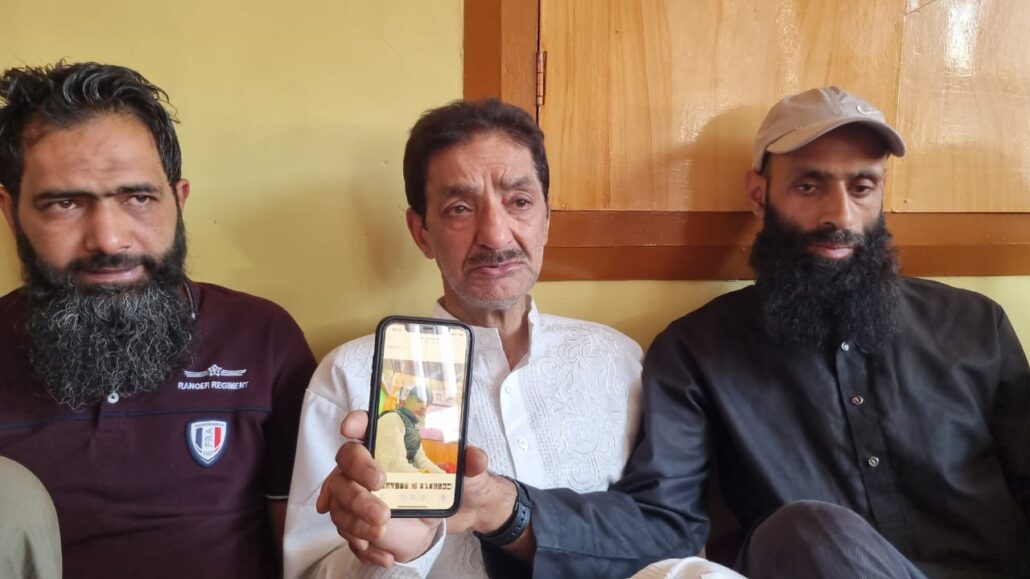
In Srinagar’s Dalal Mohalla, sorrow lingers in the narrow lanes as a family mourns the sudden loss of 14-year-old Numan Farooq Sofi — a quiet, artistic boy raised by his hearing-impaired father and elder siblings. His death earlier this week has shaken the neighbourhood and ignited a broader conversation about how schools handle discipline, self-expression, and the emotional well-being of their students.
A resident said, “Numan did not commit suicide. He was driven to such an extreme by the school. For months, he was harassed over his tattoos. This was a private school, and many know the very un-Islamic things that happen there. It’s not an Islamic school where students get harassed for tattoos.”
According to the family, Numan was initially expelled from school, but after local intervention, he was readmitted. “He was only 14, too young to understand what a tattoo meant. But instead of educating him, the teachers humiliated him,” the resident added.
Mehwish, Numan’s sister, shared her anguish: “He was given a discharge certificate twice. We signed affidavits twice promising he wouldn’t get tattoos again. Yet he was allowed back in school. A few days ago, he told me they forced him to open his shirt, and even though I stopped them, they kept pressuring him. They treated him like something to fix, not someone to understand.”
She also recounted, “I was called to the school over the tattoo issue. When I arrived, I saw that my brother wasn’t allowed in class. A teacher had humiliated him after forcibly opening his shirt.”
Numan was enrolled at Kashmir Harvard Educational Institute, a reputed private school in Srinagar. His family alleges the school repeatedly summoned them, demanding a written promise that Numan would not get any more tattoos. Despite his efforts to remove the tattoos — including four painful removal sessions — the school continued to focus on this issue.
“They kept calling us,” Mehwish said. “They didn’t care about his attempts to change. They only wanted to shame him.”
Within the community, Numan was known as a sensitive and thoughtful boy who used small, symbolic tattoos as a way to cope with personal loss, especially the death of his mother. His family insists these markings were not acts of rebellion but a personal form of expression and healing.
Local cleric Suhail Ahmad Kaul, president of the nearby mosque, condemned the school’s treatment of Numan as “a slow death caused by cruelty.” He said the boy was singled out, made to sit apart from his classmates, and publicly humiliated.
“This is not how you treat a child,” Kaul said. “Mistakes are part of growing up, but shame should never be the answer.”
Adding to the family’s pain is the school’s silence following Numan’s death. “They never issued a condolence message. No acknowledgment at all. They just moved on as if he never existed,” Mehwish said.
The school, meanwhile, denies any wrongdoing. A senior official told local media the allegations were “baseless and deeply hurtful.” The institution emphasized that it maintained respectful communication with students and parents and never planned to expel Numan.
“We are heartbroken by his death,” the official said. “But discipline is an essential part of education.”

- News Deskhttps://thekashmiriyat.co.uk/author/kashmiriyat/
- News Deskhttps://thekashmiriyat.co.uk/author/kashmiriyat/
- News Deskhttps://thekashmiriyat.co.uk/author/kashmiriyat/
- News Deskhttps://thekashmiriyat.co.uk/author/kashmiriyat/


