

Syed Imran
As the government offices reopened in Jammu on Monday, marking the official restoration of the century-old Darbar Move tradition, traders, hoteliers, and transporters across the region said they were witnessing the first signs of economic revival after years of stagnation.
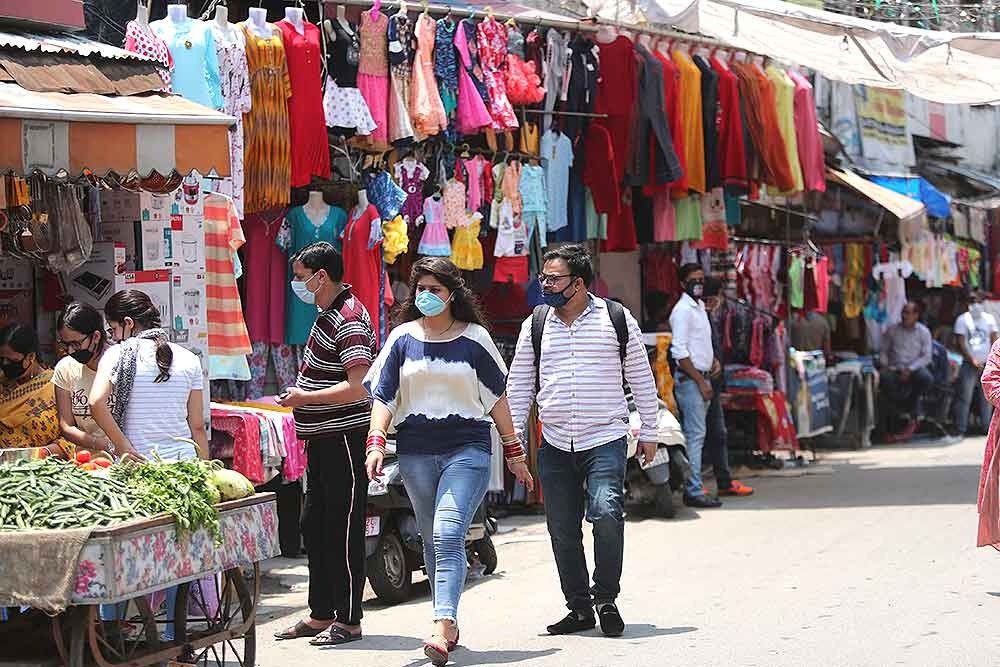
In Jammu’s Raghunath Bazar, shop shutters that had stayed half-closed in recent winters were lifted early. Tea stalls buzzed again. “For the past four years, we were barely surviving,” said Surinder Chowdhary, a shopkeeper in the old city. “When the Darbar stopped, business collapsed. Omar Sahib promised to bring it back and he did. For us, this is more than politics; it’s survival.”
The Darbar Move — a biannual practice of shifting the Civil Secretariat and other government offices between Srinagar and Jammu — was halted in 2021 on financial grounds. The decision had hit Jammu’s winter economy hard, affecting thousands of traders, transporters, and small business owners.
Now, with offices moving again, optimism has returned to markets across both regions. “Hotels are getting bookings, taxis are running again,” said Manish Gupta, President of the Jammu Chamber of Commerce. “When offices move, money moves. That’s the simplest way to put it.”
In south Kashmir’s Qazigund, where truckers and dhaba owners depend on highway traffic linked to the Move, locals called the restoration a “lifeline.” “We were not having any business. It does not matter whose legacy it is,” said Abdul Rashid, a small trader near the highway. “If we are earning, what matters is we can fight only when we have food on our plates.”
The remark captures a growing sentiment among working-class Kashmiris and Dogra traders alike, that the debate over legacy and symbolism pales before the urgency of livelihood.
Chief Minister Omar Abdullah, speaking to reporters earlier, said the decision was about “healing a broken link.”
“Not everything should be measured in monetary terms,” Omar said. “Some things hold emotional and symbolic value. The Darbar Move connected Jammu and Srinagar. By ending it, that bond was broken. We’ve tried to mend it.”
In Srinagar too, residents echoed that sentiment, calling the restoration a step toward “balance and belonging.” “This is not just an administrative move,” said Feroz Ahmad, a teacher from Rajbagh. “It’s emotional. It reminds us that Jammu and Srinagar still breathe together.”


- News Deskhttps://thekashmiriyat.co.uk/author/kashmiriyat/
- News Deskhttps://thekashmiriyat.co.uk/author/kashmiriyat/
- News Deskhttps://thekashmiriyat.co.uk/author/kashmiriyat/
- News Deskhttps://thekashmiriyat.co.uk/author/kashmiriyat/


