
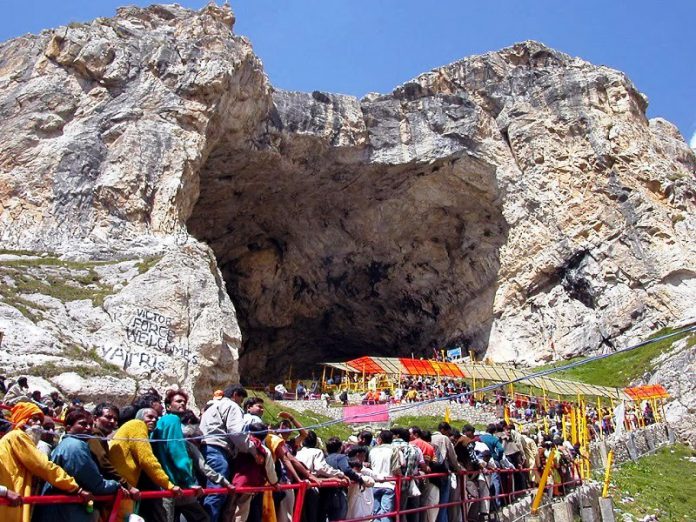
Multi-layered and in-depth security arrangements have been put in place for the upcoming annual Amarnath Yatra to ensure a safe and smooth pilgrimage, Kashmir Police chief V K Birdi said on Wednesday.
“The Shri Amarnath Yatra this year is starting next week. Jammu-Kashmir Police and other security forces have made all security arrangements for the yatra. Compared to last year, this time there are multi-layered and in-depth security arrangements so as to make the yatra safe and smooth,” Birdi, Inspector General of Kashmir Police, told reporters in Anantnag.
He visited the Nunwan base camp of the yatra along the Pahalgam axis to personally review the preparedness ahead of the pilgrimage, which begins on July 3.
The 2025 Amarnath Yatra will be held from July 3 to around August 8 or 9, concluding on Raksha Bandhan. The 38-day pilgrimage has already drawn a large number of devotees, with more than 3.3 lakh pilgrims registered so far. Registration is still open and can be done through both online and offline modes.
Online registration is available on the Shri Amarnath Shrine Board (SASB) website, where applicants need to submit a passport-sized photograph, a valid Aadhaar card, and a Compulsory Health Certificate (CHC). The registration fee is ₹220. Offline registration is also facilitated through authorized bank branches including Jammu and Kashmir Bank, SBI, PNB, and Yes Bank. NRIs and groups can register through demand drafts submitted at designated locations.
Pilgrims can undertake the yatra through two routes. The traditional Pahalgam route in south Kashmir spans about 43 kilometers and takes around three to five days to complete. This longer route passes through key halting points like Chandanwari, Sheshnag, and Panchtarni.
The alternate Baltal route, located in north Kashmir, is much shorter at around 13 kilometers but is steeper and more physically demanding. It is often chosen by those seeking to complete the yatra in a single day.
To ensure the safety of pilgrims, the government has declared a No-Fly Zone from July 1 to August 10 along both the Pahalgam and Baltal routes. This ban includes drones, paragliders, UAVs, and even helium balloons, with exceptions only for official surveillance, medical evacuations, and disaster management.
The Centre has sanctioned the deployment of 581 companies of Central Armed Police Forces (CAPF), amounting to nearly 58,000 personnel. Additionally, about 50,000 CRPF personnel will be stationed along with bomb disposal squads, canine teams, anti-drone systems, jammers, and high-tech surveillance drones. These measures fall under a larger operational strategy codenamed “Operation Shiva.”

- News Deskhttps://thekashmiriyat.co.uk/author/kashmiriyat/

- News Deskhttps://thekashmiriyat.co.uk/author/kashmiriyat/

- News Deskhttps://thekashmiriyat.co.uk/author/kashmiriyat/
- News Deskhttps://thekashmiriyat.co.uk/author/kashmiriyat/
