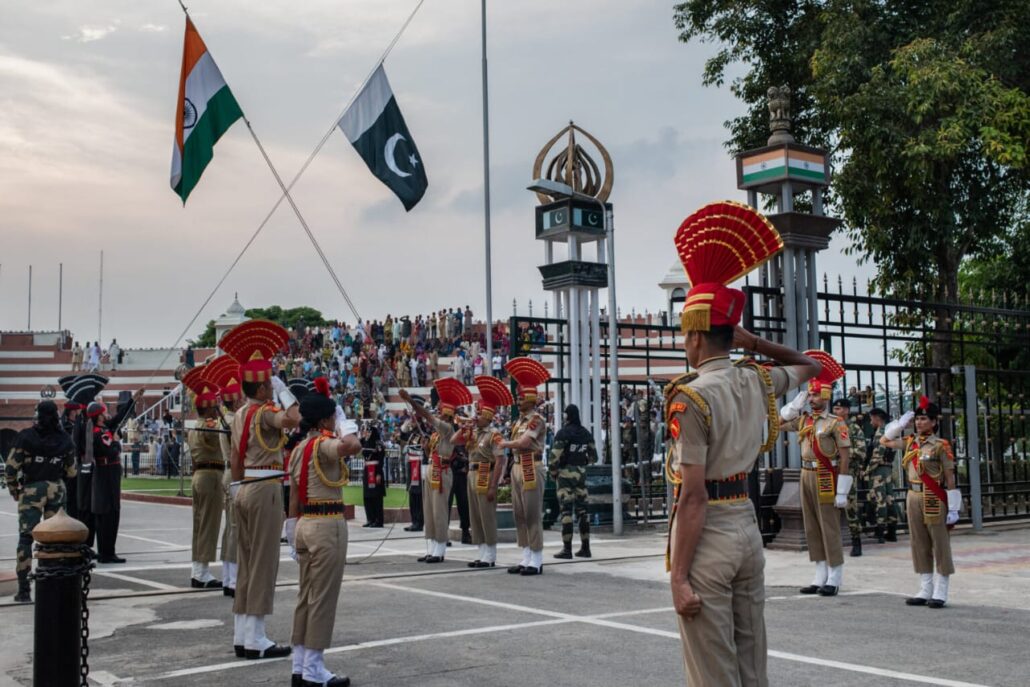
India and Pakistan have agreed to extend their ceasefire agreement till May 18, sources in the Indian Army said on Friday.
As per an NDTV report, the move comes as part of ongoing confidence-building measures following a brief but intense flare-up after the deadly terror attack in Jammu Kashmir’s Pahalgam, which claimed the lives of 26 tourists.
The ceasefire understanding was initially reached on May 10 after four days of missile and drone exchanges triggered by India’s Operation Sindoor—a precision military campaign targeting terror infrastructure in Pakistan and Pakistan-occupied Kashmir.
Launched on the night of May 7–8, the operation was a direct response to the Pahalgam attack and has since heightened military tensions across the region.
Despite the ceasefire, Pakistan reportedly violated the terms within hours of the agreement coming into effect. However, military sources say that both sides are working to reduce border alertness levels through top-level military dialogue.
Defence Minister Rajnath Singh, who visited troops in Srinagar earlier this week, questioned the safety of Pakistan’s nuclear arsenal, calling for its supervision by the International Atomic Energy Agency (IAEA). “Are nuclear weapons safe in the hands of such a rogue nation?” he asked, citing Pakistan’s track record.
Singh is scheduled to visit the Bhuj Air Force Station in Gujarat today, where he will evaluate the preparedness of air force units following Pakistan’s failed drone incursions in the region. Air Force Chief Air Marshal AP Singh will accompany him.
Meanwhile, the government is likely to propose a ₹50,000 crore increase in defence spending as a follow-up to Operation Sindoor. This would raise India’s total defence outlay to over ₹7 lakh crore for 2025–26, with the funds earmarked for weapons procurement, R\&D, and strategic capabilities.
In Pakistan, Prime Minister Shehbaz Sharif has offered talks with India “for peace”, though he reiterated that dialogue must include the Kashmir issue. India has maintained that Jammu Kashmir, and Ladakh, remain its “integral and inalienable” parts.
Amidst these developments, civilians along the India-Pakistan border in Jammu continue to live in fear. “There’s no trust. We cannot sleep peacefully,” said 80-year-old Suram Chand from Arnia, reflecting a widespread sentiment of insecurity despite the current lull.
Separately, Jamia Millia Islamia has suspended all academic ties with institutions affiliated with the Turkish government, citing national security concerns. The university cited Turkiye’s support for Pakistan and its use of Turkish drones during the recent conflict as reasons for the move.

- News Deskhttps://thekashmiriyat.co.uk/author/kashmiriyat/

- News Deskhttps://thekashmiriyat.co.uk/author/kashmiriyat/

- News Deskhttps://thekashmiriyat.co.uk/author/kashmiriyat/
- News Deskhttps://thekashmiriyat.co.uk/author/kashmiriyat/
