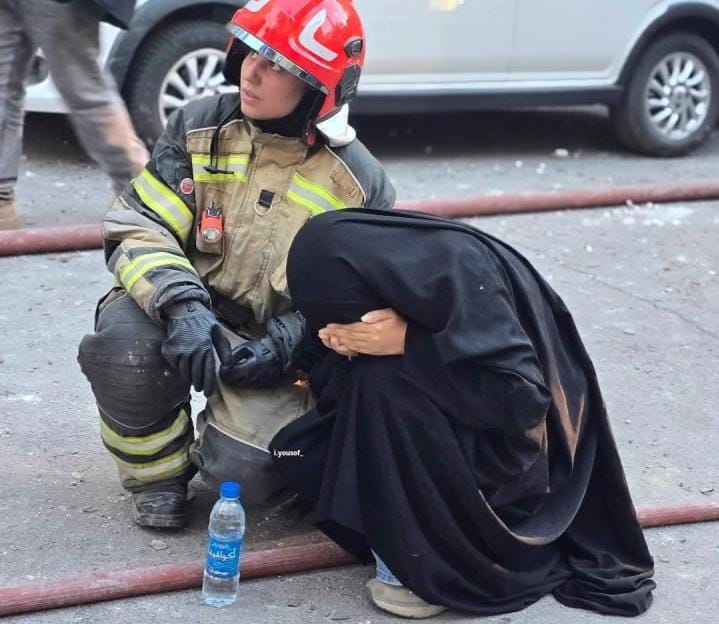
The Israeli military launched widespread airstrikes on Iran early Friday, targeting nuclear facilities, missile factories, and senior Iranian military officials in what Prime Minister Benjamin Netanyahu called a “decisive moment in Israel’s history.”
The strikes triggered explosions in multiple Iranian cities, including near the Natanz uranium enrichment plant, and have already killed top Iranian nuclear scientists and commanders. The attack comes just days before a scheduled round of Iran-U.S. nuclear talks in Oman, now thrown into jeopardy.
The United Nations has issued a strong warning against the military escalation. A spokesperson for Secretary-General António Guterres said the UN is “particularly concerned by Israeli attacks on nuclear installations in Iran while talks between Iran and the United States are underway.”
The statement emphasized that “both sides must show maximum restraint and avoid a descent into deeper conflict — a situation that the region can hardly afford.”
Iran’s Supreme Leader Ayatollah Ali Khamenei, addressing the nation, described the Israeli attack as “a crime committed by the Zionist regime with its satanic, bloodstained hands.”
He warned that Israel “should anticipate a severe punishment,” and vowed that “the powerful arm of the Islamic Republic’s Armed Forces won’t let them go unpunished.”
While Israel declared a state of emergency in anticipation of Iranian retaliation, the airstrikes have drawn sharp criticism and expressions of alarm from governments across the globe. Several countries condemned the attack as a blatant violation of international law and a dangerous act of aggression that threatens the stability of the region.
Oman, which has been playing a key role in facilitating nuclear talks between Tehran and Washington, described the strikes as “a dangerous, reckless escalation” and “a flagrant violation of the United Nations Charter.”
In a statement, the Omani government said, “Such aggressive, persistent behavior is unacceptable and further destabilizes the region. The Sultanate holds Israel responsible for the consequences and calls upon the international community to halt this dangerous course.”
The Turkish president has condemned Israeli strikes on Iran, calling it a “clear provocation” and warning that the government of Israeli Prime Minister Benjamin Netanyahu was attempting to drag the region into disaster. “The attacks of Netanyahu and his massacre network, which are setting our entire region and the world on fire, must be prevented,” Erdogan said in a post on X, adding that Ankara was closely monitoring developments in the region.
Indonesia also issued a stern rebuke, with its foreign ministry stating, “Indonesia strongly condemns Israel’s attack on Iran. The attack risks exacerbating existing regional tensions and could potentially trigger a broader conflict.” Jakarta urged all sides to exercise “utmost restraint and avoid actions that might cause further instability.”
Pakistan, a nuclear-armed nation that does not recognize Israel, condemned the Israeli strikes in the strongest terms. Foreign Minister Ishaq Dar wrote on X, “Strongly condemn unjustified Israeli attacks on Islamic Republic of Iran. Pakistan stands in solidarity with the Government & the people of Iran.”
A statement from the foreign ministry further called the strikes “a serious threat to peace, security, and stability of the entire region and beyond.”
Saudi Arabia also weighed in, expressing “strong condemnation and denunciation of the blatant Israeli aggressions against the brotherly Islamic Republic of Iran.” The Kingdom said these actions “undermine Iran’s sovereignty and security and constitute a clear violation of international laws and norms.”
In contrast, key Western powers largely stopped short of direct condemnation.
U.S. Secretary of State Marco Rubio said, “Tonight, Israel took unilateral action against Iran. We are not involved in strikes against Iran, and our top priority is protecting American forces in the region. Iran should not target U.S. interests or personnel.”
The United Kingdom’s Prime Minister Keir Starmer urged restraint, calling the situation “concerning.” He said, “We urge all parties to step back and reduce tensions urgently. Escalation serves no one in the region. Stability in the Middle East must be the priority.”
Australia’s Foreign Minister Penny Wong expressed alarm over the potential consequences of the strikes. “Australia is alarmed by the escalation between Israel and Iran. This risks further destabilizing a region that is already volatile. We all understand the threat posed by Iran’s nuclear and ballistic missile programs, but the solution must be dialogue and diplomacy,” she said.
New Zealand’s Prime Minister Christopher Luxon said the strikes were “a really unwelcome development,” warning that “the risk of miscalculation is high. That region does not need any more military action.”
Japan’s Foreign Minister Takeshi Iwaya joined others in condemning the use of force. “Amid ongoing diplomatic efforts to achieve a peaceful resolution of the Iranian nuclear issue, the use of military force is deeply regrettable,” he said. “The government strongly condemns this action, which escalates the situation.”
As tensions continue to rise and Tehran reportedly prepares a military response, airspaces across parts of the Middle East and Central Asia have been restricted, and global oil prices surged by over 6%.
With both nations hardening their rhetoric, international diplomats are scrambling to prevent what many fear could become a full-scale regional war.

- News Deskhttps://thekashmiriyat.co.uk/author/kashmiriyat/

- News Deskhttps://thekashmiriyat.co.uk/author/kashmiriyat/

- News Deskhttps://thekashmiriyat.co.uk/author/kashmiriyat/
- News Deskhttps://thekashmiriyat.co.uk/author/kashmiriyat/
