A series of Israeli airstrikes on Iran has left a trail of civilian casualties, with Iranian state media confirming the deaths of women and children in residential areas of Tehran.
The attacks, part of what Israel has named “Operation Rising Lion,” also claimed the lives of senior Iranian nuclear scientists Fereydoun Abbasi-Davani and Mohammad Mehdi Tehranchi.
The Israeli military said it launched dozens of jets overnight to strike Iran’s nuclear and military infrastructure. However, residential neighbourhoods in Tehran and other cities were also hit.
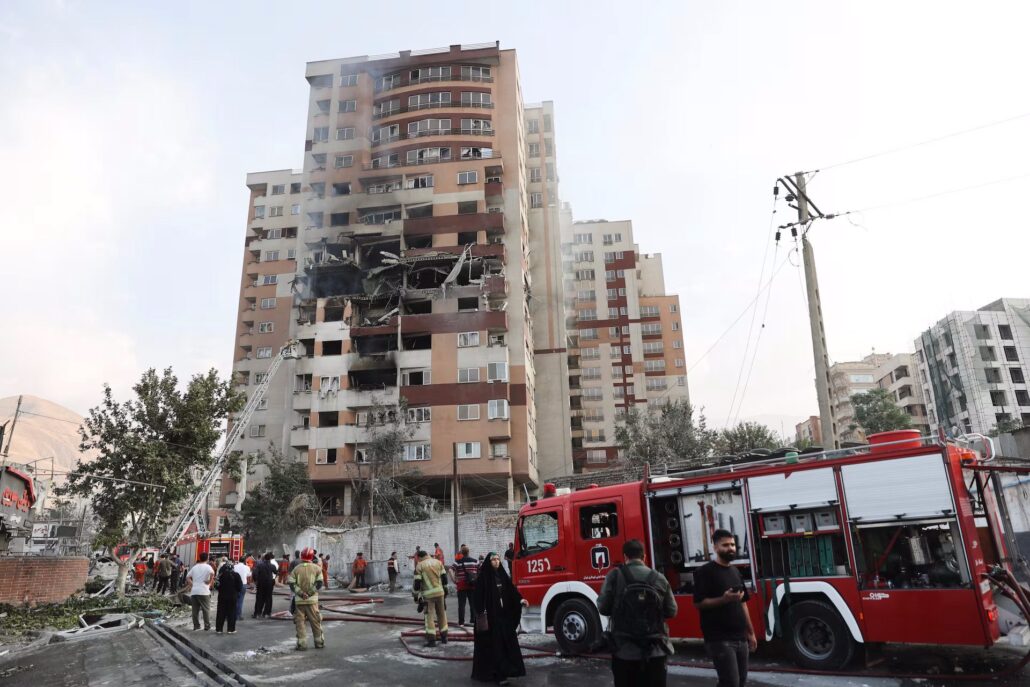
Iranian outlets described scenes of devastation, including collapsed apartment buildings and injured civilians being pulled from rubble.
Images from the capital showed thick plumes of smoke rising above housing blocks, with emergency workers rushing to aid survivors. Tehran’s fire department confirmed multiple casualties in the northern part of the city.
Israel’s Prime Minister Benjamin Netanyahu defended the strikes, claiming they were aimed at halting Iran’s progress toward developing nuclear weapons. “We struck the heart of Iran’s nuclear weaponisation program,” he said in a video address, insisting the operation would continue for “as many days as necessary.”
But the human toll has sparked outrage. International observers and humanitarian groups are calling for restraint and accountability. “Bombing residential areas cannot be justified under any circumstances,” a spokesperson for an international rights group said.
Iran has vowed to retaliate. Israeli officials have acknowledged the likelihood of incoming missile or drone attacks and have sealed off their airspace in anticipation.
This latest escalation follows growing tensions over Iran’s uranium enrichment, which is now at 60% — far exceeding limits set under the 2015 nuclear deal.
The United States, which warned of a “massive conflict” prior to the Israeli operation, has yet to formally respond to the civilian deaths.
- News Deskhttps://thekashmiriyat.co.uk/author/kashmiriyat/

- News Deskhttps://thekashmiriyat.co.uk/author/kashmiriyat/

- News Deskhttps://thekashmiriyat.co.uk/author/kashmiriyat/
- News Deskhttps://thekashmiriyat.co.uk/author/kashmiriyat/
