

Anzer Ayoob
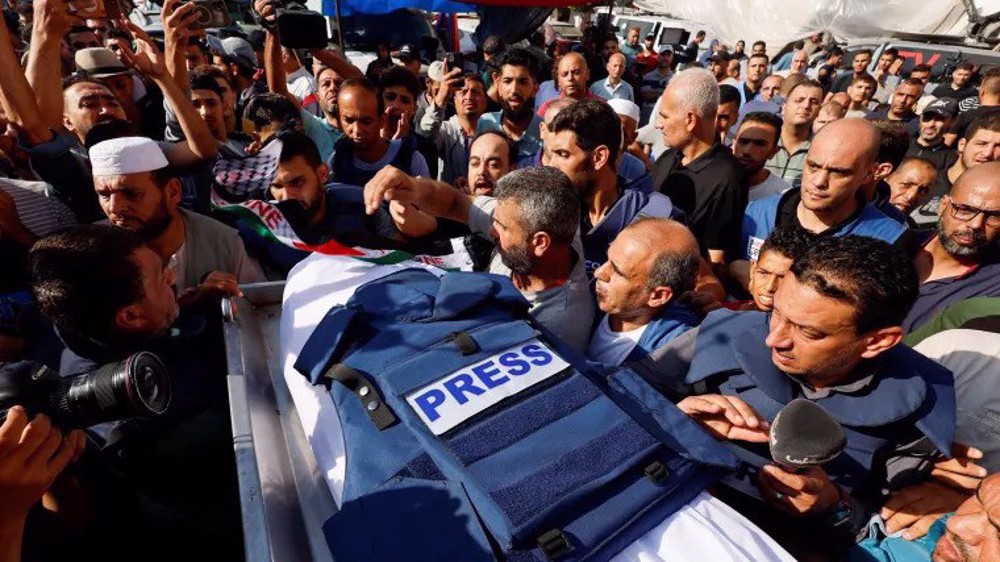
Beneath the relentless hum of Israeli drones and the shudder of airstrikes, Gaza’s journalists have transformed their craft into an act of defiance. Since the war’s escalation in October 2023, these reporters have become what I call “Journoists”—hybrids of journalists and activists who not only document a conflict that has claimed over 67,000 lives, according to Gaza’s Ministry of Health, but also advocate fiercely for accountability, aid, and survival. With foreign correspondents barred from independent access by Israeli authorities, Gaza’s Journoists have shouldered the world’s gaze, operating under a blockade that isolates them from resources, safety, and often hope.
The cost has been staggering. The Committee to Protect Journalists (CPJ) reports at least 239 journalists and media workers killed in the Israel-Gaza war since October 2023, the vast majority Palestinians in Gaza—the deadliest period for journalists in modern history. In 2024 alone, roughly 70 percent of global journalist deaths were linked to the Gaza conflict, according to CPJ’s annual tally. These figures reflect a grim reality: in Gaza, truth-telling is a target. “Without Palestinian voices, there would be no record of what has been happening,” said Plestia Alaqad, a 23-year-old Journoist whose raw video dispatches have pierced the enclave’s isolation, reaching millions globally.
These Journoists—freelancers, network correspondents, and citizen reporters—navigate famine, displacement, and direct threats, often without protective gear or pay. Their work transcends traditional reporting, blending factual accounts with urgent advocacy for humanitarian aid, cease-fires, and international scrutiny. From smuggled footage to UN testimonies, they have turned journalism into a lifeline for a people under siege. Here are eight whose stories define this perilous fusion of witness and resistance.
Anas al-Sharif
Anas al-Sharif, a 28-year-old Al Jazeera Arabic correspondent, was a beacon of Journoism until his death on August 10, 2025, in a strike on a journalists’ tent in Gaza City. Reporting from the besieged north, where foreign reporters could not reach, al-Sharif’s daily dispatches detailed sieges, forced evacuations, and famine’s grip. Joining Al Jazeera in November 2023, he became a vital voice against what he and colleagues described as systematic silencing by Israeli forces. “I am a journalist with no political affiliations. My only mission is to report the truth from the ground,” he declared in a final broadcast, refuting Israeli military claims of Hamas ties.
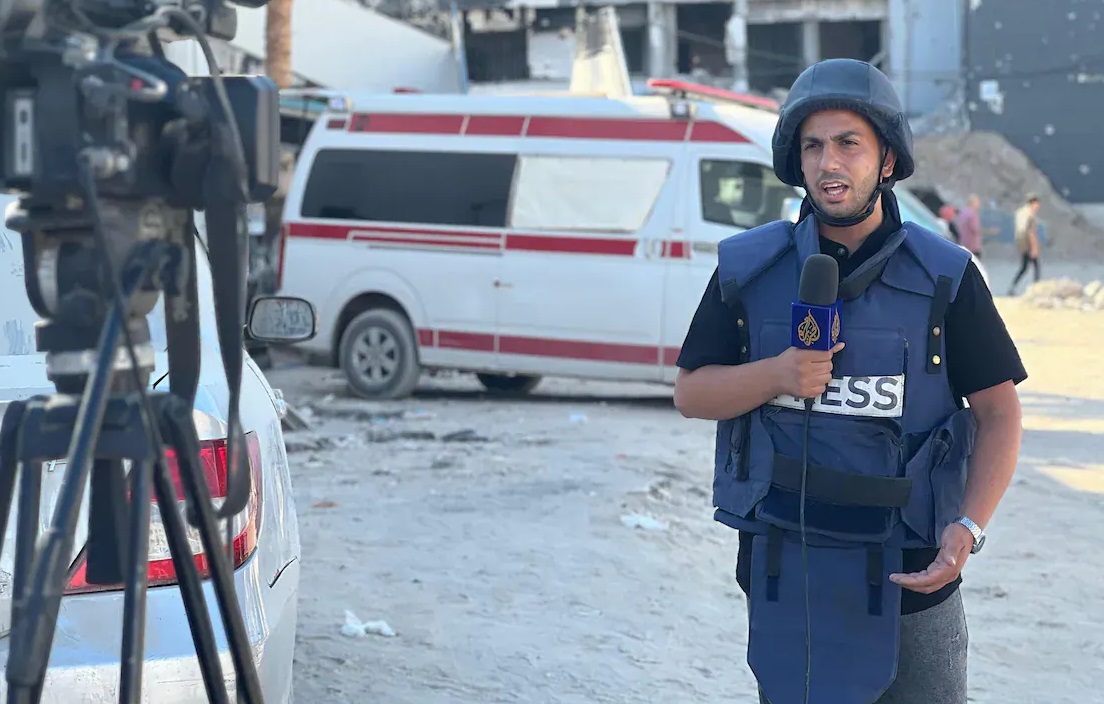

His voice memos, smuggled via WhatsApp, exposed Israel’s “siege tactics” and coordinated aid appeals, embodying the activist strain of Journoism. The strike that killed him and three colleagues prompted Reporters Without Borders to demand an emergency UN Security Council session. The Guardian wrote: “Anas al-Sharif knew that far from offering protection amid the slaughter in Gaza, his press credentials further endangered him.” His legacy endures in the global calls for justice his work inspired—a testament to the power of Journoism under fire.
Hani Mahmoud
Hani Mahmoud, another Al Jazeera correspondent, has survived two years of relentless peril to report from Gaza’s shifting front lines, his Journoist work blending stark facts with impassioned advocacy. In September 2025, as Israeli forces advanced on Gaza City, he described the human toll: “People feel now it’s a permanent state of displacement.” Speaking to Democracy Now!, he echoed human rights groups’ framing: “There is no denying that Israel’s military campaign is a genocide.”
Mahmoud’s live broadcasts, often from hospital sieges or displacement camps, interweave footage with pleas for international intervention. In August 2025, after a strike on a journalists’ tent, he lamented: “Press vests and helmets, once considered a shield, now feel like a target.” Yet moments of tentative hope surface in his work, as in October 2025, when he noted a shift in Gaza’s atmosphere: “It feels different today.” Collaborating with outlets like the BBC, Mahmoud has pushed for reopened borders and aid corridors, his Journoism a call to action: “Without their commitment, the world would not have seen these reports.”
Plestia Alaqad
Plestia Alaqad, 23, was a student when the war intensified, but her raw vlogs from Gaza’s ruins made her a global Journoist. Her TikTok clips, viewed by millions, humanize the famine and bombardment, leading to partnerships with NGOs and testimony at UN sessions. In her 2025 memoir, The Eyes of Gaza: A Diary of Resilience, she wrote: “I don’t think it’s possible to find a genocide-life balance.” On the war’s second anniversary, she told Democracy Now!: “Israel succeeded in isolating and dividing Gaza from the rest of the world,” framing survival itself as a political act.
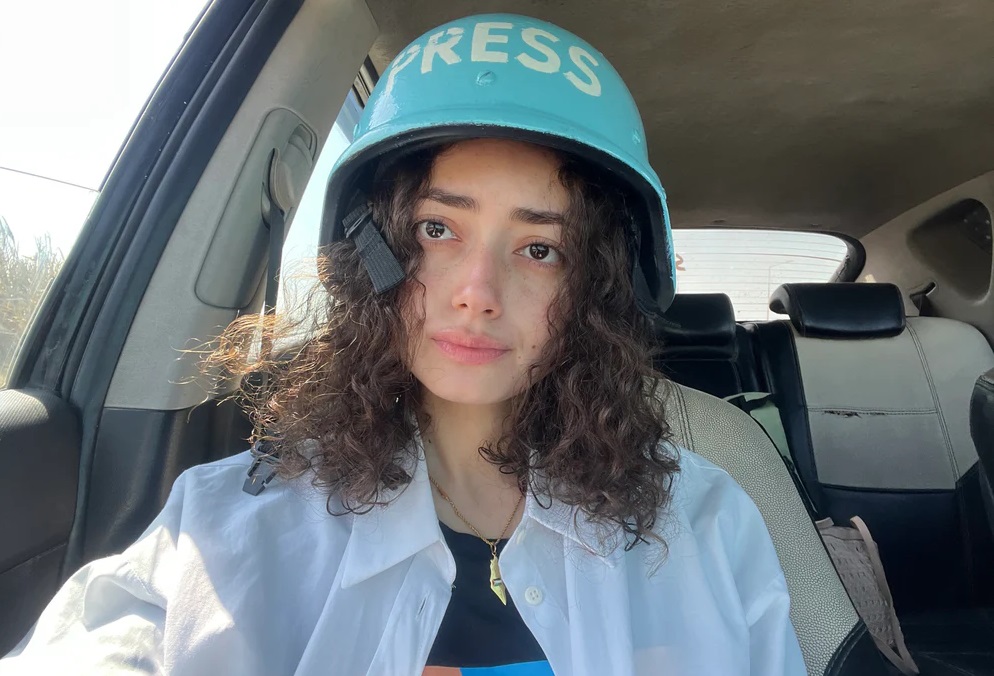

Now studying abroad after evacuating, Alaqad insists: “I’ll always define Palestinians by how they choose to live, not how they died,” a mantra that drives her advocacy for children’s and women’s rights. Her work has sparked youth-led campaigns worldwide, proving digital Journoism’s power to counter media blackouts and mobilize solidarity. “I can’t watch everything silently,” she told Al Jazeera in 2023—a conviction that continues to shape her global outreach.
Shorouq Shaheen
Shorouq Shaheen, a photojournalist, has turned her lens on the gendered toll of war, documenting assaults on women’s shelters and displacement camps while organizing support for female reporters—a hallmark of her Journoist role. With foreign journalists barred for over 18 months as of May 2025, Shaheen told Deutsche Welle of the impossible conditions: operating without protective vests or evacuation routes, smuggling images to global outlets under constant threat.
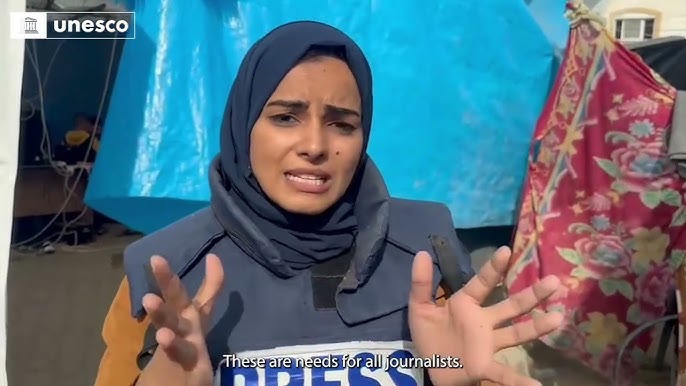

Her contributions to networks like the Doha Film Institute’s Ajyal program highlight the harsh conditions faced by women journalists, blending visual storytelling with critiques of reproductive rights in wartime. “Our stories are weapons against forgetting,” she said in a May 2025 interview, echoing tributes to slain colleagues who pleaded: “Look, see, here we are. We are being annihilated.” Shaheen’s activism includes co-founding support systems for displaced media workers, ensuring their voices endure amid the chaos.
Mahmoud Abu Namous
Mahmoud Abu Namous, a deaf journalist, has pioneered Journoism by amplifying Gaza’s roughly 5,000 hearing-impaired residents, often left without interpreters during bombings. In a July 2025 X video, he signed: “I am Mahmoud Abu Namous, a deaf journalist from Gaza. I share this testimony in my language, for the deaf community and people with disabilities whose voices are unheard.” His footage of inaccessible shelters and hospitals has spurred UN scrutiny and pressured aid groups for sign-language support.
In January 2024, amid famine, Abu Namous captured a rare moment of relief: “Now, I found wheat and flour to make bread, which is important to feed and calm my children.” His work intersects disability rights with war reporting, demonstrating how Journoism can dismantle barriers. By advocating for inclusive aid, Abu Namous has given voice to a community often erased—his videos a quiet but powerful act of resistance.
Amr Tabash
Amr Tabash, a photographer, has traversed Gaza’s rubble for two years, capturing fleeting acts of humanity—children playing amid debris, families sharing meager meals—to counter narratives of despair. In an August 2025 Instagram post, he wrote: “As a journalist in Gaza, I live every day on the edge of death. When I leave my home for work or to cover an event, I bid farewell to my family as if it were the last time.” His Journoist spirit shines in his October 2025 X reflection: “This is not courage… it is loyalty—to the place, to the people, and to the duty. Gaza has taught me to be stronger than fear, and to keep going until the very end.”
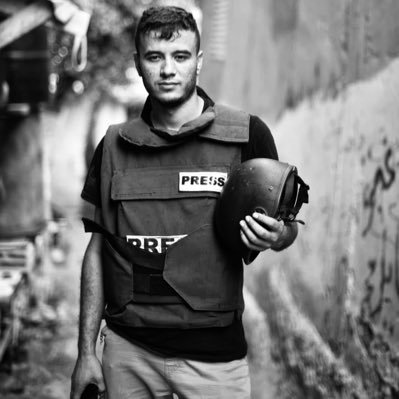

Tabash’s images, featured in a 2025 UN Office for the Coordination of Humanitarian Affairs exhibition, have raised funds for orphans and critiqued famine policies. Recalling the death of colleague Hussam Shabat in August 2025, he shared: “Days earlier, Hussam had asked me in a broken voice,” a testament to the bonds forged in peril. Through virtual exhibitions and advocacy, Tabash’s work transforms visuals into global petitions, embodying the Journoist call to action.
Aseel Matar
Aseel Matar, a correspondent for MTV El Djazairia and a guild member, has reported from Gaza City’s front lines, often from her besieged home, framing her coverage as “unbreakable messages to the world.” In September 2025, trapped by Israeli quadcopters firing randomly, she documented the terror: “We were talking, applying for jobs. The next day, we woke up to a different reality.” During displacement, she recalled: “Quadcopter drones began firing directly at us. Those were terrifying moments I’ll never forget… we were suddenly separated, and I haven’t seen my family since.”


As a charity activist, Matar covered aid efforts, like an August 2025 Chechnya-donated convoy for needy families in memory of Ahmad Haji Kadyrov. In an August 2025 X post titled “Diary of a distracted journalist,” she pleaded: “Where is the conscience of the world? Save Gaza and the children of Gaza.” Matar’s Journoism blends on-air reporting with calls for cease-fires and support networks, as seen in her attendance at memorials for slain colleagues: “This coverage was never just journalism. It was a humanitarian duty, a commitment to truth.”
Ismail al-Ghoul
Ismail al-Ghoul, a 27-year-old Al Jazeera correspondent killed on July 31, 2024, alongside cameraman Rami al-Rifi, remains a symbol of Journoist sacrifice. Refusing evacuation to cover child casualties in Gaza City, his viral reports sparked global protests. UNESCO condemned his death as part of a pattern eroding Gaza’s “voice to the world,” with his footage cited in International Criminal Court probes.
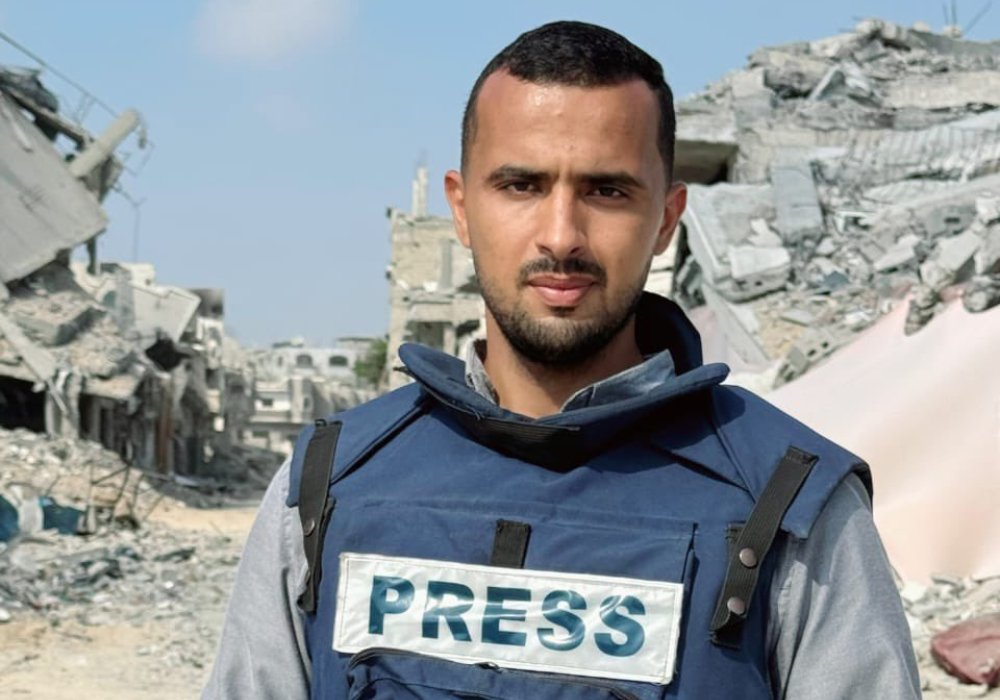

Al-Ghoul’s hunger amid famine became a poignant emblem: “I am not ashamed to stand in front of the camera and say: I am hungry. Many children ask me for something to eat, not knowing that I, like them, stay awake at night from hunger.” Colleagues recalled: “Through their work, they pleaded with us, Look, see, here we are. We are being annihilated.” His letter was held aloft at a London demonstration in August 2024: “RIP Ismail Al-Ghoul… murdered with his colleague Rami Al-Rifi by apartheid Israel in Gaza today.” Al-Ghoul’s footage continues to fuel legal and public reckonings, a lasting act of Journoism.
A global echo
The Journoists of Gaza resonate beyond their borders, echoing the work of figures like Maria Ressa, the 2021 Nobel Peace Prize winner who has battled disinformation in the Philippines. “We’re not just telling stories; we’re fighting for truth,” Ressa said, a sentiment mirrored in Gaza’s reporters. Like Ressa, Gaza’s Journoists face crackdowns—arrests, targeted strikes, and media blackouts—yet their work persists, amplified by digital platforms and global solidarity.
The challenges are immense. Digital tools spread their stories but also misinformation, requiring ethical navigation. In Afghanistan and Syria, journalist-activists face similar perils, yet Gaza’s isolation is unique, with no foreign press to share the load. As scholars Johan Lindell and Michael Karlsson argue, journalists must adopt a “global outlook,” a call Gaza’s Journoists embody by connecting local truths to worldwide audiences.
As the war enters its third year, Gaza’s Journoists—survivors and the fallen—stand as engaged witnesses. In a conflict where truth is often the first casualty, their refusal to be silenced is both record and resistance, a beacon for a world that must not look away.
(Anzer Ayoob is a journalist and author from Chenab Valley. He is the founder of The Chenab Times and author of “The Power of Local Journalism: A Voice for the Voiceless.” Can be reached on X @AnzerAyoob)

- News Deskhttps://thekashmiriyat.co.uk/author/kashmiriyat/

- News Deskhttps://thekashmiriyat.co.uk/author/kashmiriyat/

- News Deskhttps://thekashmiriyat.co.uk/author/kashmiriyat/
- News Deskhttps://thekashmiriyat.co.uk/author/kashmiriyat/

