Ancient DNA analysis of human remains from the Burzahom archaeological site in Kashmir has revealed that the valley has been home to continuous human habitation and maternal lineages for over 7,000 years.
The study, conducted by researchers from the Birbal Sahni Institute of Palaeosciences and collaborating institutions, shows that Neolithic populations in the region are genetically linked to modern Kashmiris, while also highlighting connections to Central Asia and other regions.
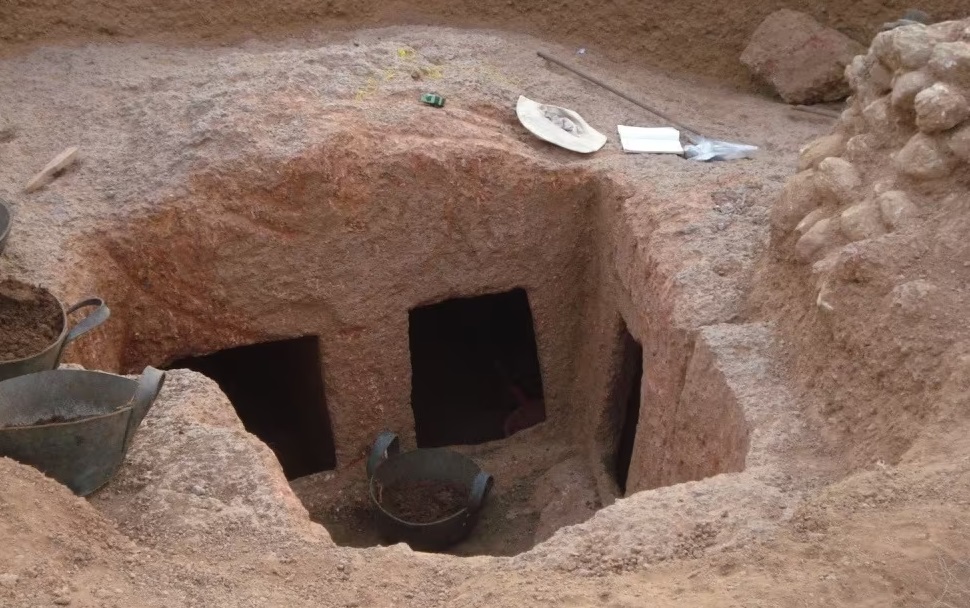
Burzahom, one of the earliest Neolithic sites in the Kashmir Valley, has long been recognized for its rich cultural and archaeological record, spanning from the Neolithic to the medieval period. Located at 34°10’N and 74°52’E, the site lies between the Himalayas and the Pir Panjal range.
Excavations began under Helmut de Terra in 1935 and continued extensively under T. N. Khazanchi between 1960 and 1971, revealing a complex history of human habitation, farming, and cultural exchange.
Archaeological evidence indicates four distinct phases of occupation at Burzahom: Neolithic I (Aceramic), Neolithic II (Ceramic), Megalithic, and Early Historic periods. Findings include the development of agriculture, primary and secondary burials of humans and animals, the use of red ochre in burials, and evidence of cranial surgery through trepanation. These discoveries illustrate a sophisticated understanding of cultural and medical practices among early inhabitants of the region.
The genetic study analyzed twelve human skeletal remains from Burzahom and nearby medieval sites. DNA extraction was performed in controlled clean rooms, and next-generation sequencing was used to generate high-quality mitogenomes. The analysis revealed that a Neolithic sample, dated to approximately 2009–2002 BCE, belonged to mitochondrial haplogroup M65a, a lineage still observed in modern Kashmiri populations.
A Megalithic sample was assigned to the U2b2 haplogroup, which is also present in Kashmir, Tajikistan, and Pakistan, indicating long-standing regional genetic connections.
Two medieval samples showed more complex patterns. One belonged to haplogroup M30, suggesting genetic continuity with earlier local populations and links to the Swat Valley and Roopkund region. The second medieval sample was assigned to haplogroup W4, a lineage found in Central Asia and Europe, indicating possible migration from Bronze Age Central Asian populations.
The study highlights both continuity and interaction in the maternal genetic landscape of Kashmir. Lineages such as M65a and U2b2 show a direct connection with modern populations in Kashmir and surrounding regions, confirming deep-rooted maternal ancestry. Lineages such as W4, however, reflect later migration events, illustrating the region’s complex demographic history.
Archaeological evidence from Burzahom also demonstrates cultural connections with the Swat Valley, northern Pakistan, and the Tibetan Plateau. Pottery, stone tools, and burial practices suggest that early inhabitants participated in seasonal migrations, trade, and cultural exchange across considerable distances. These connections appear to have persisted from the Neolithic through the medieval period.
This study represents the first comprehensive attempt to trace maternal genetic continuity in Kashmir using ancient DNA.
The research provides new insights into the region’s population history and reinforces the archaeological understanding of Kashmir as a crossroads between South Asia, Central Asia, and beyond.
The authors note that further research with larger sample sizes could provide additional clarity on historical population movements and cultural interactions in the region.

- News Deskhttps://thekashmiriyat.co.uk/author/kashmiriyat/

- News Deskhttps://thekashmiriyat.co.uk/author/kashmiriyat/

- News Deskhttps://thekashmiriyat.co.uk/author/kashmiriyat/
- News Deskhttps://thekashmiriyat.co.uk/author/kashmiriyat/
