

Irshad Ahmad
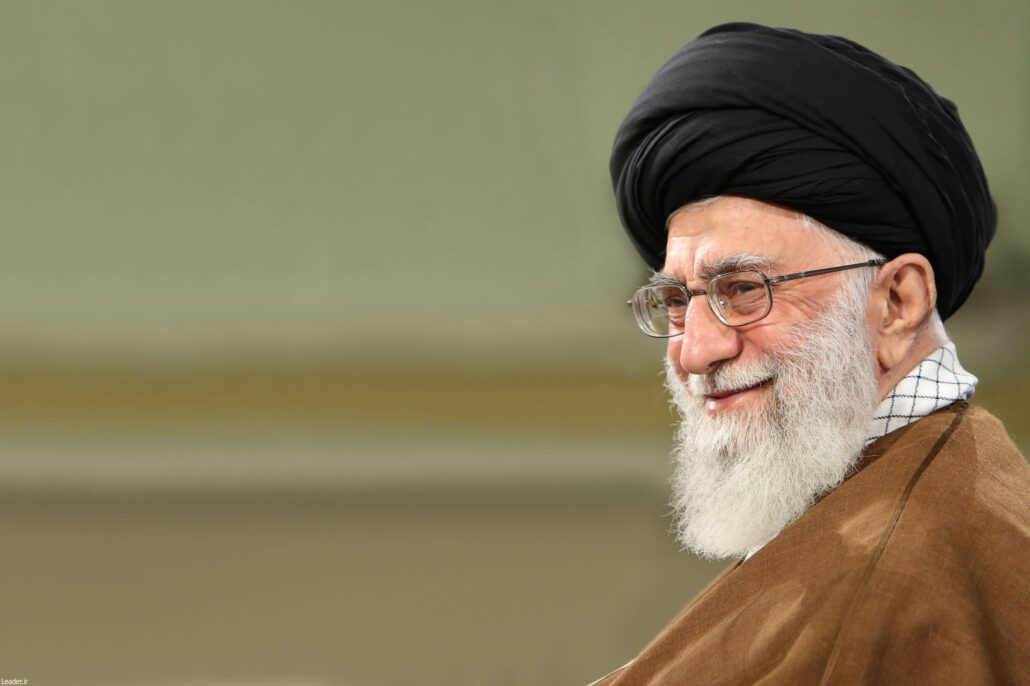
When Ayatollah Khamenei appeared on Iranian state television on June 18, 2025—calm, composed, and unmistakably alive—he wasn’t just delivering a speech. He was fact-checking a week’s worth of speculative Western headlines with the subtlety of a surgeon and the precision of a statesman. For anyone who had read the barrage of English-language news reports in the preceding days, his 15-minute address felt like watching reality puncture a well-inflated media balloon.
Some of those outlets had him mentally unfit. Others had him removed from power. Some even suggested he was pressured into ceasefire talks. But as the Supreme Leader confidently asserted that “Our people will not submit to an imposed war, nor to imposed peace,” it became evident—Western media had been reporting more on wishful thinking than on verified information.
Then came another theatrical twist: Israel claimed to have bombed Iran’s nuclear facilities. These were not schools or homes or sports complexes, we were told—certainly not the kind that might contain children, athletes, or the elderly. Yet images emerging from social media showed a different kind of target and a very real kind of loss. Major Western outlets echoed Israel’s claim as if it were universal truth, with headlines like: “Israel Strikes Nuclear Sites in Iran”—but when it came to the casualties, the phrase “Iran claims civilians killed” was inserted with the kind of skepticism reserved only for the “untrusted.” In some cases, civilian deaths were acknowledged—but only after clarifying that it was Iran saying so.
It’s here that Khamenei’s short speech did more than rebut military claims—it revealed the deeper function of global media narratives: not just to inform, but to frame. And in this case, frame Iran as the perennial rogue.
In a world where media is not merely a mirror but a maker of realities, the June 2025 address emerged as a rupture in the narrative monopoly. It revealed how dominant news networks do not just report on conflict—they manufacture definitions of war, peace, legitimacy, and threat. Western media, fortified by decades of soft imperial power, shapes how the world thinks, not just what it thinks about.
Iran, cast consistently as the ideological and political “Other,” has long been subjected to this hegemonic narrative. What Khamenei’s speech did—by invoking international law, not theology; by speaking with clarity, not confusion—was to challenge not only the content of those narratives, but their very architecture.
Here’s how it unfolded, headline by headline.
1 Reuters – “Iran leader Khamenei sees his inner circle hollowed out by Israel” (June 17, 2025)
Just a day before Ayatollah Ali Khamenei’s nationally televised address, Reuters published a report that relied exclusively on anonymous Israeli intelligence officials. The piece painted a bleak portrait: the Iranian leader, it claimed, was increasingly isolated, surrounded by a weakened and fragmented inner circle, and politically “hollowed out” due to recent Israeli attacks. It also implied that the structure of Iranian decision-making was teetering—without citing a single Iranian source or comment from Tehran.
This wasn’t just lazy reporting—it was strategic narrative sabotage. In psychological operations, such preemptive strikes on public perception are designed to undermine the authority and legitimacy of a leader before they’ve had a chance to speak. By framing Khamenei as internally shattered, the piece conditioned readers to view anything he might say the next day as desperate posturing from a man in decline.
But that’s not what happened.
On June 18, Khamenei delivered a speech that was anything but feeble. He appeared poised, lucid, and politically assertive, directly challenging both Israel and the U.S. He invoked international law, rejected imposed peace, and warned of “irreparable consequences” if America intervened militarily.
2. Economic Times – “Khamenei reportedly removed from decision-making after mental health breakdown” (June 16, 2025)
Two days before Ayatollah Khamenei’s speech, Economic Times, echoing reports from Israeli media, ran a headline suggesting that Iran’s Supreme Leader had suffered a mental health breakdown and was quietly removed from decision-making. No Iranian source was cited, no evidence presented, and no context offered. It was speculation—but presented with the aura of certainty, as if truth were just another line item in a briefing.
This wasn’t just biased journalism; this was epistemic violence masquerading as reporting. When journalism abandons fact for diagnosis, especially psychological ones, it crosses from critique into colonial pathology—delegitimizing not ideas, but minds.
There is a long imperial tradition of branding anti-colonial leaders as “mad,” “irrational,” or “delusional.” It doesn’t critique what the leader says; it casts doubt on their ability to speak at all. It silences through medicalization, a subtle and insidious erasure that cloaks geopolitical intent in the neutral-sounding veil of “health concern.”
Yet again, Khamenei’s speech on June 18 made a mockery of this narrative. He was articulate, composed, and steely-eyed in his message: Iran will not surrender. He spoke not as a figure sidelined, but as a man very much at the helm, warning the United States in no uncertain terms of “irreversible consequences.”
In contrast, this report reveals a deeper anxiety—not about Khamenei’s mental state, but about the West’s loss of monopoly over global narratives. Because in the age of social media, when a 3-minute video can disprove a media ecosystem, the real breakdown might be institutional—not personal.
3. CNN – “Iran signals readiness for ceasefire amid pressure from allies” (June 16, 2025)
In the heat of the Iran-Israel confrontation, CNN ran a report suggesting that Iran was signaling readiness for a ceasefire—not as a sovereign strategic move, but due to “pressure from allies” and regional fatigue. The report cited unnamed Western diplomatic sources and described Iran’s shift in tone as reluctant and reactive.
This is classic narrative sleight of hand. Instead of reporting what Iran said, the piece reported what Western sources interpreted Iran might want to say. And when Ayatollah Khamenei took the stage two days later and explicitly said:
“Our people will not submit to an imposed war, nor to imposed peace, and they will not bow to dictates from any party,”
CNN offered no high-profile correction, no counter-story, and certainly no apology for its premature framing.
This isn’t just about misreporting; it’s about pre-writing history. The goal here is to domesticate the resistance—to frame Iran not as an actor but as a reactor, not as choosing defiance but begrudgingly dragged into compliance. It places Iran under a kind of diplomatic guardianship, stripping the country of its agency even as it speaks.
Even more telling was how Khamenei’s defiant speech was ignored or diluted in many U.S. headlines, despite its clear implications. The American public wasn’t given a choice to evaluate Iran’s position; they were simply told what to think of it—through the fog of unverifiable leaks and wishful briefings.
As Khamenei fact-checked them in real time, a silence followed. And that silence, as always, was not accidental—it was editorial.
4. BBC – “Iran’s dangerous escalation threatens regional peace”
Just two days before Khamenei’s speech, the BBC issued a piece accusing Iran of “dangerous escalation” and threatening “regional peace.” The article squarely placed the blame on Tehran, conveniently omitting key context: just last year, on Israel bombed the Iranian consulate in Damascus, killing senior diplomats and IRGC personnel. This wasn’t a backchannel skirmish—it was an attack on sovereign diplomatic property, a blatant violation of international law under the Vienna Convention.
Yet the BBC’s coverage made no mention of this event, let alone framed it as the trigger. Instead, Iran’s retaliatory response was depicted as the starting point of the crisis. The article failed to report Iran’s claims of repeated Israeli drone incursions into its airspace—claims Khamenei directly referenced in his June 18 speech.
The BBC’s bias here was not just in omission but in tone. There was no room for Iranian civilians—unless their deaths were framed as Iranian “claims.” And when Iran invoked international law to defend its airspace and respond to aggression, it was brushed aside as mere posturing from a rogue regime.
Khamenei, in his televised speech, calmly but forcefully declared,
“Wise individuals who know Iran, its people, and its history will never speak to this nation in a threatening manner.”
But the BBC’s framing already presumed otherwise. It wasn’t reporting—it was narrative management, designed to render Iran’s self-defense as aggression, and to erase the chain of provocations that started not in Tehran, but in Damascus.
5. The New York Times – “Khamenei defiant as Iran faces international isolation” (June 18, 2025)
Published just hours after Ayatollah Khamenei’s speech, this New York Times report carried a telling title: “Khamenei defiant…”—a word that subtly implies irrational obstinance, rather than principled resistance. The piece selectively quoted the Iranian leader, omitting his most direct warnings to the United States, including:
“Washington must know that we will not surrender and that any American attack will have severe, irreversible consequences.”
It also framed Iran as a pariah, allegedly facing “international isolation”—without specifying which part of the “international” community was doing the isolating.
The New York Times’ article did not contextualize Khamenei’s speech as a response to repeated violations of Iran’s airspace or an assassination carried out against its diplomatic corps. Instead, it reduced his defiance to isolationist bravado. But isolation from whom? Not China. Not Russia. Not much of the Global South. The “international community” here is shorthand for the transatlantic alliance—a convenient club whose consensus shapes what counts as legitimacy.
By omitting key quotes and context, the NYT article didn’t just soften the speech—it depoliticized it. It took a calculated act of geopolitical signaling and repackaged it as little more than stubborn noise from a “defiant” regime.
But thanks to social media, the full speech was out there. Khamenei wasn’t confused, removed, or mumbling about peace. He was clear, cold, and confident. He invoked law, not just ideology. And for a moment, the Western media’s monopoly on narrative broke—not because it corrected itself, but because it couldn’t control the clip.
Western media’s power lies not in its reporting but in its capacity to define. It defines sanity. It defines sovereignty. It defines what is justifiable and what is irrational. The Iran-Israel conflict of June 2025 reminded us that this media power is not neutral—it is ideological.
Ayatollah Khamenei’s speech became a case study in narrative rupture. He didn’t rely on religious authority to make his case—he relied on language that the world’s so-called arbiters of law and order usually revere: international law. And that is precisely what made his words dangerous—not because they were fanatical, but because they were legal, rational, and unignorable.
In a landscape where truth is brokered not by facts but by who gets to speak them, resistance is not just military—it is epistemic. And for a brief moment in June 2025, one short speech reminded the world that even in a war of narratives, the microphone does not always belong to the empire.

- News Deskhttps://thekashmiriyat.co.uk/author/kashmiriyat/

- News Deskhttps://thekashmiriyat.co.uk/author/kashmiriyat/

- News Deskhttps://thekashmiriyat.co.uk/author/kashmiriyat/
- News Deskhttps://thekashmiriyat.co.uk/author/kashmiriyat/

