


Basit Shah
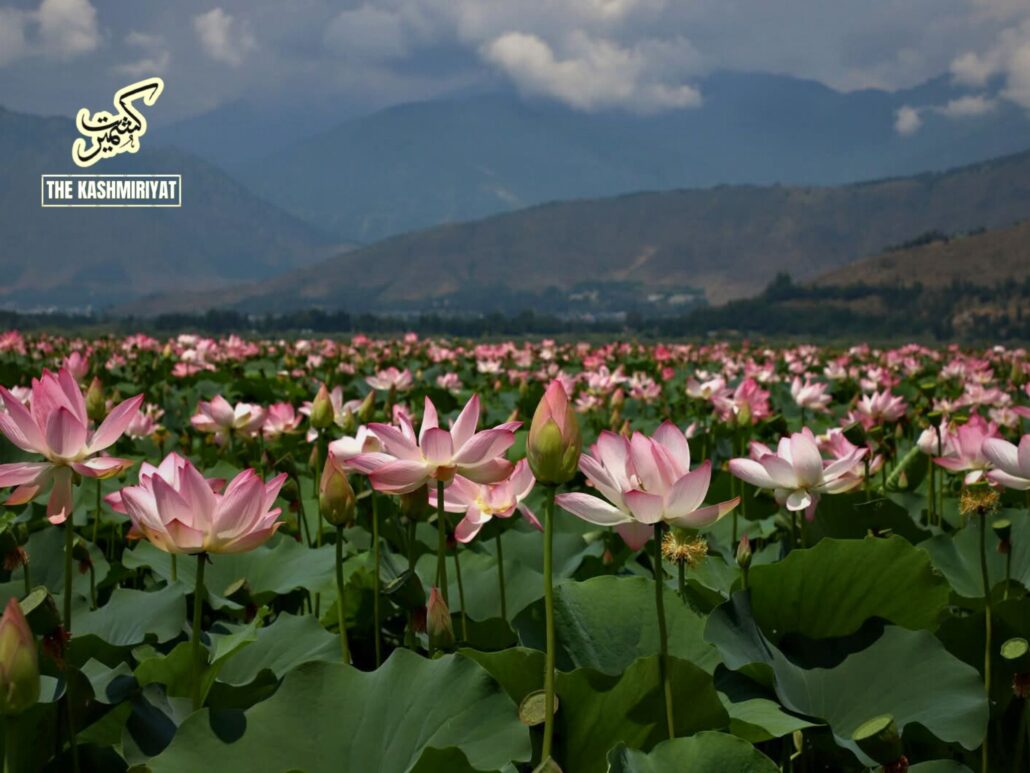
Wular Lake in north Kashmir is once again dotted with vibrant pink lotus flowers, a sight not seen since the devastating floods of 1992. For the local community, this is more than just a visual spectacle; it is the return of a lost livelihood and a piece of cultural memory.
“I never thought I’d live to see this again,” said 62-year-old Ghulam Nabi Lone, a lifelong resident of Banyari village who once harvested lotus stems, known locally as nadru, with his father. “These flowers were once part of our everyday lives. When they disappeared, so did a part of us.”
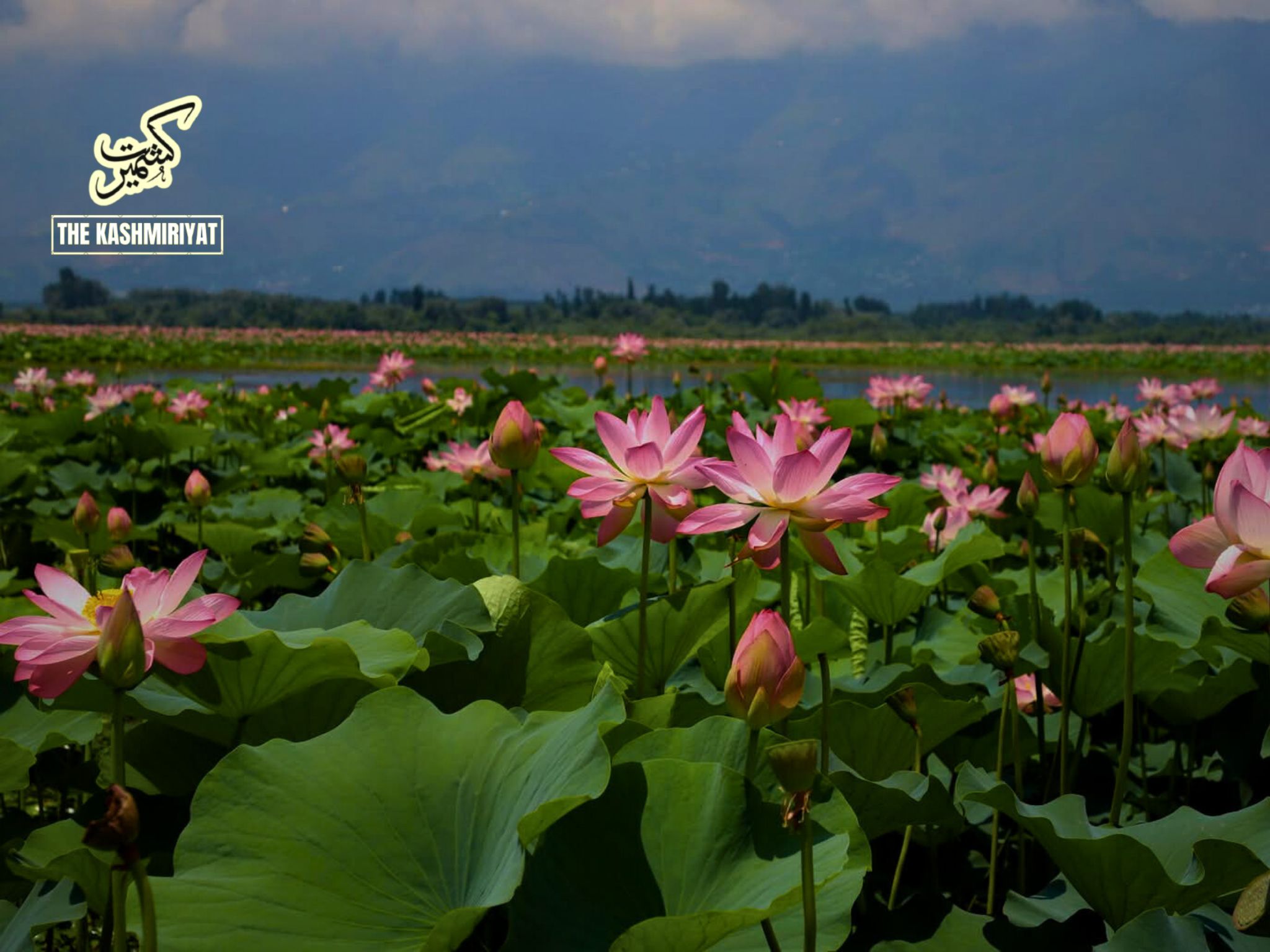

The return of the lotus to one of South Asia’s largest freshwater lakes has been made possible by years of conservation work by the Wular Conservation and Management Authority (WUCMA). Their efforts to dredge and desilt large portions of the lakebed, once buried in silt from the 1992 flood, have now borne fruit.
“These seeds had been buried under layers of silt for decades,” said Mudasir Ahmad, a zonal officer with WUCMA. “Once we began large-scale desilting, we saw the first signs of revival last year. This year, we also introduced new seeds into the cleared sections of the lake.”
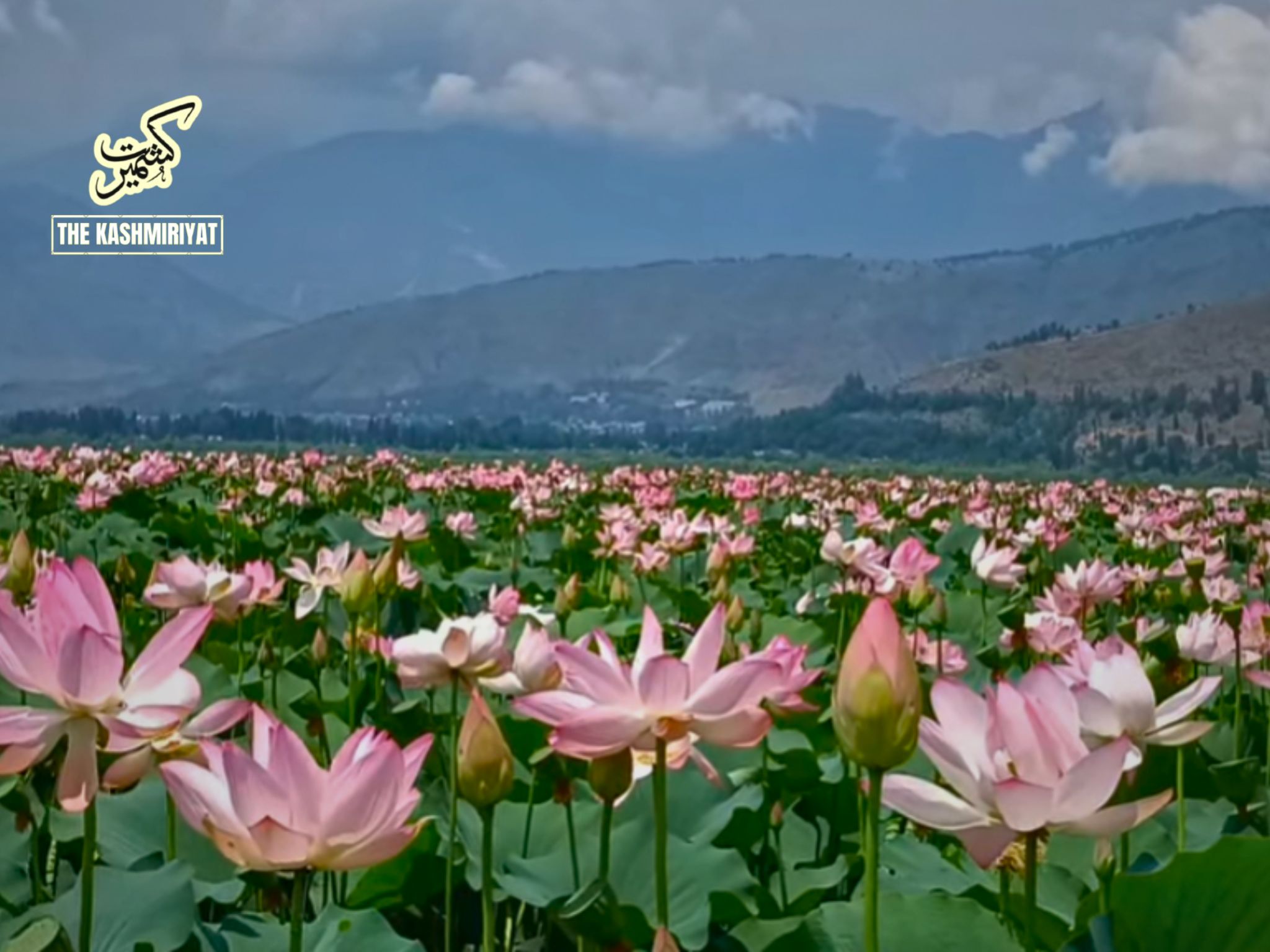
The revival has sparked cautious optimism among villagers. “People used to throw seeds into the lake for years hoping the lotus would return. Nothing worked. But this time, nature responded,” said local elder Hajra Begum from Lankreshi Pora, a village nestled along the lake’s edge.
Wular, which spans nearly 200 square kilometers, once produced abundant nadru, a staple of Kashmiri cuisine. The stems are harvested by hand, often requiring farmers to wade or dive into deep water. The work is physically demanding, but for many families, it was once a steady source of seasonal income.

The renewed blooms also carry economic promise. “From September to March, there’s little other work here,” said Shabir Hussain, a young resident who now hopes to follow his grandfather’s footsteps into harvesting. “This could bring back jobs to our villages.”
Environmental officials say over 7.9 million cubic meters of silt have been removed so far. Work is underway to construct retention basins on incoming streams to prevent fresh silt from choking the ecosystem again.
For now, the return of the lotus is being treated with reverence. “Last year when a few flowers bloomed, we asked people not to pluck them,” said Nazir Ahmad Dar, a community member helping with awareness efforts. “We wanted the lake to heal before we could touch its gifts again.”


- News Deskhttps://thekashmiriyat.co.uk/author/kashmiriyat/

- News Deskhttps://thekashmiriyat.co.uk/author/kashmiriyat/

- News Deskhttps://thekashmiriyat.co.uk/author/kashmiriyat/
- News Deskhttps://thekashmiriyat.co.uk/author/kashmiriyat/

