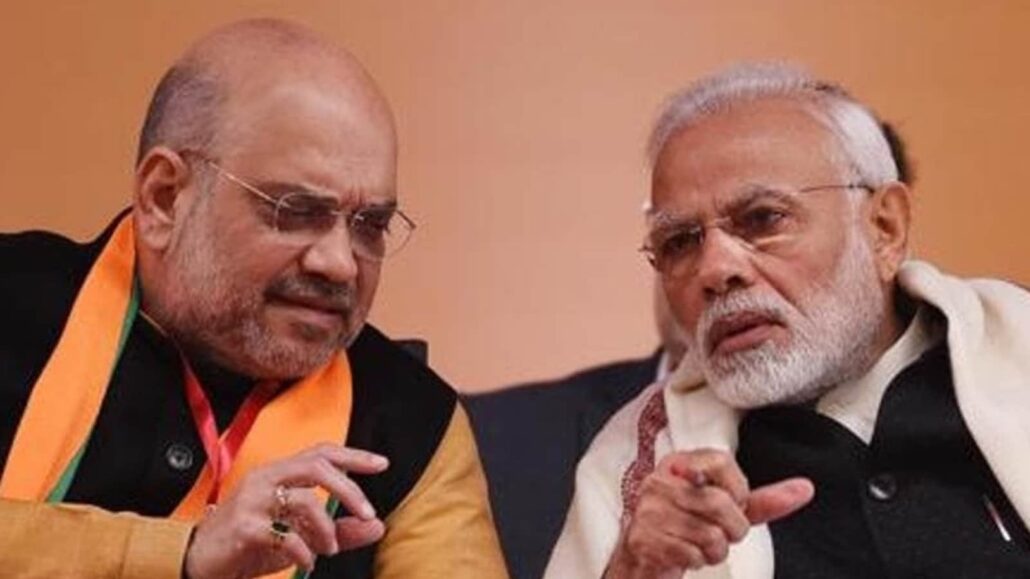
Union Home Minister Amit Shah on Tuesday said that the Narendra Modi-led government has dismantled every barrier protecting terrorism, from the abrogation of Article 370 in Jammu and Kashmir to the recent Operation Sindoor.
Speaking at the 41st Raising Day of the National Security Guard (NSG) at its headquarters in Manesar, Shah said that the government’s counter-terrorism policy is guided by “zero tolerance” and comprehensive reform.
He highlighted several measures taken under this policy, including amendments to the Unlawful Activities (Prevention) Act (UAPA), the introduction of clearer definitions of terrorism in criminal laws, and the banning of organisations such as the Popular Front of India (PFI).
Shah said that Operation Sindoor successfully targeted Pakistani terror bases, training camps, and launch sites. He added that under Operation Mahadev, Indian security forces carried out precise operations to neutralise those behind the Pahalgam attack, strengthening public confidence in the armed forces.
“From the abrogation of Article 370 to surgical strikes, airstrikes, and Operation Sindoor, our campaign against terror has been broad, coordinated, and uncompromising,” Shah said. “The Modi government is committed to eradicating terrorism from its roots.”
He further asserted that terrorists would no longer find safe havens anywhere, as Indian forces are prepared to act decisively “wherever and whenever required.”
The Home Minister said the government has implemented significant legislative and institutional changes since 2019 to bolster national security. These include amendments to the UAPA and NIA Act, and stronger action under the Prevention of Money Laundering Act (PMLA) to choke the financial channels of terror networks.
“For the first time, terrorism has been clearly defined under criminal law, closing the gaps that earlier allowed ambiguity,” Shah said, adding that over 57 individuals and multiple organisations have been designated as unlawful entities.
Highlighting infrastructure expansion, Shah announced that a new NSG hub is being established in Ayodhya, joining existing hubs in Mumbai, Chennai, Kolkata, Hyderabad, Ahmedabad, and Jammu.
These hubs, he said, will enable round-the-clock rapid response to emerging threats, with specialised units trained for high-risk operations.
According to Shah, these measures have significantly enhanced India’s ability to dismantle terror networks both within and beyond its borders. “We have ensured that no terrorist can find refuge, whether inside India or abroad,” he said.
Reflecting on the NSG’s contribution, Shah commended the force for its four-decade-long service in combating terrorism and organised crime. “The government will continue to strengthen security infrastructure and remain prepared to counter any threat to the safety of our citizens,” he concluded.

- News Deskhttps://thekashmiriyat.co.uk/author/kashmiriyat/

- News Deskhttps://thekashmiriyat.co.uk/author/kashmiriyat/

- News Deskhttps://thekashmiriyat.co.uk/author/kashmiriyat/
- News Deskhttps://thekashmiriyat.co.uk/author/kashmiriyat/
