
Danishwar Hameed
In January 2024, Mughal Darbar in Ramban, a modest eatery run by Ghulam Hassan Dar, was so crowded that finding a table for lunch meant waiting in line.
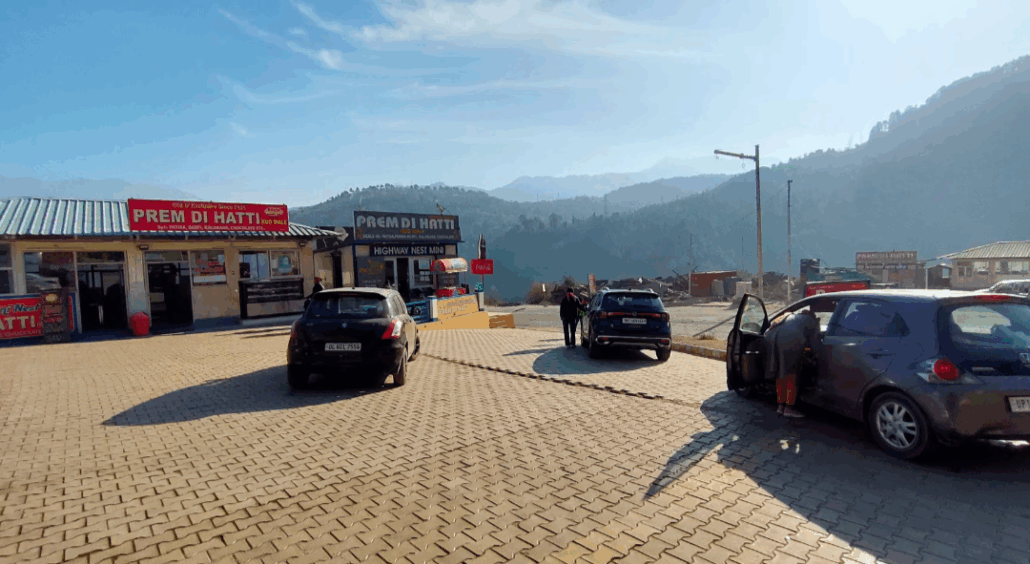
Truck drivers, tourists, and local commuters packed the small restaurant from morning till dusk. “Till last year, this place would be full. We served 400 to 500 plates daily. Now, barely 10,” Dar said, looking at the empty chairs around him. When I revisited the same place in July 2025, Dar sat idle for hours. I was his only customer all afternoon.
“They built a road that doesn’t touch Ramban at all,” he said. “Smooth drive for cars, but we’re left behind, forgotten.”
Dar’s story echoes through dozens of towns and stopovers along the Jammu Srinagar Highway (NH-44), especially in Qazigund, Banihal, Ramban, and Batote. These towns once pulsed with economic activity driven by one simple fact: thousands of vehicles moved between Jammu and Srinagar every day.
Passenger vehicles, goods trucks, and government convoys all passed through these towns. The highway wasn’t just a stretch of road; it was the economic artery for thousands of small businesses.
Dhabas, tea stalls, fruit vendors, tyre repair shops, and guesthouses all thrived on the slow, stop-and-go traffic that had to navigate the winding mountain roads.
Every winter, this trade saw a natural boost. As temperatures plummeted in the Kashmir valley, a seasonal migration took place.
Families from Srinagar, Anantnag, Pulwama and elsewhere would temporarily shift to Jammu. In those months, eateries and markets in Ramban and Banihal thrived, catering to Kashmiri travellers making the journey south. They would stop for lunch, warm up with chai, or rest before resuming travel.
Then came the tourists. As Kashmir’s tourism rebounded post-pandemic and after years of political instability, a new flow of visitors returned. From Vaishno Devi pilgrims to Gulmarg-bound backpackers, most came by road. The long journey meant stopping midway, often in Ramban or, Batkote, Udhampur, Banihal, to stretch, eat, or shop. And all of it trickled into the hands of small businesses along the highway.
But now, with the opening of a new network of tunnels and bypass roads, most of this traffic is gone. The new alignments, especially the Banihal Qazigund tunnel, the Ramban flyovers, and other re-routing, have made travel faster and safer, but at a cost.
Officials from the National Highways Authority of India (NHAI) say the bypasses were necessary. “The new alignments were made to reduce travel time, prevent landslides, and ensure all-weather connectivity. The old highway was dangerous and inefficient,” a senior NHAI engineer posted in Ramban told The Kashmiriyat.
When asked about the economic fallout for locals, the official admitted, “It is unfortunate. But development comes with trade-offs.”
A district official in Ramban, speaking on condition of anonymity, acknowledged that no structured compensation or rehabilitation has been made available so far. “We have received concerns from traders. There may be scope for setting up food courts or petrol pumps along new routes with priority to affected locals,” the officer said.
Bypassed and Forgotten
In Ramban alone, 95 businesses have shut down since the T-5 tunnel and the Banihal bypass became operational in early 2024, according to the Ramban Business Association.
Ramban Traders estimate hat over 5,000 people in the district were directly or indirectly employed in the food business along the highway, including cooks, waiters, cleaners, helpers, and small-time owners.
“Most of us built our lives around this road. We were cooks, waiters, helpers, now we are nothing,” said Farooq Ahmad, a former restaurant manager in Ramban. “The road is smooth, but our lives are broken.”
Ram Lal, who has run a kirana shop in Ramban market since 1989, remembers when the highway snaked right through the heart of the town.
“Every bus, truck, or car would stop here. People bought biscuits, snacks, even essentials. Some came for repairs, some for rest,” he recalled. “Now they drive through tunnels and bridges. No one enters Ramban.”
With barely two or three customers visiting his shop each day, Ram Lal says he is planning to shut down. “I never thought I’d see a day like this. Ramban used to be full of life.”
According to the Ramban Traders Federation, over 300 businesses in the wider district are facing steep losses. “The problem isn’t just about traffic bypassing towns, it’s about systemic neglect,” Javid Ahmad Mir told The Kashmiriyat.
“The government planned the road without any rehabilitation policy for us. No parking zones, no service roads, no alternative commercial routes. These shops were built over decades. Now it feels like everything was for nothing,” Mir said.
The changes brought in by the new infrastructure were sudden, locals say, with no meaningful consultation or transition plan. In the absence of footfall, even those who had once thrived on seasonal business have found themselves pushed to the margins.
Banihal, once a major transit point for trucks, buses, and tourists, has turned silent. Mohammad Younis Bhat, member of the Banihal Traders Union, said over 120 shops in the town have shut permanently since the opening of the Banihal-Qazigund tunnel and the new bypass. “We welcomed development, but what’s the cost?” he asked.
“Truckers don’t stop here anymore. The fruit sellers, tea stalls, tyre repair shops, restaurants, all gone quiet. Government talks about GDP and infrastructure, but on the ground, we’re losing livelihoods,” Ram Lal told The Kashmiriyat.
With fewer vehicles entering the town, allied services like small garages, tire shops, and mechanics are shutting shop too. Even petrol pump owners in some bypassed stretches have reported over 60 percent drop in daily sales. There are dhabas that once catered to hundreds of drivers, now reduced to selling a handful of cups of tea each day.
He provided data collected by the union: out of 210 active businesses in Banihal town in 2023, only 91 reported consistent earnings in 2025. Around 70 have closed. The rest are on the brink.
What adds to the frustration, according to Bhat, is the lack of any long-term policy to integrate local economies into the new highway model. There were no new commercial zones planned along the bypass. “Even a simple food plaza near the tunnel exits, with priority for affected shopkeepers, could have helped,” he said.
The Federation has submitted multiple memoranda to the district administration, urging for relief measures, soft loans, and the creation of designated service areas along the highway where bypassed traders can be relocated. “They promised a town planning model. But there’s been nothing, no compensations, no schemes,” Bhat said.
The silence in these towns is more than economic decline. It is a growing sense of abandonment. In tea shops and shuttered markets, residents speak not only of losses, but of a vanished rhythm of human interaction, trade, and a life that once revolved around movement. Now, the movement continues, just not through them.
Narrow Vision of Growth
Over the past decade, infrastructure has become the cornerstone of development policy across India.
From six-lane expressways in Uttar Pradesh to massive tunnels cutting through the Pir Panjal in Kashmir, the emphasis has been singular, faster, smoother, uninterrupted travel. But for the small towns, roadside eateries, tyre repair shops, tea stalls, and local traders who once thrived on traffic, these upgrades have left a deep scar.
In Pampore, a town famed for its saffron fields and known for drawing visitors along the Srinagar-Jammu highway, the bypass has brought quiet instead of progress. The once-bustling stretch where tourists and pilgrims stopped to sip tea and buy saffron now lies dull and forgotten.
Muneer Ahmad, who has sold spices and dry fruits near the old highway since the 1990s, watches the new road cut past his livelihood. “Even Pampore is forgotten now. People used to stop here for kehwa and saffron. Now they zoom past. If you only build roads and forget the people, what’s left?” he asked, pointing at rows of empty shops nearby.
This is not just about Kashmir. It is a pattern repeated across India; in Dhule, Maharashtra, in Nagaon, Assam, in Rohtak, Haryana. Bypasses and tunnels are hailed as triumphs of engineering, but no attention is paid to what they bypass socially and economically.
“What kind of development kills the very markets that supported the economy of the road?” asks economist Dr. Asif Wani. “This model rewards vehicle owners, logistics companies, and contractors but ignores the informal and small-scale workers who were the backbone of the roadside economy.”
High-speed tunnels and bypasses, designed to save time and fuel, have cost thousands their means of living. In towns like Ramban and Banihal, it is not just a loss of traffic; it is a collapse of the local economy.
Ghulam Dar, owner of the once-thriving Mughal Darbar restaurant along the highway in Banihal, now serves barely a handful of customers a day. “I used to make up to Rs 15,000 a day during peak season. Now I struggle to earn even 500,” he said. “It is like the road took everything with it; our customers, our trade, our dignity.”
The scars of this neglect are now visible, in shuttered shops, idle workers, and in Dar’s quiet restaurant, where the hum of traffic has been replaced by silence. The roads may have improved, but for those left behind, the journey has only become harder.

- News Deskhttps://thekashmiriyat.co.uk/author/kashmiriyat/

- News Deskhttps://thekashmiriyat.co.uk/author/kashmiriyat/

- News Deskhttps://thekashmiriyat.co.uk/author/kashmiriyat/
- News Deskhttps://thekashmiriyat.co.uk/author/kashmiriyat/
