
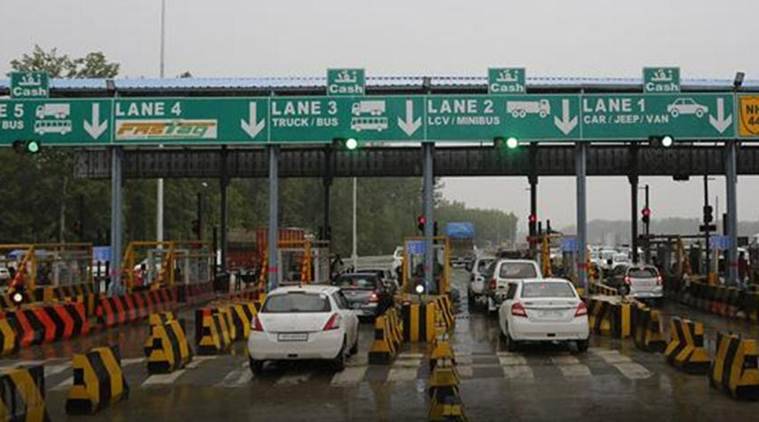
The Supreme Court has upheld a Kerala High Court order suspending toll collection on the Mannuthy–Edappally stretch of NH-544, ruling that toll can only be justified when citizens are provided with safe and motorable roads.
The case, National Highways Authority of India & Anr v. OJ Janeesh & Ors, stemmed from a public interest litigation (PIL) in which the High Court on August 6, 2025, halted toll collection by the National Highways Authority of India (NHAI) and its concessionaire.
The court observed that failure to provide safe and regulated highways breaches the principle of public trust, which governs the relationship between citizens and state agencies.
The judgment noted that citizens cannot be compelled to pay tolls merely because of a private concession agreement if the promised infrastructure is not delivered. Both the High Court and the Supreme Court stressed that accountability rests with the Central government, which has ultimate authority over levying such fees.
Tolls are collected under the National Highways Act, 1956, and the National Highways Fee (Determination of Rates and Collection) Rules, 2008. The government claims they are intended as user fees to recover costs of construction, ensure upkeep of highways, and shift the financial burden from taxpayers to direct users. However, the courts underline that toll collection is conditional upon NHAI’s duty to maintain highways in a safe and motorable state.
Reiterating the public trust doctrine, the courts said that roads are essential public infrastructure and their upkeep is a state obligation. In the 2025 Noida Toll Bridge case, the Supreme Court had already held that projects meant for public benefit cannot escape judicial scrutiny, particularly when public interest is compromised in favour of private entities.
Other courts have also questioned toll collection on poorly maintained highways. In February 2025, the Jammu & Kashmir and Ladakh High Court directed NHAI to charge only 20% of the toll on the Pathankot–Udhampur stretch of NH-44, citing unsafe conditions. Likewise, the Madras High Court in June restrained toll collection on the Madurai–Tuticorin NH-38 stretch, though the Supreme Court later stayed that order.
Legal experts believe the ruling in OJ Janeesh could trigger a wave of similar PILs nationwide, as it marks the first time the Supreme Court has linked toll collection directly with road quality.
The decision establishes that tolls are not unconditional revenue tools but depend on the government’s ability to provide safe, usable highways.

- News Deskhttps://thekashmiriyat.co.uk/author/kashmiriyat/

- News Deskhttps://thekashmiriyat.co.uk/author/kashmiriyat/

- News Deskhttps://thekashmiriyat.co.uk/author/kashmiriyat/
- News Deskhttps://thekashmiriyat.co.uk/author/kashmiriyat/
