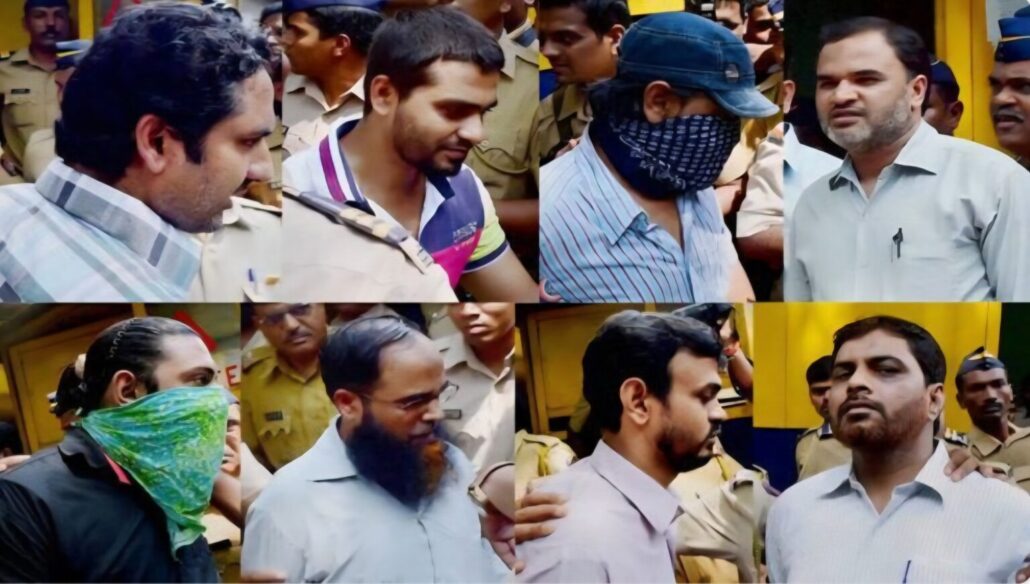
In a significant development, the Bombay High Court has acquitted all 12 men convicted in the 2006 Mumbai train blasts case, nearly 18 years after the deadly attacks that killed 189 people and left over 800 injured.
The accused were arrested under the Maharashtra Control of Organised Crime Act (MCOCA) and convicted in 2015 by a special court. Five of them had been sentenced to death, while seven others were given life imprisonment. The High Court, however, found that the prosecution had failed to prove their guilt beyond reasonable doubt.
The division bench of Justices Anil Kilor and Shyam Chandak delivered the ruling after years of delay in hearing the appeals. A push for speedy hearings in 2024 had led to the formation of a special bench.
Senior advocate Dr. S. Muralidhar, former Chief Justice of the Orissa High Court, represented two of the life convicts. He argued that the investigation was deeply flawed, pointing to issues with how confessional statements were obtained and criticizing the role of media trials and public pressure in shaping the case.
“These men have lost 17 years of their lives. They didn’t step out of jail for even a single day. Their youth is gone,” Muralidhar told the court. He warned that the system had failed not only the accused but also their families, who continue to carry the stigma of false terror charges.
He also pointed out the pattern of investigative agencies arresting people soon after a terror incident to satisfy public outrage, often without solid evidence. “Once someone is branded a terrorist, their life is over, even if the court later finds them innocent,” he said.
The full judgment is yet to be released, but the acquittal raises serious questions about the conduct of the police, the role of the media, and the use of anti-terror laws. It also adds to the growing list of cases where courts have had to correct grave miscarriages of justice long after lives have been shattered.
- News Deskhttps://thekashmiriyat.co.uk/author/kashmiriyat/

- News Deskhttps://thekashmiriyat.co.uk/author/kashmiriyat/

- News Deskhttps://thekashmiriyat.co.uk/author/kashmiriyat/
- News Deskhttps://thekashmiriyat.co.uk/author/kashmiriyat/
