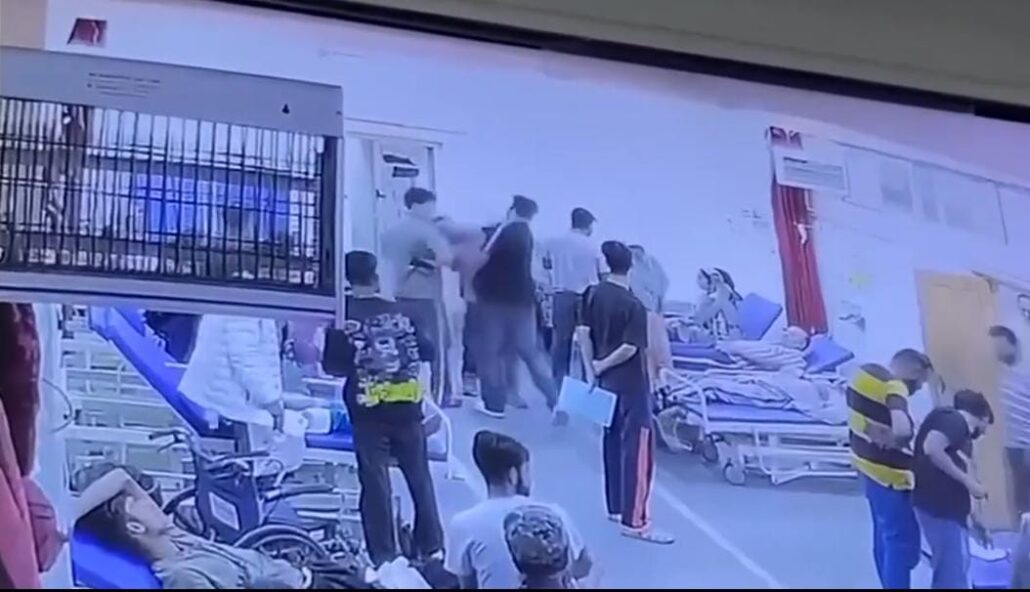
Yesterday’s incident involving a doctor at a major hospital in Kashmir being slapped by an attendant has generated strong reactions. For many, it became more than a case of assault.
The incident has turned into a mirror reflecting the many fractures in the region’s healthcare system, exposing not just patient frustration, but also the exhaustion and vulnerability of overworked medical professionals.
A senior resident doctor from Srinagar, requesting anonymity, described the pressures doctors face daily. “We are working 16 to 18 hours a day, with hardly any breaks or time to breathe. Sometimes we go entire shifts without meals or even water. I know some of us falter in our duties. But the system burns us out.” He explained that what is often perceived by patients as arrogance is, in many cases, sheer exhaustion.
This sentiment is echoed across much of India’s public health sector, which remains underfunded and overstretched.
The World Health Organization recommends one doctor per 1,000 people. India still falls short of this, with a reported shortfall of over five lakh doctors. In Jammu and Kashmir, the doctor-patient ratio is around 1:1400, below the global benchmark.
The situation worsens in rural areas where medical resources are even thinner.
Despite these conditions, doctors are frequently expected to uphold the image of a noble and morally exceptional profession. Yet this label, while flattering, can be a double-edged sword.
Many experts argue that when the “noble profession” narrative is used to shield the medical establishment from criticism, it silences necessary scrutiny and stifles reform. The result is a growing list of unresolved cases of alleged medical negligence, which only deepen public mistrust.
The incident in question has also triggered emotional and political reactions online.
While many have rightly condemned the act of violence against the doctor, there has also been pushback against journalists who reported on the suffering of patients. Several journalists say they were trolled and verbally attacked for doing their job.
“Some of them abuse our families for merely reporting,” one journalist said. “We have seen since yesterday how reporters are being ridiculed simply because they reported that patients were suffering. Do they expect us to not give voice to the weaker sections just because the doctor comes from a privileged background?”
This backlash underlines a larger unease in public discourse, one where acknowledging patient hardship is seen as a threat to the prestige of professionals. But the reality of patient experience is difficult to ignore.
A woman from Anantnag put it simply, “This does not even need media. Everyone has lived this reality. If you are not known, not recommended, not privileged, you are treated like a burden.”
Her words reflect a common experience in Kashmir’s hospitals, where access to care often depends on social status or personal connections. This sense of inequality, real or perceive, fuels public anger and erodes trust in institutions.
In response to public outcry, hospital authorities often announce investigations. But the pattern is familiar: quick statements, formal inquiries, and then silence. Rarely do the findings of these inquiries reach the public.
This lack of transparency has long-term consequences. When accountability remains hidden, people stop believing that justice, whether for doctors or patients, will ever be served.
There are lessons to be drawn from other countries. In places like Sweden, Norway, and Denmark, doctors are respected not because they are elevated above criticism, but because they operate within systems that ensure accountability.
These countries have built mechanisms such as independent health ombudsmen, formal patient grievance systems, and transparent disciplinary processes. There, trust is institutional; not personal.
In Sweden, doctors are required to self-report errors. In Norway, patient rights are legally guaranteed and ethical training is a requirement, not a token gesture. The focus is not on declaring the profession noble but on making it just and responsive to all.
What happened in Kashmir should not be viewed as an isolated altercation. It is a symptom of a larger breakdown, one where both patients and professionals feel unheard and unprotected.
Doctors deserve safe working conditions and dignity. Patients deserve respect and fair treatment. But both exist within a system that often fails them.
The real challenge is not choosing between patients and doctors. It is about rebuilding trust in public health institutions, so that neither must suffer in silence or speak only when violence breaks through.

- News Deskhttps://thekashmiriyat.co.uk/author/kashmiriyat/

- News Deskhttps://thekashmiriyat.co.uk/author/kashmiriyat/

- News Deskhttps://thekashmiriyat.co.uk/author/kashmiriyat/
- News Deskhttps://thekashmiriyat.co.uk/author/kashmiriyat/
