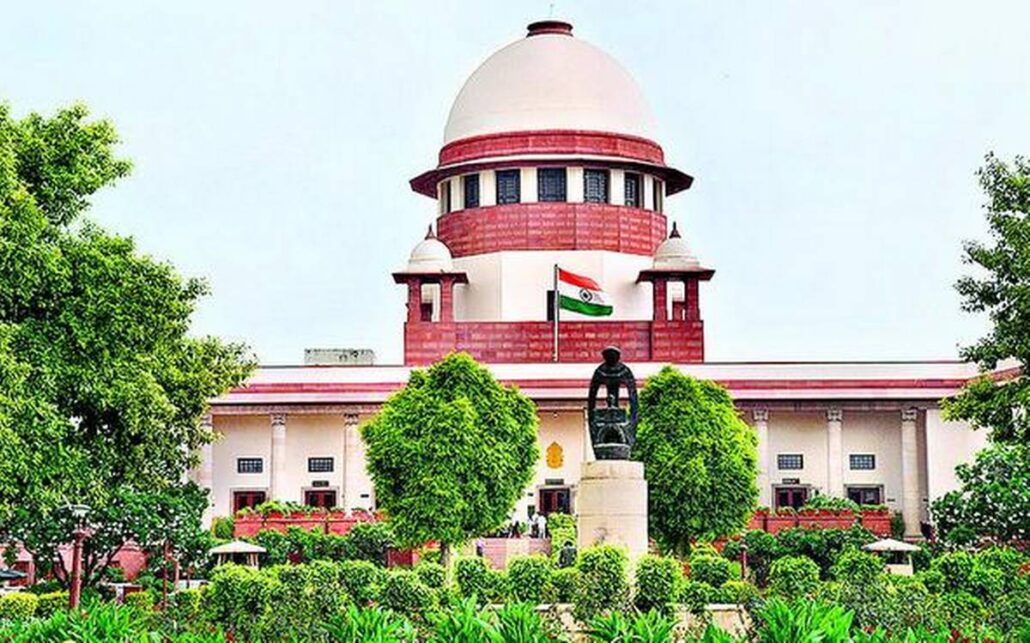
The Supreme Court on Friday declined to directly hear a Public Interest Litigation (PIL) challenging the Jammu Kashmir administration’s ban on 25 books about Kashmir, directing the petitioner to approach the Jammu and Kashmir and Ladakh High Court instead.
A bench of Justices Surya Kant, Joymalya Bagchi, and Vipul M. Pancholi observed that since several authors of the proscribed books belong to the Union Territory, the High Court would be in a better position to assess the matter.
“Recently, there’s an attempt to bypass High Courts. Let’s have the advantage of the HC opinion. We have seen the list of the books. Some local people are talking about issues. HC would be in a better position,” Justice Kant remarked during the hearing.
The court ordered that if the matter is filed before the High Court, it should be placed before a three-judge bench headed by the Chief Justice, with a request for an early decision. The bench clarified that it had not expressed any opinion on the merits of the case.
The petition was filed by Kashmir-based lawyer Shakir Shabir, represented by Senior Advocate Sanjay Hegde. Hegde argued that Section 98 of the Bharatiya Nagarik Suraksha Sanhita (BNSS), which allows governments to seize objectionable publications, was being misused. He warned that such orders could lead to blanket seizures nationwide, calling it an excessive measure.
However, the bench maintained that the matter must first be examined by the High Court. When Hegde suggested shifting the case elsewhere, Justice Kant cautioned that bypassing the jurisdictional High Court would be “demoralising,” adding, “The High Court is a constitutional court. Let it decide.”
Earlier this year, the Jammu and Kashmir Home Department—acting with the approval of Lieutenant Governor Manoj Sinha—issued the ban order, stating that the books promoted false narratives and secessionist ideas. The notification alleged that the publications distorted history, glorified militants, vilified security forces, and fostered radicalisation among youth.
Authorities said the books were found to “excite secessionism” and threaten the sovereignty and integrity of India, thereby invoking Sections 152, 196, and 197 of the Bharatiya Nyaya Sanhita, 2023.
- News Deskhttps://thekashmiriyat.co.uk/author/kashmiriyat/

- News Deskhttps://thekashmiriyat.co.uk/author/kashmiriyat/

- News Deskhttps://thekashmiriyat.co.uk/author/kashmiriyat/
- News Deskhttps://thekashmiriyat.co.uk/author/kashmiriyat/
