

Lokendra Singh
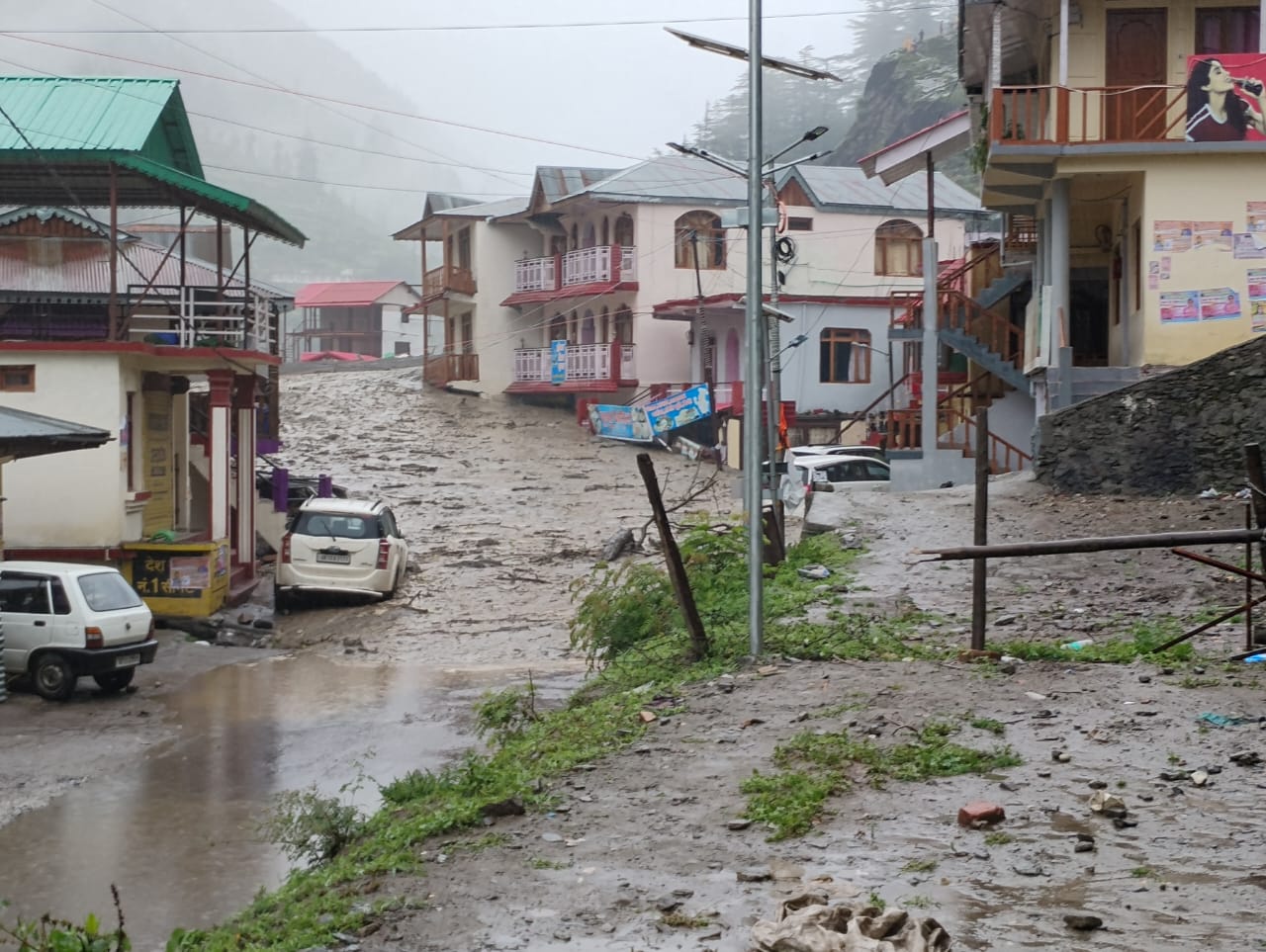
On a quiet Sunday afternoon in Dharali, a village nestled in Uttarakhand’s Uttarkashi district, the Kheer Ganga stream turned monstrous within seconds. What was once a gentle trickle became a roaring wall of water, mud, and boulders. It surged through the valley, demolishing homes, sweeping away bridges, and engulfing entire communities.
“When we saw the huge amount of water flowing down, we panicked,” said Subhash Chandra Semwal, a 60-year-old from nearby Mukhba village. “We blew whistles to alert people, but they were swept away in moments.” The flash flood lasted less than sixty seconds, yet the devastation was immense.
“This wasn’t just water. It was rage, mountain rage,” said Prateek Rawat, a 23-year-old student from Dharali whose family home barely survived a similar landslide last year. In 2024, boulders had come crashing down behind their house at midnight, breaking part of the roof and burying their vegetable patch. “We’ve been living with this fear for years,” he said, “but this time, it felt like the mountain wasn’t just angry, it was screaming.”
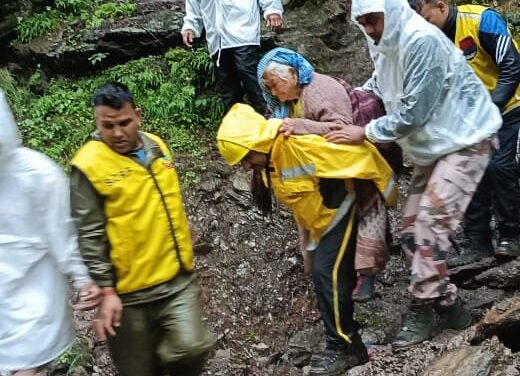
At least five people have died, and more than fifty remain missing, including 8 to 11 soldiers stationed at a nearby army camp, highlighting the unpredictability and reach of the disaster. A swift and large-scale rescue response has been underway: the Indian Army’s Ibex Brigade, stationed just 4 km away, reached the scene within ten minutes and coordinated with NDRF, SDRF, and ITBP teams. Together, they have rescued upwards of 190 people, using drones, tracker dogs, and makeshift ziplines amid continuing rain and treacherous terrain.
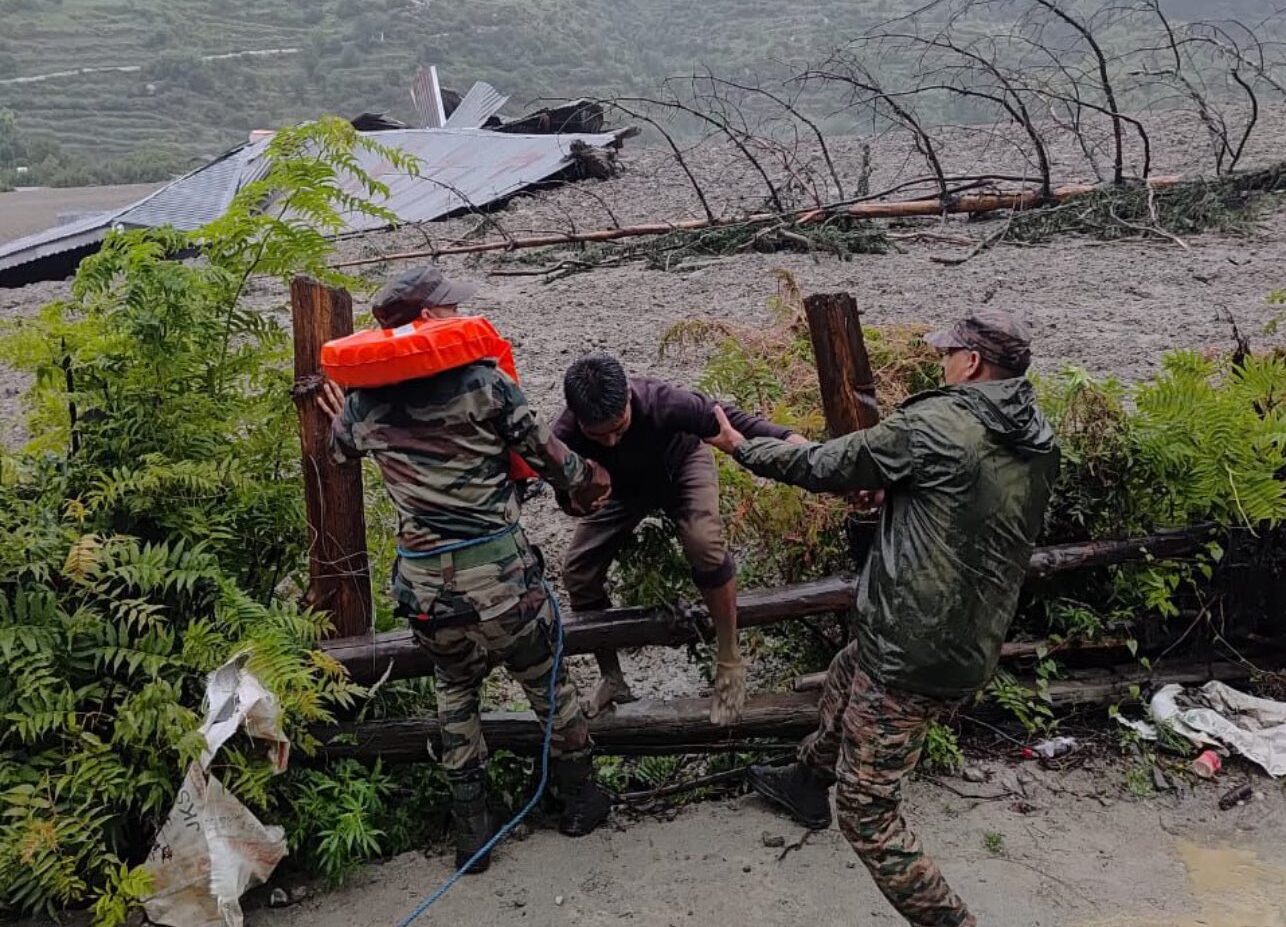
Further compounding the emergency, 20 to 25 hotels and homestays were washed away in Dharali, and the historic Kalp Kedar temple was buried under debris. Fifty to one hundred families have reportedly been impacted. Roads, helipads, power lines, and communication channels have been severely disrupted. The Army camp in Harsil was also damaged, and key access routes including national highways and local roads, have collapsed or vanished under landslide debris.
More than 200 rescue personnel including army, ITBP, NDRF, SDRF, BRO, and civil teams have been mobilized. Two Chinook and MI-17 helicopters have been deployed for evacuation and supply drops, though dense fog and rain continue to hamper air operations. Relief camps are now operational in schools and hotels, and essential supplies, medical aid, and trauma counselors are being dispatched. The state government has released ₹20 crore in disaster relief funds, while the Prime Minister and Home Minister have pledged full central support.
“The situation in Dharali is extremely sad and painful. Rescue operations are being carried out on a war footing. All resources have been mobilized to save lives and provide relief. We are doing everything possible to support the affected people,” Chief Minister Pushkar Singh Dhami said.
Locals say that there barely was a warning before the disaster. “It happened without any warning. One moment everything was normal, and the next, water came rushing through the market, pulling people with it. We shouted, blew whistles, did whatever we could, but it was all so fast. Even the air felt frozen. There was nowhere to run,” said Lokendra Bisht, a local homestay owner who survived by climbing onto his roof.
Man-made wounds, nature’s revenge
Across the state, from Joshimath to Karnaprayag, and now to Dharali, the mountains are cracking open, flooding, or sinking under pressure. The fragile Himalayas, long revered as a symbol of endurance, are showing signs of collapse.
The disaster in Dharali is not an anomaly. It’s part of a growing pattern that scientists, activists, and locals have been warning about for years. The frequency and ferocity of landslides, flash floods, and land subsidence have increased dramatically. And behind every “natural” disaster lies the same set of triggers: aggressive road building, hydroelectric tunneling, deforestation, unregulated tourism, and, increasingly, climate volatility.
Mountains are not just masses of rock; they are an ecosystem that exists in a finely balanced state. Their slopes, vegetation, water channels, and soil layers work in quiet coordination to keep the land stable. When a road is carved into one side of a mountain, or a tunnel is bored through its underbelly, this intricate equilibrium is disrupted. It’s like slicing into one part of the body and expecting the rest to function as before. Water begins to flow where it shouldn’t, slopes weaken, and the soil starts to move. In time, the mountain reacts, tilting, sliding, collapsing, not out of malice, but in an effort to reestablish balance. What we call disasters are often just the terrain’s desperate attempts to hold itself together after being wounded.
“In our time, elders would say, don’t disturb the silence of the mountains; they watch everything, and they remember. Back then, the hills stood quiet, like sages in meditation. But now, that calm is gone. At night, if you listen closely, you can hear it, the mountains wail. It’s not wind. It’s a cry, deep and long, as if the land itself is mourning what we’ve done to it.,” said Dhani Ram, 84, a lifelong resident of a village near Joshimath.
Nowhere is this clearer than in Himachal Pradesh.
Just days before the Uttarkashi flood, Himachal’s Mandi district saw its roads disappear beneath massive landslides triggered by heavy rainfall. The Chandigarh-Manali highway — a vital lifeline — was again buried in debris. Twelve people have died in the last week alone as monsoon-triggered calamities rip through Kullu, Kangra, and Solan.
Residents shared videos of entire hillsides sliding down like liquid. Cars, buildings, trees, all were engulfed. The ground beneath once-thriving villages has turned unstable. The Beas River swelled beyond capacity, washing away bridges and homes. This is now an annual script, one that gets deadlier each monsoon.
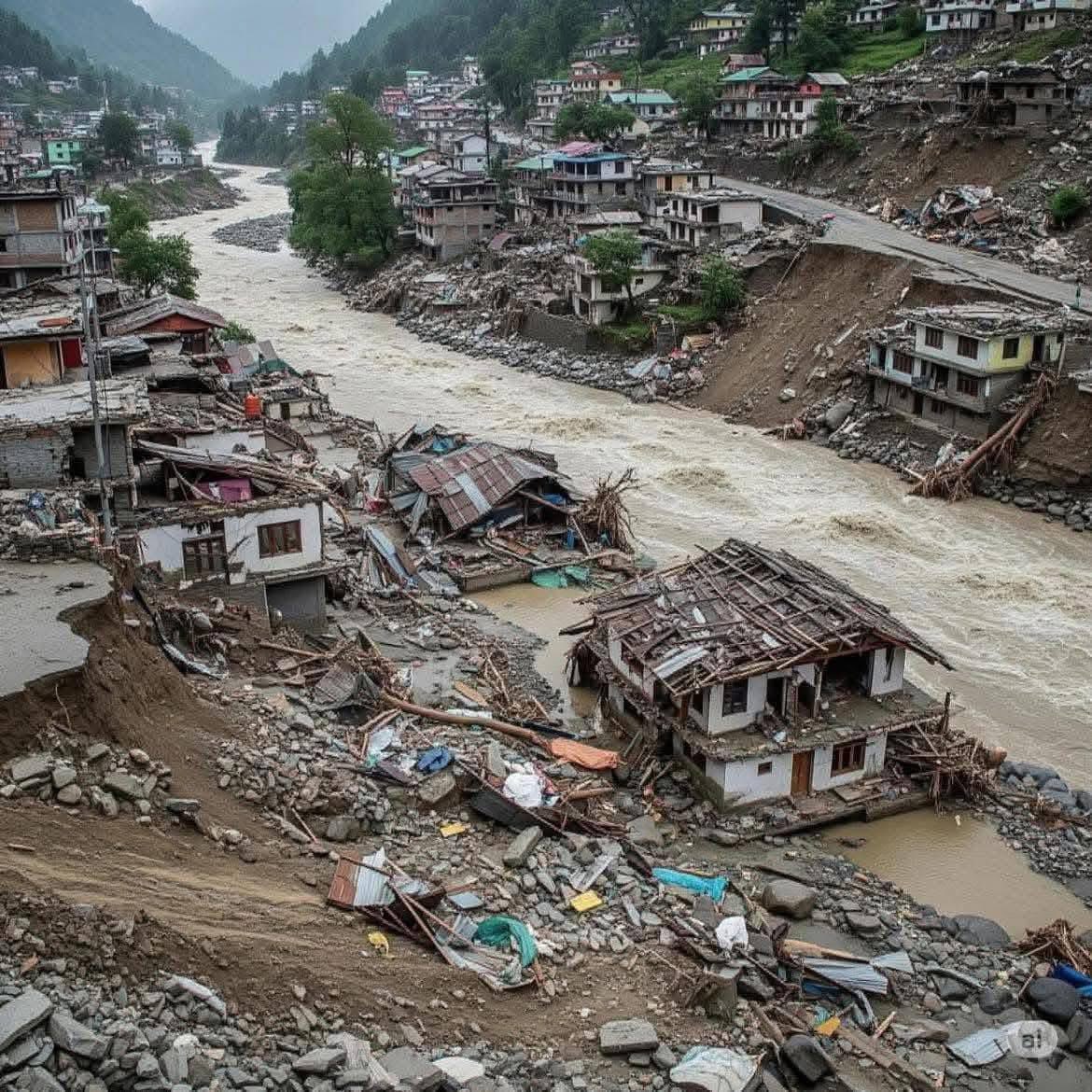
In 2023, parts of Joshimath, a prominent pilgrimage and tourist town in Uttarakhand, began to sink. As per official figures, Over 860 buildings developed cracks; around 181 of them were officially declared unsafe, and over 350 families evacuated. Homes, shops, roads, and temples showed visible distress as the ground buckled under pressure. Experts attributed the crisis to a combination of factors: fragile geology, aggressive slope cutting for road widening, large hydropower tunnel projects, faulty drainage systems, and groundwater seepage.
By mid‑2025, a technical team, including IIT‑Roorkee specialists, visited nearby Karnaprayag and confirmed signs of unstable ground, though evidence of subsidence in Helang has not yet been substantiated.
The Supreme Court of India has sounded grave concern over similar ecological risks in Himachal Pradesh. In July 2025, the court warned that unchecked development, especially tourism-driven construction, highways, hydropower and deforestation, could cause the state to “vanish in thin air” unless immediate corrective action is taken. The bench emphasized that revenue generation should not come at the cost of the environment.
The National Institute of Disaster Management has similarly highlighted the vulnerability of the Himalayan region. While specific figures like “78 percent of Uttarakhand and 66 percent of Himachal Pradesh are landslide‑vulnerable” were not located in public NIDM assessments, their reports consistently underscore that both states remain highly susceptible due to rapid land‑use changes, poor slope management, and a lack of effective long‑term planning.
Climate change accelerating damage
According to UNESCO and the World Meteorological Organization (WMO), glaciers around the world have lost approximately 9,000 gigatonnes of ice since 1975, with the most substantial losses recorded in 2024, a clear warning of the accelerating climate crisis. In the Hindu Kush Himalaya region, glacier melt increased by 65% between 2011 and 2020 compared to the previous decade. Projections suggest that if global warming remains between 1.5 °C and 2 °C, around 30–50% of glacier volume in this region could vanish by the end of the century, more, if temperatures exceed that threshold.
Scientific modeling published in Water Resources Research shows that in the Himalayas, rainfall contributes to about 38% of landslide events, with glacier and snowmelt accounting for nearly 29%, and thawing permafrost another 33%. Each of these triggers is worsening under the influence of climate change.
Satellite data from 2024 revealed that glacial lakes in India have expanded by approximately 33.7%, with the broader Himalayan region seeing a 10.8% increase. This expansion raises the risk of glacial lake outburst floods, an increasingly common and deadly hazard. Taken together, these findings reflect a deeply troubling reality: the Himalayas are shedding their protective ice cover at an unprecedented rate, precipitation patterns are destabilizing mountain slopes, and existing infrastructure policies remain dangerously out of sync with the region’s seismic and ecological fragility.
And then, there’s Ramban, where the mountains aren’t just sliding anymore. They’re disintegrating.
One morning in Digdol village, Mohammad Iqbal, a fruit seller, stepped out to set up his stall along the Srinagar-Jammu highway. What he saw shook him to the core. “It was like the mountain was melting,” he said. “The hill just gave up.” What followed was chaos: electricity poles snapped, vehicles flung into the void, and a section of highway buried, again. A 10-kilometer stretch of road has become a ghost path, swallowed and rebuilt repeatedly, only to vanish once more. Three people died. Dozens were injured.
“Every few weeks, the road disappears and reappears,” Iqbal said. “We’ve stopped expecting stability.”
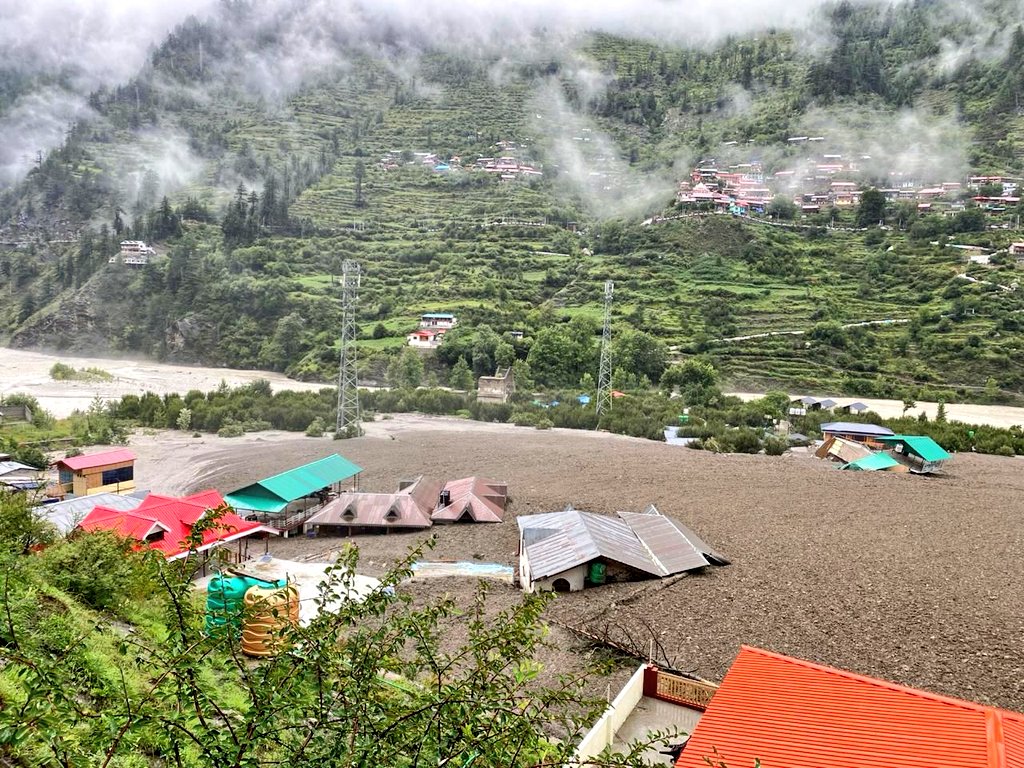
This instability is manmade. Tunnel blasting, slope cutting, and road-widening in the Chenab Valley have turned regions like Mahore, Panthiyal, and Batote into collapse zones. A 2021 CAG report slammed multiple infrastructure projects for bypassing environmental guidelines, lacking slope stabilization, and ignoring geological warnings. Even the Landslide Numerical Risk Factor (LNRF) model, published in the Journal of Resources and Ecology, identified 21% of the Chenab Valley as lying in very high landslide hazard zones. That number is rising.
A senior geologist from Jammu, who requested anonymity, offered a stark warning: “We are triggering what we should be trying to prevent. Landslides, road collapses, glacial floods—none of these are surprising anymore. What’s surprising is how little we’ve changed our approach.”
The effects are not only structural. For residents, even the environment feels altered. “The birds don’t sing anymore,” Iqbal added. “They fly in chaos, or they’ve just vanished. We’ve destroyed their homes. Trees are axed every day, hills blasted open, and roads carved through forests as if nothing else lives here. What’s left for them? Dust and noise. We don’t sleep at night anymore. Even a dog barking feels like a warning.”
In Dharali, an elderly shepherd sat beside the crumbling banks of the Bhagirathi and spoke softly, as if to the river. “Old people warned not to disturb the calm of these mountains, The mountains have long been generous, offering water, shelter, energy, and beauty. But they are young mountains, still forming, shifting, adjusting. Unlike the old Deccan plateau, the Himalayas are alive. And every road, tunnel, and dam cut into them is a scar they remember.”
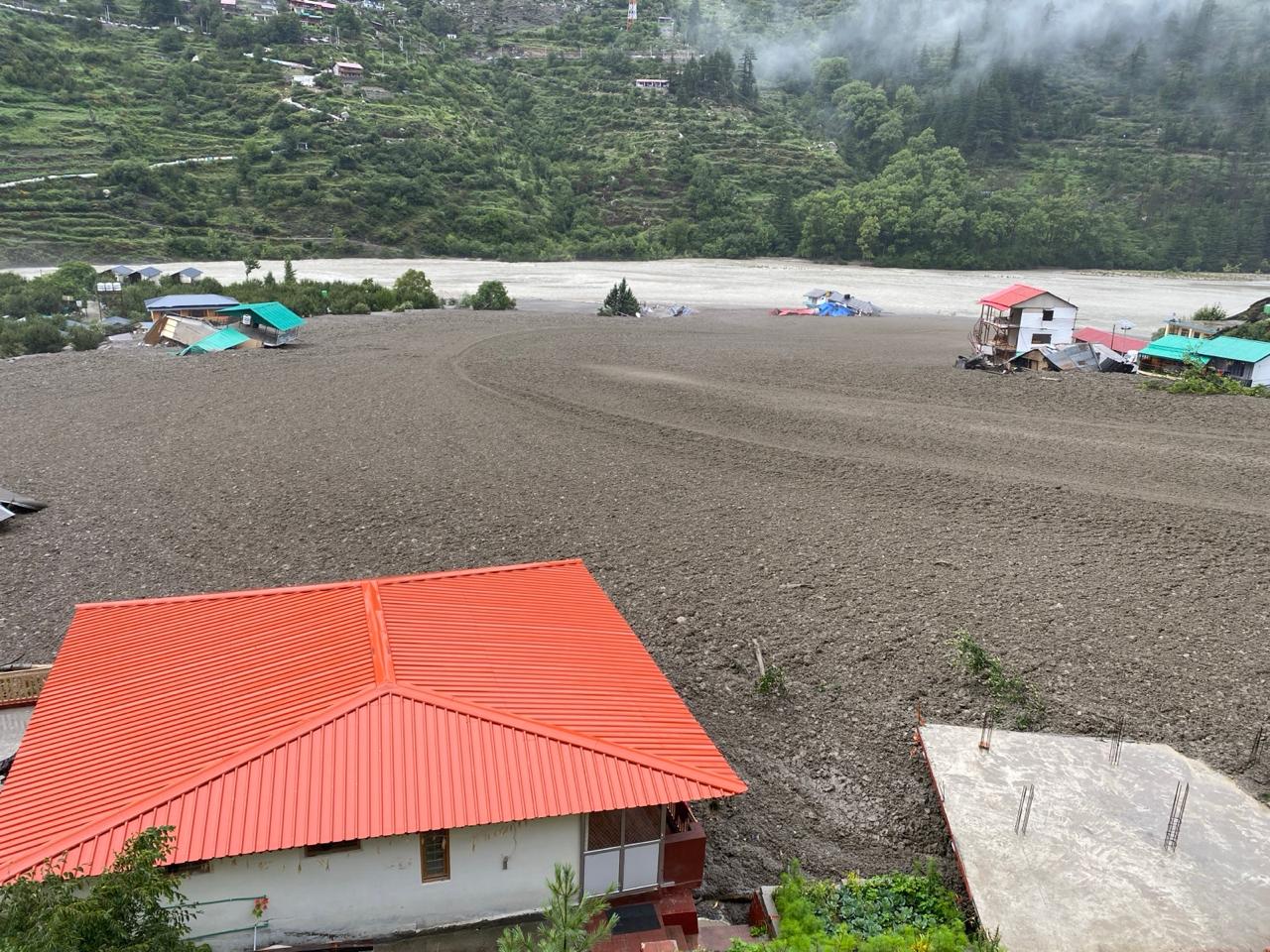
From Dharali to Joshimath, Mandi to Ramban, the mountains have had enough. They are rebelling. Unless India radically rethinks its infrastructure model in the hills, with seismic safety, ecological integrity, and long-term sustainability, these disasters will not remain seasonal news. They may become permanent reality. And the cost will be paid not just in homes and highways, but in lives.
“They always call it a ‘natural disaster’, but how natural is blasting tunnels through sleeping mountains? The big media houses won’t say that, because the companies funding this destruction also fund their ads,” Prateek told The Kashmiriyat. “We live here. We see it every day. If you listen at night, you can hear it, the mountain crying.”

- News Deskhttps://thekashmiriyat.co.uk/author/kashmiriyat/

- News Deskhttps://thekashmiriyat.co.uk/author/kashmiriyat/

- News Deskhttps://thekashmiriyat.co.uk/author/kashmiriyat/
- News Deskhttps://thekashmiriyat.co.uk/author/kashmiriyat/
