
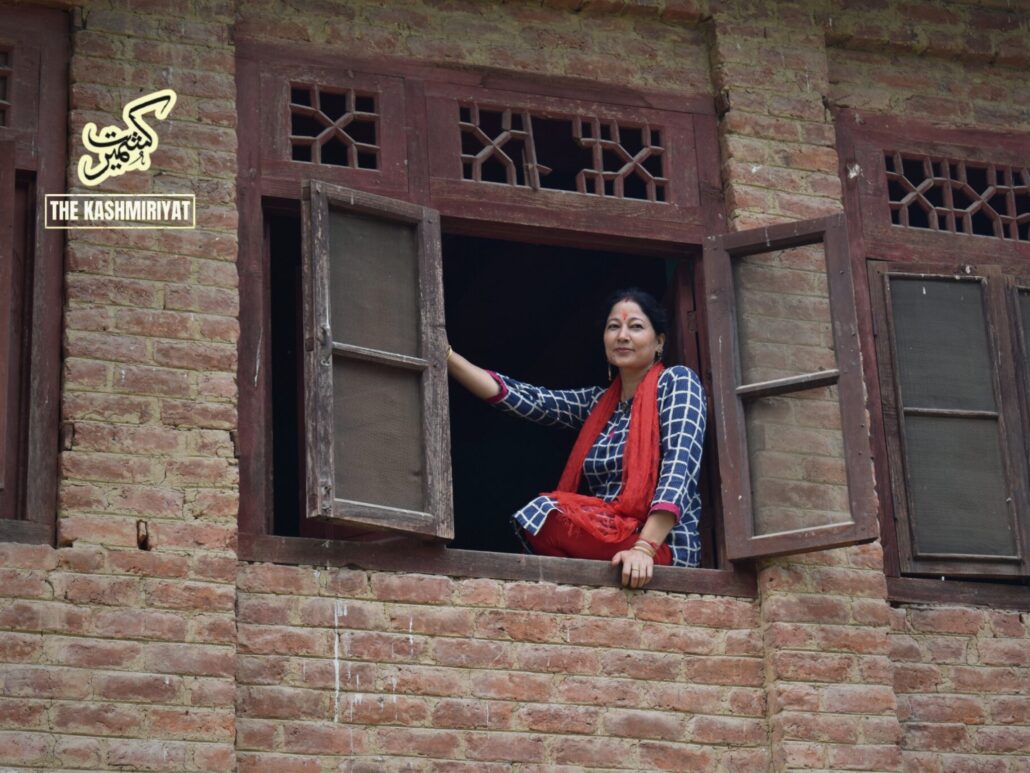
Prerna Bhat
As the Jammu Kashmir administration rolls out fresh rehabilitation measures for displaced Kashmiri Pandits in mid-2025, the word “return” dominates headlines once again. New transit accommodations are under construction in Baramulla, Anantnag, and Shopian. Job packages, housing assistance, and priority identification for displaced families continue as part of the government’s ongoing effort to facilitate the community’s homecoming.
But for a generation like mine, those born after the 1990 migration, this “return” is far more complex than a physical relocation. It is emotional, logistical, and perhaps most importantly, a reunion not only with land, but with memory, identity, and people.
I have never lived in Kashmir, yet Kashmir lives deeply within me. For many of us born in exile, it exists as a mosaic of second-hand stories and fading photographs, an inherited blend of nostalgia and trauma. The promise of return may be wrapped in optimism and headlines, but on the ground, it raises difficult questions: Where do we return to when the homes are no longer ours? When the lanes no longer recognize our footsteps, When the idea of “home” is shaped more by longing than familiarity.
The current government’s initiatives are commendable in intention. Over the past few years, policies have evolved to offer displaced Pandits secure and sustained avenues for returning to Kashmir through townships, government jobs under the Prime Minister’s Special Package, and digital land records. Crucially, the government has clarified that return is voluntary, not compulsory. And yet, as a Kashmiri Pandit born in exile, I find myself navigating a deeply emotional terrain.
Homecoming is not just about walls and roofs; it’s also about neighbours, language, rituals, and the comfort of being known. The physical structures we left behind may be rebuilt, but our social fabric has been irreversibly altered. Today’s return often resembles relocation more than reunion. Many transit colonies are gated and located on the town outskirts, separated from the local population for security reasons. While administratively justifiable, this design can reinforce distance rather than heal it.
Security concerns are real and must not be dismissed. Targeted killings of Kashmiri Pandits and Sikhs in recent years have justifiably necessitated caution. But safety alone cannot define meaningful resettlement. A truly sustainable return demands trust, coexistence, and social integration; not isolation behind compound walls.
Another complexity lies in the generational divide. For our elders, return is a long-held dream rooted in memory and belonging. But for those of us raised in cities like Jammu, Delhi, Pune, or Mumbai, Kashmir is intimate yet abstract. We know the smell of snow only through stories, the rhythm of Kashmiri in our grandparents’ voices, and the silence of Shivratri more than its songs. The longing exists, but so does uncertainty. Returning to a place we’ve never lived in is not a conventional homecoming. It’s a first encounter with a forgotten part of ourselves.
Recent media coverage has highlighted not only government initiatives, but also individual efforts by Pandits choosing to return and rebuild. Their stories, though few, are powerful; reviving temples, resuming agriculture, launching small businesses in long-abandoned areas. These are signs of resilience and hope. But they also show the urgent need for institutional support that goes beyond infrastructure. Return must be more than a policy goal, it must be a lived experience built on empathy, healing, and inclusion.
Language preservation is another concern. Many young Kashmiri Pandits no longer speak the language of their ancestors. Cultural practices, songs, and idioms are at risk of fading unless actively revived through community programs, school curricula, and digital spaces. The return must also be cultural, rooted in language, traditions, and a sense of shared future.
It is worth noting that many Kashmiri Muslims have, in their own quiet ways, expressed grief and regret over the events of 1990. There are grassroots efforts; unreported, but real, where individuals have helped Pandits trace old properties, protected shrines, or welcomed them back. These gestures, though understated, are vital threads in any fabric of reconciliation. Encouraging such human connections may do more for peace than policy ever can.
As the region evolves in the post-Article 370 era, Kashmir’s future must be built on shared narratives, not selective memories. For peace to last, all communities must find voice, space, and recognition. Kashmiri Pandits deserve not only a rightful place in the land but also within its cultural and civic dialogue.
The road ahead is difficult, but not impossible. The question is no longer whether we should return. The real question is: how do we ensure that the return is meaningful, sustainable, and complete?
As someone born in the shadows of exile, I hope we are seen not just as inheritors of trauma, but as bearers of dialogue, memory, and renewal. We are not here to reopen wounds—we are here to help heal them, if only we are given the space. Let the return be not just a political promise, but a human possibility.
Prerna Bhat is a MA, Mass Communication student at Jamia Millia Islamia, New Delhi. The views expressed by the author are her own.

Prerna Bhat
- Prerna Bhat#molongui-disabled-link

- Prerna Bhat#molongui-disabled-link

- Prerna Bhat#molongui-disabled-link

- Prerna Bhat#molongui-disabled-link
