


U.S. President Donald J. Trump, alongside Israeli Prime Minister Benjamin Netanyahu, has unveiled a comprehensive 20-point plan aimed at ending the ongoing conflict in Gaza. The proposal outlines steps for a ceasefire, the return of hostages, the release of prisoners, and a conditional path toward Palestinian self-determination.
Hamas has not formally accepted the plan.
The Gaza conflict cannot be understood without its deep historical roots. From the Palestinian perspective, the story begins in 1948 with the Nakba, or “catastrophe,” when over 700,000 Palestinians were displaced following the creation of Israel. Entire towns and villages were depopulated, leaving hundreds of thousands as refugees in Gaza, the West Bank, and neighboring countries. Since then, repeated wars, military operations, and uprisings have compounded human suffering.
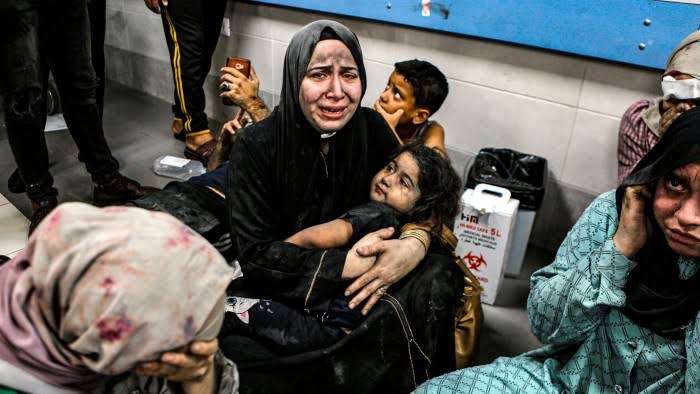
It is estimated that hundreds of thousands of Palestinians have been killed, and millions more displaced over successive conflicts, with Gaza emerging as one of the most densely populated and embattled regions in the world.
Many analysts describe former U.S. President Donald J. Trump’s 20-point Gaza peace plan as one of the most comprehensive proposals for the region in decades. The plan tackles both immediate and long-term challenges, including a ceasefire, the return of hostages, mass prisoner releases, humanitarian aid, infrastructure reconstruction, economic development, and governance reforms.
It also introduces a structured framework for a transitional technocratic government, international oversight, and programs to promote interfaith dialogue and deradicalization. By addressing multiple dimensions of the conflict simultaneously, the plan aims to create conditions for lasting stability in Gaza while improving the daily lives of its residents.
At the same time, critics argue that the plan remains highly conditional and potentially limiting for Palestinian sovereignty. Hamas has not accepted its terms, particularly those demanding disarmament and exclusion from governance, raising questions about its feasibility on the ground.
The heavy international oversight, particularly by the U.S., and the phased approach to self-determination, are viewed by some as curbing true Palestinian political agency. Skeptics warn that without broad Palestinian buy-in, the plan, despite its detailed measures, risks remaining a blueprint on paper rather than a practical solution.
1. Gaza as a Terror-Free Zone
The plan demands that Gaza be fully “deradicalized” and stripped of militant infrastructure, ensuring it no longer poses a threat to Israel or neighboring countries.
2. Redevelopment for the People of Gaza
Trump frames the plan as an opportunity to rebuild Gaza, with large-scale investment to improve housing, health, education, and daily life for its residents who have suffered immense destruction.
3. Immediate Ceasefire if Accepted
If both sides agree, the war would halt instantly. Israel would suspend air and artillery strikes and pull forces back to agreed lines while conditions for a staged withdrawal are prepared.
4. Hostage Return Within 72 Hours
All hostages, alive or deceased, would be released by Hamas within three days of Israel’s public acceptance of the deal — one of the plan’s central conditions.
5. Mass Prisoner Releases by Israel
In return, Israel would free thousands of Palestinian prisoners, including those jailed since October 2023 and many serving life sentences, as part of the exchange.
6. Amnesty for Disarmed Hamas Fighters
Hamas members who voluntarily lay down arms and renounce violence could receive amnesty, avoiding prosecution or reprisals.
7. Safe Passage Abroad for Hamas Members
Those unwilling to stay in a disarmed Gaza may be granted safe passage to leave the territory, preventing further bloodshed.
8. No Forced Displacement of Gazans
The plan explicitly states that Gaza’s residents will not be expelled. People may leave voluntarily but will also have the right to return.
9. No Israeli Annexation of Gaza
Israel would pledge not to annex Gaza. Its forces would withdraw in stages, conditional on compliance with security and demilitarization terms.
10. Transitional Technocratic Palestinian Government
A temporary governing committee of Palestinian technocrats — not affiliated with Hamas — would oversee Gaza’s administration during the transition.
11. International “Board of Peace”
This board, chaired by Trump and reportedly including figures like Tony Blair, would supervise reconstruction efforts and governance reforms.
12. U.S.-Led Stabilization Force
An international security mission under U.S. leadership would patrol borders, prevent arms smuggling, and train a vetted Palestinian police force.
13. Humanitarian Aid Without Interference
The plan calls for unfettered delivery of food, medicine, and relief supplies through neutral agencies such as the UN and Red Crescent.
14. Large-Scale Infrastructure Rebuilding
Clearing rubble, rebuilding homes, repairing utilities, hospitals, and schools form a central pillar of the reconstruction promise.
15. Special Economic Zone for Gaza
A designated economic zone would attract investment, create jobs, and provide long-term development opportunities.
16. Demilitarization of Hamas’ Arsenal
Hamas’ tunnels, rockets, and military infrastructure would be dismantled, monitored by international overseers.
17. Regional and International Security Guarantees
Neighboring states and international bodies would provide guarantees to enforce compliance and maintain peace.
18. Interfaith Dialogue and De-Radicalization
Programs promoting religious coexistence and tolerance aim to reduce extremism and create a culture of peace.
19. Palestinian Authority Reforms
The Palestinian Authority would undergo reforms to prepare for integrating Gaza under a more credible and accountable governance structure.
20. Conditional Path to Palestinian Statehood
Finally, the plan sketches a potential route toward Palestinian self-determination, but only after sustained reforms, demilitarization, and long-term stability.
While Israel has embraced the plan, Hamas has yet to agree, rejecting provisions that demand its disarmament and exclusion from governance. Critics also warn that the plan leaves Palestinian sovereignty uncertain, offering only a conditional and delayed path to statehood. Arab leaders have voiced skepticism, with some accusing Washington of reshaping Gaza into a U.S.-controlled protectorate rather than enabling true self-rule.
For Gaza’s civilians, reeling from the immense death toll and destruction, the question remains whether this plan marks a genuine “pathway to stability” or another unrealized promise in the decades-long Israeli-Palestinian conflict.


- News Deskhttps://thekashmiriyat.co.uk/author/kashmiriyat/

- News Deskhttps://thekashmiriyat.co.uk/author/kashmiriyat/

- News Deskhttps://thekashmiriyat.co.uk/author/kashmiriyat/
- News Deskhttps://thekashmiriyat.co.uk/author/kashmiriyat/

