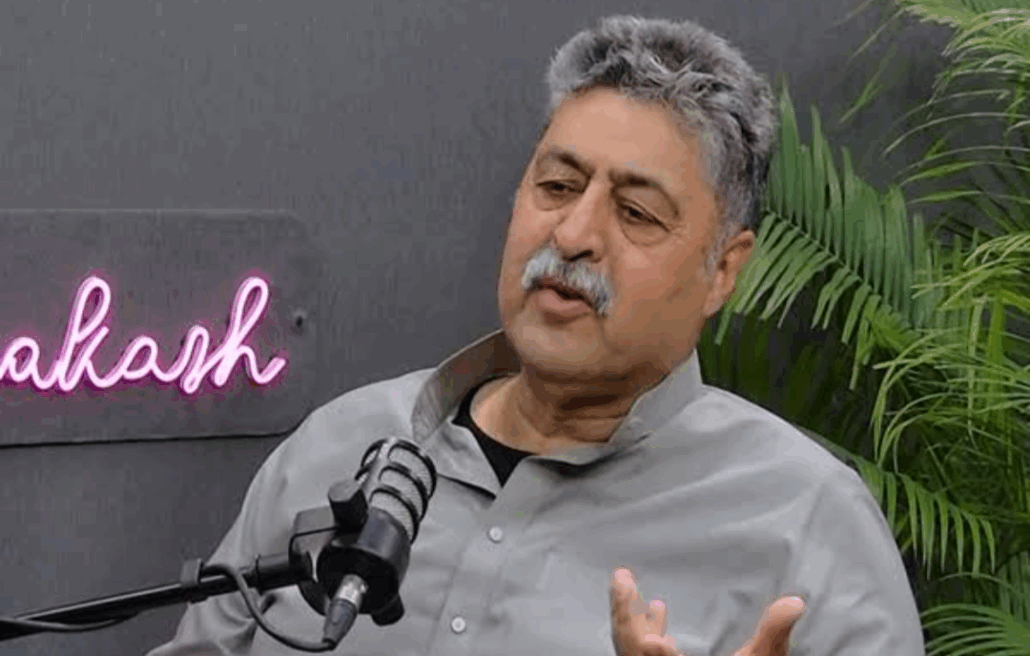
Former separatist leader Bilal Gani Lone has announced his entry into mainstream politics, stating that his primary goal is to represent what he calls the “true legacy” of his late father, Abdul Gani Lone. He claimed that legacy has been distorted, even within his own family.
Bilal’s remarks are being seen as a subtle but pointed critique of his brother, Sajjad Lone, a sitting MLA who has long been part of the political mainstream. In an interview with PTI Videos, Bilal said the two brothers have followed “different political paths since 2002.”
While extending best wishes to Sajjad, Bilal offered a direct message: “Please do politics on your own strength and not exploit the ideology” of their father.
He recalled that Abdul Gani Lone believed in “non-violence” and the “dignity of his people,” principles that Bilal says will form the core of his own political work.
According to Bilal, the People’s Conference, the party founded by his father, ceased to exist the day Abdul Gani Lone was assassinated on May 21, 2002. He vowed to build his political path “organically,” free from what he termed as the “politics of exploitation.”
Abdul Gani Lone, known as a proponent of dialogue and peaceful resolution, was killed by militants affiliated with Hizbul Mujahideen while attending a memorial event for Mirwaiz Maulvi Farooq in Srinagar.
Bilal Lone, who was a part of the core leadership of the Hurriyat Conference, said he does not seek high political office such as MLA or Chief Minister. “I am not in any race,” he said, adding that his only goal is to “speak the truth” and repay his debt to the people of Kashmir.
“If the door of my house closes because of the truth, I have no problem with that,” he said, describing his new journey as a “collective effort” moving slowly but with sincerity.
Reflecting on his years in the separatist Hurriyat Conference, Bilal admitted that he and his colleagues “could not do anything” for the people. However, he said his relationship with Mirwaiz Umar Farooq remains strong, calling him a leader of “very big stature” with a constructive role to play in the region’s politics. He also said he would be willing to support Mirwaiz if he chose a democratic political path.
Bilal explained that his shift in politics is rooted in concern for Kashmir’s youth, whom he described as the “biggest casualty of the conflict.” “Violence has only brought destruction,” he said. “It has finished generations and left Kashmiris at the receiving end.”
He said his political approach would go beyond traditional governance issues like roads, electricity, and water. Instead, he wants to focus on the future, education, healthcare, and employment opportunities for the younger generation.
Addressing Kashmir’s communal divide, Bilal said that trust between Kashmiri Muslims and Pandits must be rebuilt. He emphasized the need for reconciliation and a sincere dialogue about past wrongs.
“Kashmiri Muslims must understand that if a Kashmiri Pandit lives in our neighbourhood, it is our duty — not the state’s, to protect him,” he said.
“Whatever wrong has been done in the past, let us address it. Let us go and talk to those who were wronged. If we made a mistake, let us apologise.”
Bilal Lone is the latest among several former separatist figures in Kashmir to enter the electoral field. Earlier, his brother Sajjad Lone transitioned from separatist politics to mainstream politics, forming his own version of the People’s Conference.
Several organisations including Jamaat-e-Islami, a group banned by the Indian government in 2019 for alleged separatist links, have entered mainstream electoral politics in Kashmir.
Alongside them, a number of former separatist figures have distanced themselves from past ideologies and joined regional parties or contested elections independently.
These include individuals like Syed Saleem Geelani and Syed Salim Gilani—both of whom joined the People’s Democratic Party—and Aga Syed Muntazir, also now part of the PDP.
Others such as Ghulam Nabi Shaheen, Javaid Hubi, and Altaf Ahmad Bhat have either joined regional formations like the Awami Ittehad Party led by Engineer Rashid (Sheikh Abdul Rashid) or contested as independents.
Home Minister Amit Shah recently announced that two Hurriyat Conference constituent groups—Jammu & Kashmir People’s Movement (JKPM) and J\&K Democratic Political Movement (JKDPM)—have formally renounced separatist ideology and pledged allegiance to the Indian Constitution.
He called the shift a sign of deepening democratic engagement in the region. With inputs from PTI
- News Deskhttps://thekashmiriyat.co.uk/author/kashmiriyat/

- News Deskhttps://thekashmiriyat.co.uk/author/kashmiriyat/

- News Deskhttps://thekashmiriyat.co.uk/author/kashmiriyat/
- News Deskhttps://thekashmiriyat.co.uk/author/kashmiriyat/
