

Shabir Ali/ Meer Irfan
On a damp morning in Srinagar’s bustling meat market, the smell of fresh cuts blends with the metallic tang of blood, filling the air with a familiar heaviness. Customers bargain with butchers, unaware of what may lurk unseen inside the very mince they are about to carry home. Beyond the visible cleanliness of neatly displayed meat counters lies a disturbing reality: ground meat in Kashmir, often imported from outside the region, could be laced with filth, adulterants, and industrial waste that no one ever signed up to eat.
For years, whispers about “rotten meat” have circulated in hushed tones. But our weeks-long investigation, based on insider testimonies, official records, and recent raids, reveals an industry riddled with malpractice, where public health takes a backseat to profit.
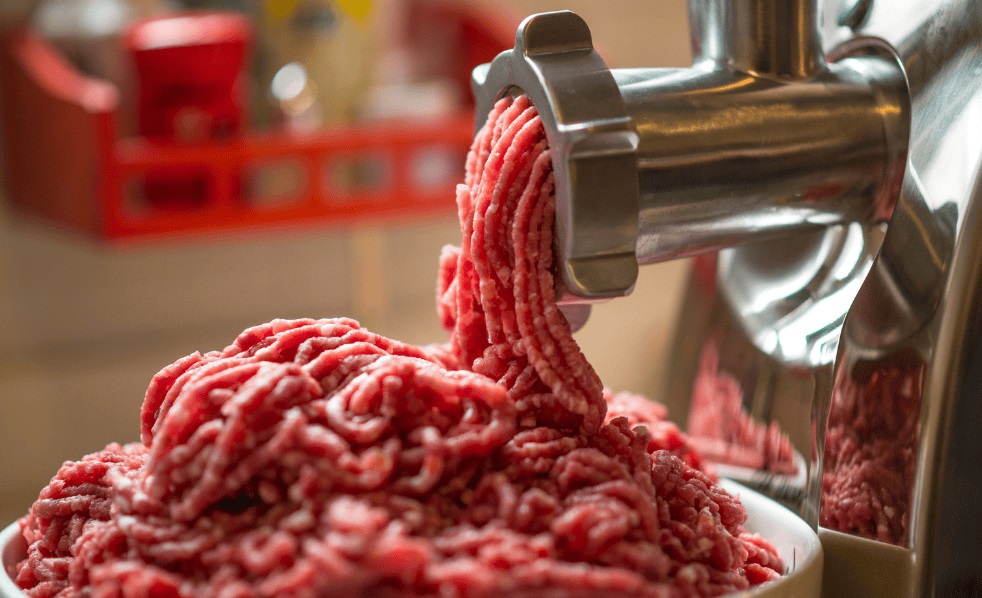
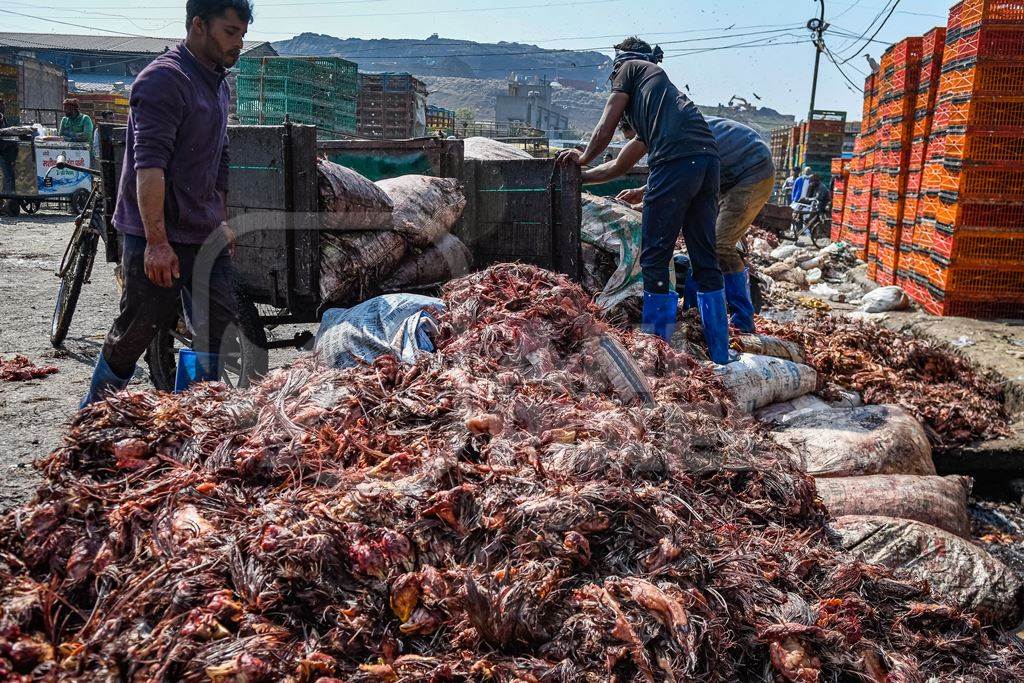
It begins inside the industrial meat exporters, hulking machines where bulk cuts of chicken or mutton are processed into fine mince. One insider, who works in a Delhi-based processing unit that supplies meat across north India, including Kashmir, admitted what few dare to say publicly: “You can’t imagine what all goes into that grinder. Egg tray paper covers, chicken feet, intestines, expired bread, sometimes even rotting meat that would otherwise be thrown away. Once it’s minced, no one can tell the difference.”
The paper covers used for egg trays, which often come soiled, are shredded and mixed in with the flesh to increase volume and reduce costs. What starts as a cheap adulterant quickly becomes indistinguishable from the meat itself once it passes through the steel blades. “People think they are buying fresh ground meat, but what reaches their kitchen could easily contain things you wouldn’t even feed animals,” the insider continued, lowering his voice as if someone might overhear.

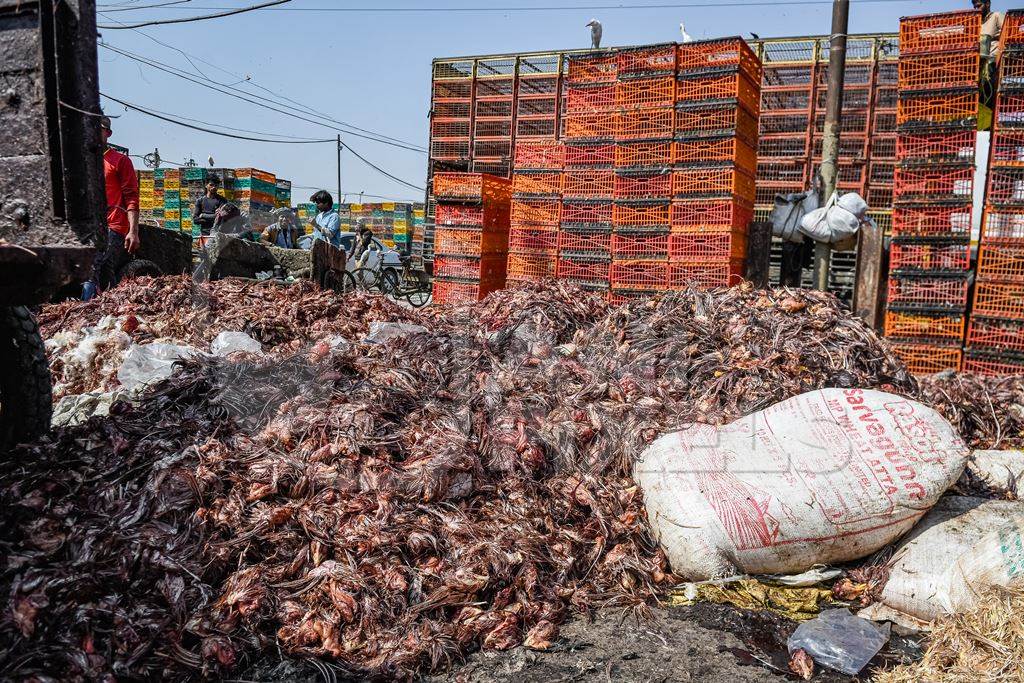
Concerns about adulterated meat are not new. In January 2024, the Delhi Police Crime Branch busted a gang selling donkey meat as mutton, exposing how easy it is to slip unregulated meat into the supply chain. Just months earlier, the Food Safety and Standards Authority of India (FSSAI) had flagged concerns over unlicensed slaughterhouses operating in states like Uttar Pradesh, Haryana, and Delhi, the same states from where bulk meat consignments often make their way to Kashmir.
Officials in Srinagar admit that Kashmir has become heavily dependent on outside supplies due to growing demand. “We do not produce enough chicken or mutton locally to meet daily consumption. A lot of what is sold here comes from Delhi and Punjab,” one senior official in the Food Safety Department acknowledged. “That leaves us vulnerable to whatever practices are happening in those processing units, which are difficult for us to monitor.”
Doctors, meanwhile, warn of the potential fallout. Adulterated meat can lead to severe gastrointestinal infections, long-term liver damage, and in some cases even cancer. “We are seeing an increase in patients complaining of stomach infections, diarrhea, and food poisoning linked to meat consumption,” said Dr. Hilal Manzoor posted at GMC Anantnag. “The problem is that the contamination is invisible to the naked eye. People may be eating adulterated products for months before realizing something is seriously wrong.”
The risks are not merely medical but also cultural. Kashmiris take pride in their meat-heavy cuisine, particularly the elaborate Wazwan, where quality and purity of meat are considered sacrosanct. Yet, whispers of adulteration are already shaking consumer confidence.
A meat importer from Anantnag, who has been in the business for over two decades, expressed his frustration: “The trust deficit is growing. Customers ask us where the meat is coming from. They want guarantees, but how can we guarantee when we ourselves don’t know what exactly is inside the consignments?”
Over the last month, the Food Safety wing in Kashmir has intensified raids on butcher shops and cold storages. In one instance, officials seized more than 200 kilograms of stale chicken from a godown in Srinagar’s Parimpora area, meant for sale in local markets. Another raid in Anantnag uncovered frozen consignments that had bypassed routine safety checks. While such seizures make headlines, they only scratch the surface. “For every truck we catch, ten go unchecked,” admitted another food safety officer.
What makes matters worse is the lack of laboratory capacity in Kashmir. Samples often have to be sent outside the region for advanced testing, delaying results and reducing the chances of swift enforcement. In 2023, an internal audit by the J&K Food Safety Department revealed that nearly half of the district-level food labs were functioning without modern testing kits. “If we cannot test quickly, we cannot deter offenders,” said the official, pointing to the systemic gaps that allow adulteration to thrive.
Meat traders argue that they, too, are victims of a flawed system. “There are genuine suppliers who want to maintain quality, but when unscrupulous operators flood the market with cheaper, adulterated products, customers naturally go for the lower price,” said another importer in Pulwama. “Unless there is stricter regulation at the source, we cannot stop this at the retail level.”
The economic stakes are high. Kashmir consumes an estimated 600,000 kilograms of meat daily, according to official figures. Even a small percentage of adulteration translates into thousands of households exposed to health hazards. Moreover, once consumer trust is broken, the entire trade risks collapse.
The Mince Line: Where Everything Mixes
Inside Ghazipur Mandi, the chaos is a system in itself. The official version is what inspectors see; crates moving in neat files, auctions ticking in fast rhythm, commission agents scribbling numbers on slips. But behind that surface is another order, one guarded by walls of plastic and coded silence. What outsiders think of as a single wholesale market is, in reality, a layered world.
“I have worked here eight years,” said an insider we met off the main lane, behind a wall of blue crates. He started as a loader, then moved into the packing sheds where the serious money changes hands. “People think there is one mandi. There are many mandis inside this mandi, one for the papers, one for the eyes, and one for the real meat.”
By four-thirty in the morning the auction rings are already alive. Commission agents measure time in seconds and kilos. Live birds arrive in plastic crates stacked so high they sway like a bad promise. Dressed carcasses come in thermocol boxes, some still stiff from ice, some already soft. “Soft is what worries you,” the insider explained. “Soft means the cold is gone. But soft can be cured. We wash, we re-ice, we color. The box will look new by sunrise.”
The hidden trade inside Ghazipur is not only about salvage or speed; it is about categories of flesh that should never leave the yard in the first place. Alongside regular consignments exists a parallel flow of what workers call “downgrade meat.” This is material from diseased animals, from carcasses that failed inspection elsewhere, or from birds already showing signs of infection. In the language of the mandi, it is “B-class stock.”
“These are cuts that wouldn’t be served even to animals in a laboratory trial,” the insider said flatly. “But in this mandi, they are given new life. They are cheap, plentiful, and once mixed or ground, they are unrecognizable.”
Every morning, scraps from surrounding processing units, trims and offal, are funneled into Ghazipur. In tier-1 cities such as Delhi or Mumbai, strict veterinary checks keep some of this out of the human food chain. But the further one goes into smaller cities, the thinner the oversight becomes. “In Kashmir, the demand is huge and the monitoring is weak. That makes it the perfect destination. The mafia knows where the soft markets are,” he said.
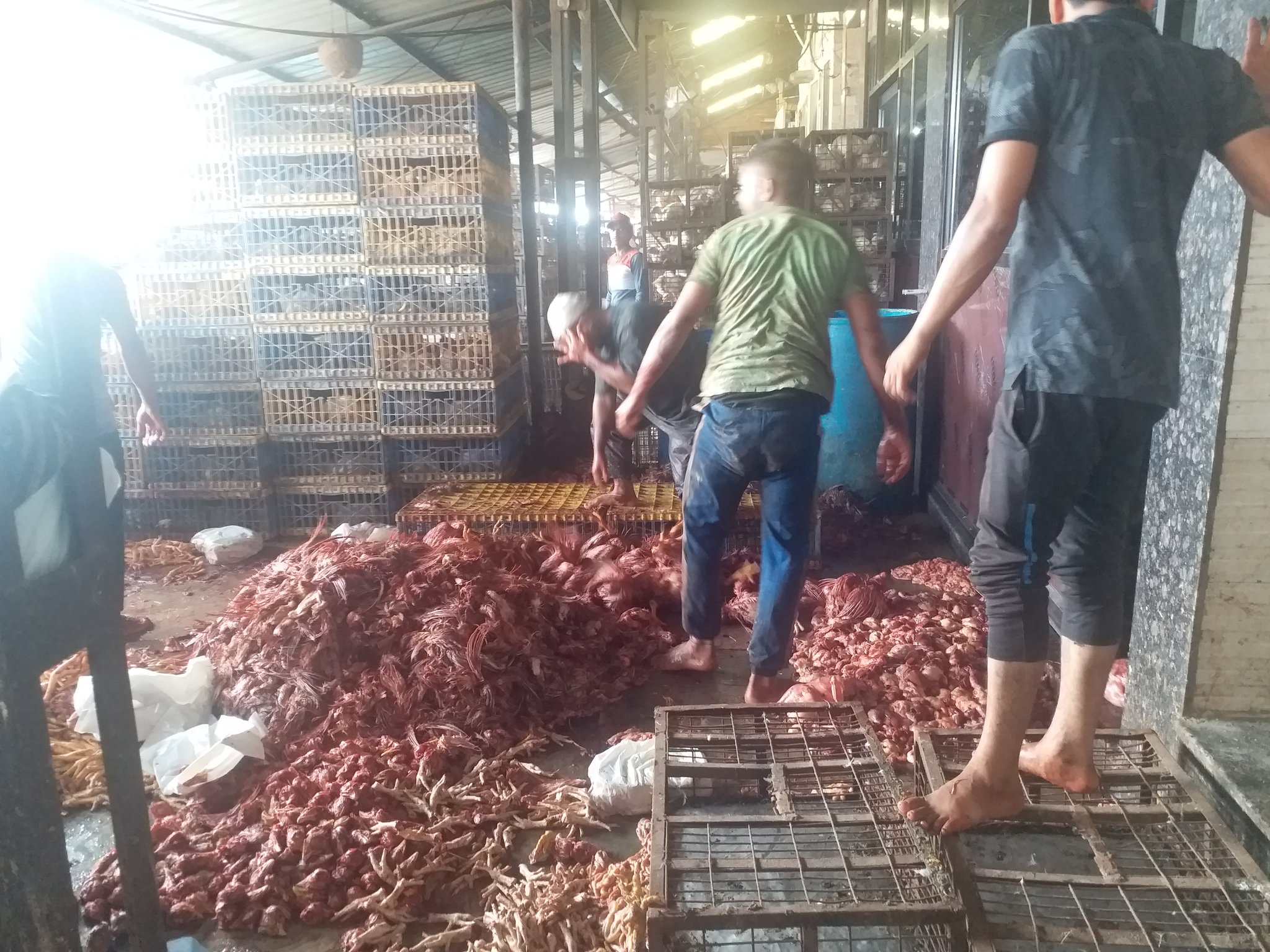

Preservation in this system becomes performance. Carcasses past their prime are dipped in icy water laced with bleaching chemicals, chlorine to strip odors, ammonium hydroxide to alter pH, nitrates to restore the illusion of color. “You wouldn’t believe how meat can look after that bath,” the insider said, describing how pale, flabby cuts emerge with a deceptive flush of pink, “like they were freshly slaughtered.”
In the back of Shed B, the line for mince begins. This is where the day’s sins are turned into something that looks passable. A stainless-steel grinder swallows trimmings, breast caps, bones, feet of animals, egg shells, necks, wings with torn skin, and whatever will move fastest when spiced. The floor is furred with pulp from egg trays used as cheap liners under carcasses; when saturated, they crumble into brown clumps that fall into the mix. “No one stops the belt to pick paper,” the insider explained. “When the line is hungry, the line eats. Egg tray, cardboard flap, plastic thread, it becomes the same mince. Add ice, it binds. Add soda, it holds color.”
From there, the meat begins its journey north. Packed into ordinary trucks lined with little more than ice-boxes, the loads are sent toward Srinagar without functioning cold-chain facilities. The meat travels thawed for hours, sweating in the heat, only to be refrozen in bulk once it arrives. Sometimes it goes into industrial deep freezers, sometimes into ice-cream factories commandeered for the purpose, sometimes straight to small butchers running on cash. Each time it thaws and freezes again, microbes multiply invisibly.
The insider added that many new food business operators, caterers, restaurant owners, small poultry shops, are pulled into this chain against their will. “First they give you the good meat, on credit, so you trust them. Then the supplies shift to the lower grade. If you complain, the same people remind you that you owe them money. Or they hint that your business might face trouble. It is blackmail with flesh as collateral.”
Substandard meat is cheap enough to keep profits high and risks hidden. Most retailers stay quiet, he said, because speaking out would mean losing supply, or worse. Enforcement raids sometimes seize a few quintals, but the larger warehouses and freezers remain untouched, tipped off before the vans arrive. “What you see in the news are the scraps,” he said. “The real stock is never caught.”
Even at the retail level, the deception continues. Poultry shops across Jammu and Kashmir sell birds that are visibly sick, a practice so common that workers have a term for it, “fifty-fifty.” Half the stock may be compromised, but it is displayed with the same confidence as the healthy half. Sick birds are often pre-butchered into neat leg pieces or breast cuts before customers arrive, hiding their condition. Whole sick birds are sometimes concealed in blood-draining buckets at the back, ready to be swapped into the line when a customer asks for a live bird to be slaughtered.
“The operation is larger than anyone outside can imagine,” the insider concluded. “Every link in the chain, from mandi to truck to shop window, has its own way of disguising decay. By the time the meat reaches a Kashmiri plate, the story of how it got there has already been buried.”
Why Kashmir is especially vulnerable
Kashmir consumes far more meat than it produces. Official records show that the Valley imports nearly 70 percent of its mutton from outside J&K, with Ghazipur in Delhi serving as the main entry point. Local production has fallen far behind, which means that, as one Srinagar butcher put it, “Until that gap closes, importers will continue to decide what lands in Kashmir’s cold rooms.”
Several red flags have surfaced over the years. In one government crackdown, officials seized more than 25,000 kilograms of substandard meat in Srinagar within just a few months. A veterinary officer involved in that drive recalled, “Some consignments were so rotten that even dogs refused to eat them.”
Laboratory work has reinforced those concerns. A 2017 study by Sher-e-Kashmir University of Agricultural Sciences and Technology reported that samples of imported mutton showed lower protein levels compared to local stock. More recent quality checks revealed microbial contamination and chemical residues. As one food safety official admitted, “Lab reports in 2021 confirmed traces of preservatives that should never be in raw meat.”

Despite such evidence, inspections remain rare. According to one officer, “Consignments enter the Valley daily, but FSSAI has no routine system for testing them at the entry point. At best, a random batch is picked up once in a blue moon.”
That lack of oversight has allowed an accountability gap to widen. Importers dictate supply, while consumers are left guessing about quality. When local media outlets try to highlight the issue, backlash follows. As a Srinagar based journalist explained, “The moment we report that a certain quantity of meat is exported from Kashmir, social media starts trolling us. People don’t see that the point is not the export itself, but the fact that imports are flooding in unchecked.”
On paper, Jammu Kashmir is not meat-poor. Government figures put total production of all meats at 91,000 tonnes in 2024. But mutton, the heart of Kashmiri cuisine, still falls far short. The government’s own approval of a multi-year plan for mutton self-reliance was a tacit admission of how much money and control bleed out of the Valley through imports.
Kashmir’s culinary culture has long relied on trust, lineage, and tradition. Wazwan, the multi-course meat feast, was once prepared by wazas under family supervision, leaving little room for shortcuts. Today, that system is changing. Readymade Wazwan is increasingly common, especially for smaller gatherings, bringing convenience but also risk.
A Srinagar restaurant owner admitted, “I bought chicken for momos at 150 rupees a kilogram. Then someone offered minced chicken for 40 rupees. I took it. If a restaurant says they never use minced meat, that would be a lie. Profit comes first. Rarely do you see people who care about public health.”
The danger is clear: once meat is minced, consumers cannot judge its grade, freshness, or source. A downtown Srinagar butcher explained, “This anonymity has created a parallel economy of waste meat. Cuts unfit for sale, scraps from chopping boards, even near-spoiled stock, all go into the mincing machines. When you make it qorma or kabab, no one can tell.”
Insiders say adulteration thrives in this invisibility. Two large importers estimated—independently and with caution—that in peak months up to one-third of the ground meat entering Kashmir may be downgraded stock: stale consignments reworked, offal bulked into trimmings, or mince blended with binders to hold color and water. “The proportion shifts week to week,” one importer admitted. “Only lab tests can prove a batch. But the economics are brutal. Fresh sells at triple the price of factory mince. Restaurants normalize the cheap input until the next scandal forces them to pause.”
Enforcement remains sporadic. “We don’t have the manpower to check every truck entering Kashmir,” a food safety official conceded. “At best, we raid on tip-offs. In between, the market runs on trust.”
At the source, too, questions persist. Ghazipur slaughterhouse in Delhi has faced repeated closures and compliance drives. Traders claim conditions have improved; watchdogs argue lapses keep recurring. “What matters for Kashmir,” said a Delhi trader, “is not the promises made here but how many unchecked consignments keep moving.”
Doctors Kashmir are already seeing the effects. “After every wedding season, our wards fill with acute gastro cases,” said a senior physician. “The real danger isn’t just one bad meal. It’s the low-dose toxins and microbial residues people ingest for months. Those leave only a murky trail in hospital records.”
Political incentives run the other way. Source-market lobbies resist closures, retailers fear shortages, transporters treat fines as routine overhead. “Every link makes its margin from speed,” a former enforcement officer observed. “Slow the chain long enough to test it and you threaten everyone’s profit.” In that light, promises of new slaughterhouses or more raids sound necessary but hollow. “Without routine checks and real-time lab capacity, it’s just ritual after the storm,” said one official.
Kashmir is vulnerable because its safeguards were designed for another era, smaller appetites, slower supply chains. Consumption has soared, imports have sprawled, and kitchens now depend on formats where adulteration is invisible. Until every gate in the chain is forced to change its incentives, Kashmir will keep buying tradition and swallowing something else.

- News Deskhttps://thekashmiriyat.co.uk/author/kashmiriyat/

- News Deskhttps://thekashmiriyat.co.uk/author/kashmiriyat/

- News Deskhttps://thekashmiriyat.co.uk/author/kashmiriyat/
- News Deskhttps://thekashmiriyat.co.uk/author/kashmiriyat/

