Muzzafar Choudhary
Date: Sunday evening, Location: Nishat (Srinagar) — A 45-year-old Gujjar-Bakerwal woman, who had recently migrated from Rajouri to Srinagar with her family, was allegedly gang-raped and brutally murdered in the Nishat area, triggering outrage among the tribal community. According to her family, the woman had gone out to graze goats but did not return. Her husband later found her tied to a tree near a graveyard, with two men assaulting her. “Her hands were bound behind the tree, her clothes torn, and she was being hit on the head,” he said.
ALSO READ: Rape of 45-year-old woman in Srinagar: Family reveals shocking details of assault and neglect
One of the accused was caught at the scene by her son and handed over to the police. The victim, still alive when they rushed her to Habbak Hospital, died due to lack of medical attention. “They said it was Sunday and there was no doctor,” her son said. The incident has sparked fear and anger in the Gujjar-Bakerwal community, who say they are regularly targeted and demeaned. “People call us parasites and bloodsuckers. This is not just hate—it’s dehumanization,” said a young community member.
ALSO READ: ‘Leave the snake, kill the Gujjur’: Tribal community challenges Kashmir’s deep-rooted racism, discrimination
Police have confirmed an arrest and said the case is under investigation.
This was not just a crime against a woman or a community, it was an assault on our shared humanity. Yet, the silence that followed was more painful than the tragedy itself. There were no candlelight marches. No press conferences by political leaders. No angry sermons from prominent Islamic scholars. No emotional social media outpourings from celebrities. The valley remained quiet, as if the value of a victim’s life depends on her caste, tribe, or social status.
The Pattern and racial abuse
Recently, the Scheduled Tribe reservations were finally extended to the Gujjar-Bakerwal community, it wasn’t just political leaders who protested. A section of urban influencers and content creators joined the chorus—not by questioning the state’s policy decisions, but by mocking and trolling the community itself. These online attacks were deeply casteist, branding Gujjars and Bakarwals as “undeserving freeloaders,” as if affirmative action were a theft rather than restitution.
Ironically, those emboldened voices dared not critique the government directly, perhaps wary of FIRs and police scrutiny. Instead, they targeted a people with little means to respond, reinforcing decades of humiliation to maintain their own relevance and reach.
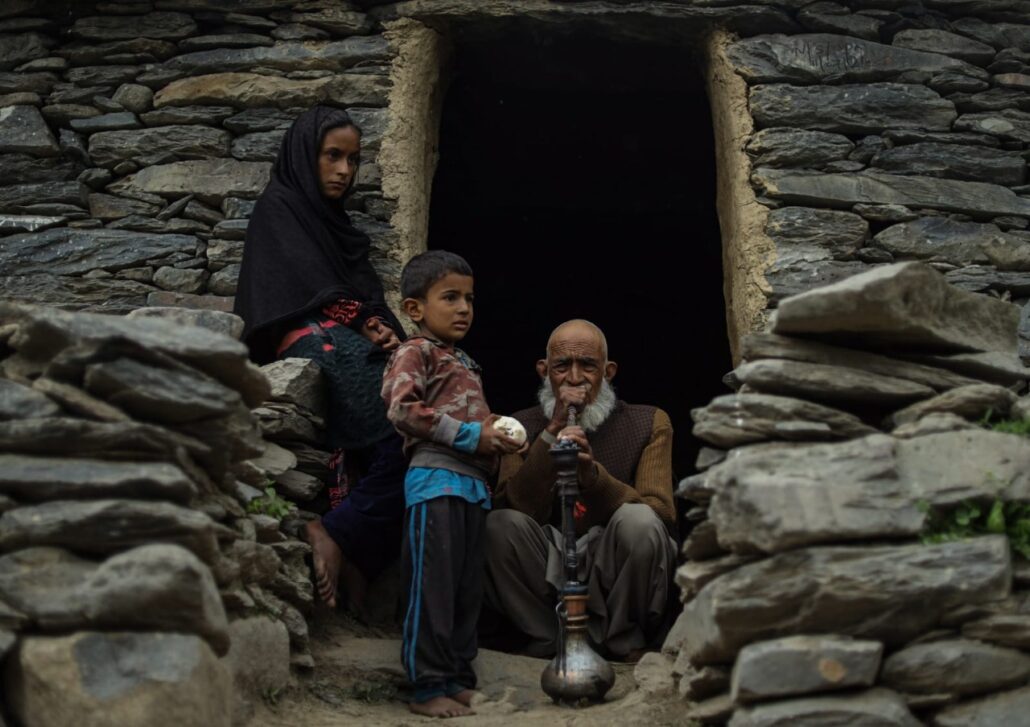
The Gujjar and Bakarwal communities—among the largest Scheduled Tribes in Jammu Kashmir—have lived and migrated through the region’s forests and mountains for generations. Pastoral nomads by tradition, they rely on forest grazing, livestock rearing, and seasonal migration. But despite their deep-rooted connection to the land, they continue to be treated as outsiders—ignored by the state, marginalized by society, and reduced to harmful stereotypes.
Called “junglee” (wild), “janwaar” (illiterate), and “parasites”, these slurs are not just verbal abuse—they are instruments of systemic dehumanization. Across towns and rural areas alike, their tented settlements are viewed as encroachments, their rights dismissed as unreasonable, and their voices either unheard or deliberately silenced. Their poverty is not seen as a symptom of state neglect but as a cultural failing.
And the discrimination doesn’t stop at rhetoric—it turns brutal.
On Sunday evening in Srinagar’s Nishat area, a 45-year-old Gujjar-Bakarwal woman was gang-raped and murdered after she went out to graze her goats. Her family, migrants from Rajouri, had arrived in the city just ten days earlier. Her husband found her tied to a tree, her clothes torn, and her body assaulted. One of the suspects was caught at the scene and handed over to the police. She died in transit after being denied timely medical attention.
The silence in response has been deafening.
Many within the community are reminded of another horrific crime—one that momentarily broke through the national conscience. In 2018, 8-year-old Asifa Bano, a Gujjar girl from Rasana, Kathua, was kidnapped, drugged, raped, and murdered inside a temple by men who sought to “drive her people out.” Instead of universal condemnation, her death was politicized. Protests were held—not in her name, but in defense of her rapists. Lawyers blocked charge sheets. Political leaders carried the national flag to support the accused.
Now, history repeats. Another Gujjar woman is brutally killed, and Kashmir remains largely silent. The lack of outrage raises painful questions: If she belonged to another caste, another class—would there be protests? Candle marches? Editorials? The silence speaks louder than any slogan.
The abrogation of Article 370 brought with it the implementation of the Forest Rights Act in Jammu and Kashmir, raising hopes among the Gujjar-Bakarwal population. Yet, thousands of families continue to face eviction threats. In the name of eco-tourism and development, their forest lands are being reclassified and cleared, often without due legal process.
When ST reservations were extended to Gujjars, political parties who now stay quiet during such tragedies were vocal in opposition. Protests filled the streets with slogans questioning their eligibility. Television debates asked if “these people” deserved affirmative action. Today, when one of “these people” is killed, those same voices fall silent.
In tribal belts, basic infrastructure remains absent. Schools lack teachers; hospitals lack doctors. Families walk miles for medical help, and students are forced to drop out due to the absence of higher education facilities. Reservation in education and jobs exists on paper, but discrimination, bias, and systemic apathy block their upward mobility. Merit is demanded of them, while equity is denied.
A few weeks ago, a tourist tragically died in Pahalgam. Rightfully, the incident drew widespread condemnation. Political leaders, students, journalists, and civil society rallied in unison. Their collective voice was powerful—and necessary. But where is that energy now? Has solidarity become selective? Are tribal lives worth less? Or are their stories just not palatable enough for primetime?
These are difficult questions. But in a land that prides itself on its syncretism and resistance, they must be asked—and answered.
Otherwise, the silence will become complicity. And for the Gujjar-Bakarwal community, it already feels like it has.
When Marginalized Women Suffer, Silence Becomes a Crime
When women from marginalized communities face violence, their pain is rarely met with the outrage it deserves. There are no viral hashtags, no primetime debates, no feminist outcry. Their trauma is reduced to a footnote—dismissed as just another statistic. This is the brutal reality of intersectionality, where gender, caste, and tribal identity collide to deepen the injustice. Gujjar-Bakarwal women live at the sharpest edge of this oppression: marginalized for their tribal roots, and again for their gender. They live under constant fear—of assault, of being ignored, of being forgotten. Yet, they continue to raise families, tend to livestock, walk miles for water and healthcare, and fight every day for survival and dignity.
The rape and murder of a Gujjar woman in Srinagar’s Nishat area has laid bare a collective moral failure. Where are the politicians who once spoke of minority rights? Where are the Molvis who preach about justice and compassion every Friday? Where are the civil society voices that crowd the streets in other moments of tragedy? If their silence is because the victim was poor, tribal, or rural, then they have not just failed the Gujjar-Bakarwal community—they have failed humanity.
The demands are not complicated—they are necessary. All accused must be arrested and tried under the harshest laws. A fast-track court must be established for the trial. For such a brutal crime, capital punishment is the only just outcome. The victim’s family must receive free legal aid and state protection. Authorities must investigate the caste-based hate speech surrounding the case. And the J&K Tribal Affairs Department must immediately launch a probe into why systemic protections for tribal women continue to fail.
This is not just a tribal issue—it is a human issue. Students, artists, writers, religious leaders, and citizens must rise above apathy. Let them write, protest, speak out, and demand justice. Because injustice doesn’t stay contained—it spreads. Today, it is a Gujjar woman. Tomorrow, it could be someone else.
The pain of the Gujjar-Bakarwal community is real. It is historic. It is deep. And now, it is bleeding. They are tired of being treated as outsiders on their own land. Tired of empty promises. Tired of silence. Justice delayed is justice denied—but silence in the face of injustice is not peace; it is complicity.
Let us be the voice for the voiceless. Let this moment not end in mourning, but begin a movement—where every life, regardless of tribe, caste, or class, matters equally. Because silence is not an option anymore.
The views expressed by the author are his own.
- News Deskhttps://thekashmiriyat.co.uk/author/kashmiriyat/
- News Deskhttps://thekashmiriyat.co.uk/author/kashmiriyat/
- News Deskhttps://thekashmiriyat.co.uk/author/kashmiriyat/
- News Deskhttps://thekashmiriyat.co.uk/author/kashmiriyat/


