

Syed Zeeshan Jaipuri
I was in seventh grade when I first saw it, the poison that corrupts everything. Two best friends, the kind who shared lunchboxes, secrets, and jokes that no one else understood, suddenly stopped talking. It wasn’t betrayal. It wasn’t heartbreak. It was first place. One of them scored a few marks more, and the other couldn’t stand it. Their friendship, built over years, was torn apart by a title printed on cheap certificate paper.
That day, something cracked in me. I began to hate the very idea of reward, the seductive lie that says we become better when we are ranked, graded, or crowned. Because I had just watched reward turn love into rivalry, sincerity into insecurity, and childhood into a race. And the more I grew up, the more I saw that nothing changes: the same disease that infects the classroom infects the whole world.
We call it ambition. We dress it up as achievement. But at its core, reward is corruption. It hijacks our intentions. It turns justice into performance and virtue into strategy. It makes us chase applause instead of truth. It trains us to measure worth not by what is right, but by what is rewarded. It’s a system that doesn’t elevate goodness, it weaponizes it.
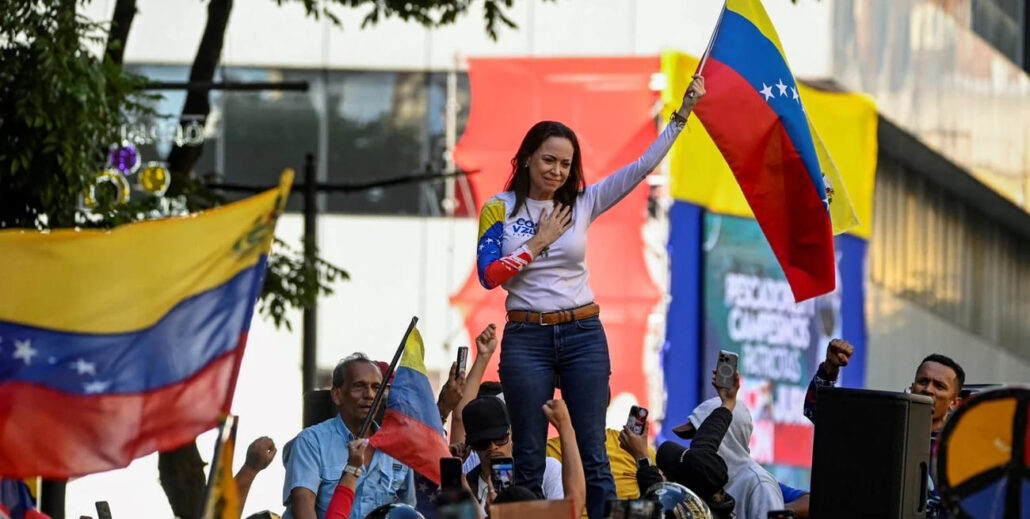
And nowhere is this corruption more visible than in the most prestigious prize on Earth: the Nobel Peace Prize. What was once meant to honour those who advance humanity has become a mirror reflecting our worst hypocrisies. This year, that mirror shattered completely when the Nobel Committee crowned María Corina Machado, a Venezuelan politician who openly supports a state accused by the International Court of Justice of genocide.
Let’s be clear about what she stands for. Machado has expressed solidarity with Israel even after the ICJ accepted South Africa’s genocide case. She’s vowed to move Venezuela’s embassy to Jerusalem. She repeatedly thanked Israel for supporting Venezuelan opposition figures. And she insists on Israel’s “right to defend itself,” the phrase that now serves as a moral shield for bombing children, hospitals, and schools.
And here’s the reality behind those words; the blood-soaked reality that “peace” rewards: According to Save the Children (6 September 2025), more than 20,000 children have been killed in Gaza. UNICEF (8 October 2025) reports that 64,000 children have been killed or maimed, including at least 1,000 babies. The World Health Organization (WHO) (10 September 2025) reports that 94% of Gaza’s hospitals have been damaged or destroyed. Of the 36 hospitals in the territory, only 18 are even partially functional. WHO has documented 793 attacks on healthcare.
The Education Cluster (16 April 2024) estimates that 87.7% of all school buildings in Gaza have been damaged or destroyed. At least 212 schools were directly hit.
Children. Hospitals. Schools. Erased. And in the middle of this devastation, a woman who cheers for the perpetrators is handed the world’s highest prize for peace. Tell me, what could possibly be more obscene?
It’s here that the rot of reward reveals itself. Because reward doesn’t care about justice; it cares about acceptability. Machado isn’t honoured despite her complicity; she’s honoured because she fits the narrative. Because she is “safe” for the powerful. Because her definition of peace doesn’t threaten the status quo.
And this corruption doesn’t stop with her. The disease doesn’t stop with the “respectable” faces of power. It also infects the ridiculous ones.
Look at Donald Trump, our class’s wannabe monitor in a $5,000 suit. A grown man who has begged, sulked, and bragged about wanting the Nobel Peace Prize like a child demanding a gold star. He claimed he deserved it for talking to North Korea. He ranted that Obama “got one for doing nothing.” He complained on Truth Social that he “won’t get a Nobel no matter what,” listing imaginary peace deals like a kid showing off participation certificates. When he was snubbed in 2025, he even claimed that Machado “accepted the prize in his honour.”
It’s hilarious, until you realise it’s the same childish hunger, just older, louder, and more powerful. The wannabe class monitor has become a wannabe global saviour. The same desperation that makes kids betray friends for first place makes presidents beg for medals. Reward doesn’t make people noble; it makes them needy.
From María Corina Machado’s complicity being crowned, to Malala Yousafzai’s silence being rewarded, to Donald Trump’s childish tantrums over a prize, the message is the same: reward corrupts everything it touches.
It teaches us to betray friendships for grades, betray truth for applause, betray justice for medals. It teaches the world to hand “peace prizes” to those who stand with apartheid and genocide. It teaches once-“fearless” activists to bite their tongues when speaking might cost them prestige. It teaches presidents that peace is something you can own, like a brand.
It makes bombing hospitals compatible with peace. It makes silence look like virtue. It makes ego look like leadership.
And it goes deeper than politics; it’s psychological. Reward exploits one of the oldest weaknesses in the human mind: comparison. Our brains are wired to measure, to compete, to want more than the person next to us. Reward hijacks that instinct and uses it to control us. It trains us from childhood to chase the symbol instead of the substance. We stop learning for the joy of knowledge and start studying for grades. We stop speaking truth to power and start tailoring our words to win applause. We stop doing what’s right and start doing what’s rewarded.
And that’s how evil hides, not in the shadows, but under medals.
Because reward doesn’t just celebrate power; it sanctifies it. It gives the machinery of oppression a moral makeover. It hands gold medals to warmongers and calls them peacemakers. It turns those who cheer for genocide into icons of justice. It hands the microphone to the loudest egos and tells the rest of us to clap.
I don’t care about Alfred Nobel’s will. I don’t care what the prize was supposed to mean. Because if the Nobel Peace Prize can be draped around the neck of someone cheering for a state accused of genocide while silencing those who once screamed for justice, then the prize was never about peace. It was always about power.
Maybe the only honest thing left to do is to burn the report card. To tear up the certificate. To stop measuring worth by medals. Maybe the truest form of peace isn’t awarded; it’s lived. It’s lived by those who stand for justice even when no one is watching. By those who cradle dying children without a camera there to capture it. By those who keep speaking when silence is safer.
Because the truth is brutal and simple: from our wannabe class monitor to Donald Trump, from school toppers to war criminals, reward is the same isease. And it’s killing everything it touches.
Syed Zeeshan Jaipuri is a renowned Kashmiri poet. Opinions expressed are his own.

- News Deskhttps://thekashmiriyat.co.uk/author/kashmiriyat/

- News Deskhttps://thekashmiriyat.co.uk/author/kashmiriyat/

- News Deskhttps://thekashmiriyat.co.uk/author/kashmiriyat/
- News Deskhttps://thekashmiriyat.co.uk/author/kashmiriyat/

