
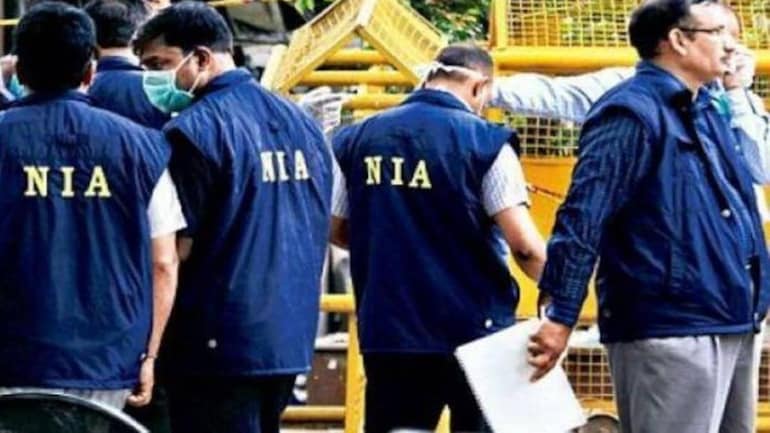
In a major breakthrough, the National Investigation Agency (NIA) on Friday arrested two more operatives in the expanding case of illegal human trafficking through the so-called “donkey route”, a perilous smuggling corridor used to ferry Indian nationals to the United States.
The arrests followed raids in Himachal Pradesh and Delhi, tightening the net around one of India’s most disturbing trafficking networks in recent history.
Sunny, known as Sunny Donker, was arrested from Dharamshala, Himachal Pradesh, while Shubham Sandhal, alias Deep Hundi, was held in Delhi’s Peeragarhi area. Both are alleged to be close aides of Gagandeep Singh alias Goldy, the key accused who was arrested in March.
Singh, based in Tilak Nagar, had been operating a global network that sent Indian citizens to the US illegally via countries like Spain, El Salvador, Guatemala, and Mexico—charging victims up to ₹45 lakh for the journey.
The arrests come as the investigation into case RC-04/2025/NIA/DLI, originally registered by Punjab Police and transferred to the NIA in March, reveals a far more sinister operation than previously known—one riddled with stories of rape, extortion, physical abuse, financial ruin, and even death.
Inside the ‘donkey route’: cartel deals, sexual violence, and jungle deaths
The “donkey route,” locally called ‘Dunki’ is a deceptive promise sold by traffickers to desperate Indians, primarily from Punjab, Haryana, and Gujarat. Migrants are flown to Latin American or European countries like Spain or El Salvador.
From there, they are forced to make a treacherous overland journey on foot—through jungles, rivers, cartel territory, and deadly terrain such as the Darién Gap in Panama—before attempting to cross into the US through Mexico.
Survivor accounts have revealed shocking details of what happens along the way. Harwinder Singh, one of over 100 deported Indians sent back from the US in early 2025, recalled the journey through the Darién Gap, “I saw another die in the Panama jungle… We crossed 17–18 hills. If one slipped, then there would be no chance that he would survive… we saw dead bodies.”
Another man, Jaspal Singh, said, “Our clothes worth Rs 30,000–35,000 were stolen on the way. We were left with nothing.”
The route is not just physically dangerous, it is brutal and dehumanising. Multiple women migrants were raped in cartel-run camps.
Some were reportedly forced into sex work as part of “payment” to smugglers. Survivors have told reporters that women were separated from groups in Panama and Guatemala, held in makeshift camps, and assaulted repeatedly.
In Delhi, investigators have recovered Telegram chat logs and voice notes from accused operatives in which Latin American agents discussed “which girls” to pick from groups being smuggled.
According to an NIA source, “Some of these chats speak of women as currency—negotiated in exchange for passage.”
Several male deportees reported being shackled or even tattooed with cartel codes as a way to establish control. These branding marks are under forensic investigation. In one case, a youth from Gurdaspur was found with a coded burn mark on his forearm after being detained near Tapachula, Mexico.
Families devastated, passports tarnished, and agents emboldened
Many of the victims were lured with fake visa promises. Gagandeep Singh is accused of charging up to ₹45 lakh per person under the pretense of arranging legal documents, only to push them into this underground route.
Families often sold land, took massive loans, or liquidated assets to pay the agents. Some even filed false death certificates back in India to avoid scrutiny, believing their loved ones would never return.
Harjit Singh, who spent over ₹60 lakh, described his despair after being detained by U.S. authorities and deported:, “I am broken inside. My mother had to sell her jewellery. I don’t see a future anymore.”
In some cases, smugglers handed over unrelated children to migrants to pose as families, aiming to increase their chances of asylum at the US border. This has triggered a separate child trafficking investigation in the US and Mexico.
In June, the Supreme Court of India, hearing a bail plea from another agent, refused to show leniency, stating, “Because of people like you, the Indian passport is devalued.”
NIA tracks global web of agents and money
According to the NIA, Sunny coordinated the ground-level movement of migrants across borders, including jungle passages and unofficial checkpoints, acting as a key “donker.”
Shubham managed the financial backend—sending huge sums through illegal hawala channels to agents in Central and South America. Funds from victims were routed to support the cross-continental trafficking chain.
On June 27, a chargesheet was filed against Gagandeep Singh under multiple sections related to human trafficking, criminal conspiracy, and money laundering.
The agency believes dozens more operatives are still active in states like Punjab, Haryana, Delhi, Gujarat, and internationally in Mexico, Guatemala, and Spain.
The investigation continues to expand, with authorities committed to dismantling the entire chain—from village-level recruiters to hawala handlers and cartel-linked smugglers abroad.
The agency says more arrests are expected in coming weeks.

- News Deskhttps://thekashmiriyat.co.uk/author/kashmiriyat/

- News Deskhttps://thekashmiriyat.co.uk/author/kashmiriyat/

- News Deskhttps://thekashmiriyat.co.uk/author/kashmiriyat/
- News Deskhttps://thekashmiriyat.co.uk/author/kashmiriyat/
