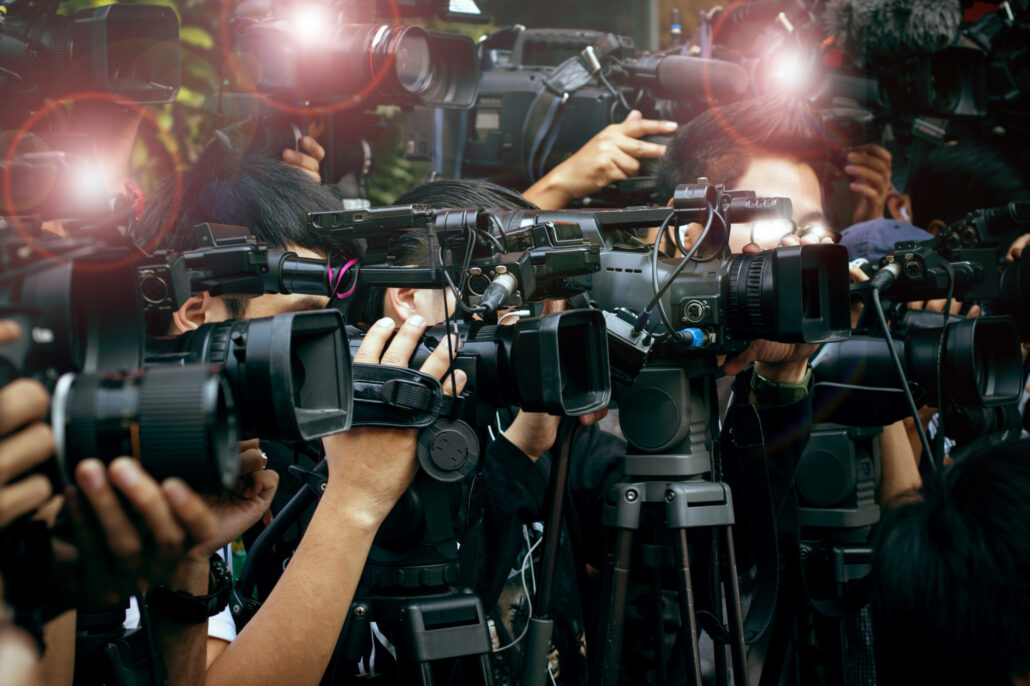
In a rare and scathing attack, Jammu Kashmir Chief Minister Omar Abdullah recently lashed out at sections of the Indian media for fanning anti-Kashmir narratives.
Reacting to the silence observed at Srinagar’s Jamia Masjid over the Pahalgam killings — a solemn moment that many TV channels deliberately chose to ignore — Omar called out these “besharam” (shameless) platforms for their cowardice and TRP-driven distortions.
His anger is justified. It is now an undeniable fact, widely acknowledged both nationally and internationally, that sections of India’s mainstream media have mutated into aggressive fake news factories. Reports by organizations like Reporters Without Borders (RSF), The Washington Post, The Guardian, Al Jazeera, and Committee to Protect Journalists (CPJ), have repeatedly flagged the dangerous role played by certain Indian channels in peddling hatred, misinformation, and Islamophobia.
A 2021 report by RSF had already categorized India as one of the most dangerous places for truthful journalism, particularly criticizing the bias in television coverage.
Similarly, The Guardian in 2023 detailed how Indian prime-time television often acts as “state propaganda” rather than objective news reporting.
Kashmiris know this firsthand. In fact, the streets of Srinagar and beyond have regularly erupted in slogans like “Godi Media Hai Hai,” directly confronting these channels’ presence.
The resentment is neither new nor spontaneous. It is the product of years of systematic vilification, where Kashmiris were reduced to mere talking points in television war rooms designed to whip up hysteria and hatred.
But here’s the bitter irony: while the political class in Kashmir is quick to decry this hate during convenient moments, they are equally quick to cozy up to the same toxic media houses when political mileage is at stake.
When it comes to coverage of government events or self-promotion, it is not the fiercely independent local media or the small but resilient alternate platforms — many run by journalists risking their lives daily — who are preferred. Instead, it is the same hate-spewing sections who are invited, accommodated, and prioritized.
This duplicity is not just disappointing; it is damaging.
For years, local journalists — many of them young women — have fought unimaginable odds, including censorship, harassment, and even incarceration, to keep the story of Kashmir alive in an increasingly suffocated media environment.
They have reported not just the easy headlines but the real, uncomfortable truths that many would rather suppress. Yet, the recognition and access they deserve is consistently denied to them by their own political representatives who would rather be seen on a “national” platform, even if that platform is dripping with hate.
What Kashmiri politicians need to recognize — urgently — is that condemning hate is meaningless if, at the same time, they continue to legitimize and empower its sources.
Every press conference held exclusively for the “Godi media” sends a message of betrayal to those who have stood firm for the truth. Every selective interview given to those who once labelled them “Pakistani stooges” deepens the trust deficit.
It is not enough to call out propaganda during moments of anger. There must be a consistent and principled rejection of hate, not just in words but in actions.
This also means finally acknowledging and uplifting the alternate media that continues to carry Kashmir’s battered but unbroken voice to the world.
Anything less is not just hypocrisy — it is complicity.
- News Deskhttps://thekashmiriyat.co.uk/author/kashmiriyat/

- News Deskhttps://thekashmiriyat.co.uk/author/kashmiriyat/

- News Deskhttps://thekashmiriyat.co.uk/author/kashmiriyat/
- News Deskhttps://thekashmiriyat.co.uk/author/kashmiriyat/
