

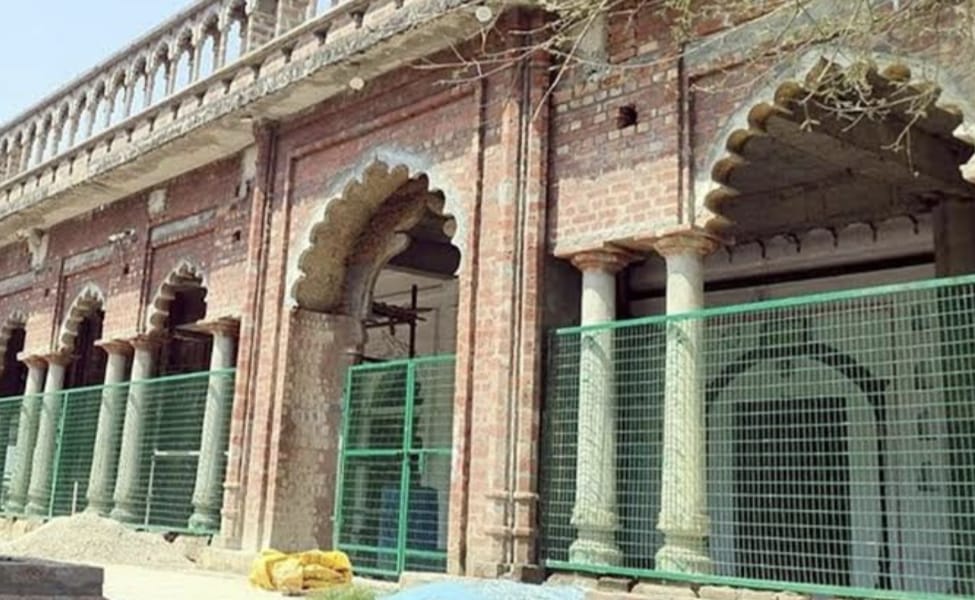
Following the enactment of the new Waqf law in Uttar Pradesh, authorities have launched an investigation into the properties of the Janaitha Sharif Dargah in Sambhal district. Allegations include unauthorized monetary collections amounting to crores of rupees and encroachment on government land in the absence of an officially appointed mutawalli (caretaker) since 2019.
Acting on these serious allegations, the District Magistrate (DM) ordered a land survey, deploying a team of 10 Lekhpals (revenue officers) to assess the dargah’s properties. The team conducted a detailed measurement of the land, and their report will soon be submitted to the DM for further action. Preliminary findings suggest the possibility of strict legal measures if the claims are verified.
Located in the Baniyather area of Chandausi Tehsil, the shrine—commonly referred to as Janaitha Sharif Dargah—houses the tomb of Hazrat Azmiya Shah. Despite having no official caretaker for the past six years, reports indicate that the site has been generating illegal revenue estimated between Rs 15 to 20 lakh per month.
Additionally, a portion of government land is allegedly being used under the guise of dargah property, where even an unregistered medical clinic is said to be operating.
The investigation was triggered by a formal complaint filed on the Chief Minister’s grievance portal. As per the complaint, the dargah management of encroaching on Waqf and government land and misusing it for personal gain.
Officials are now scrutinizing the financial records and alleged income generated between 2019 and 2025. Authorities are also examining which accounts received the money and whether any legal or administrative violations occurred during the period.
The outcome of the investigation could have significant implications, especially as it marks one of the first such probes following the enactment of the revised Waqf legislation in the state.
The new Waqf law gives the District Magistrate the power to resolve ownership disputes primarily between the Waqf Board and private individuals or institutions who may be occupying or claiming Waqf land without valid documentation or legal sanction.


- News Deskhttps://thekashmiriyat.co.uk/author/kashmiriyat/

- News Deskhttps://thekashmiriyat.co.uk/author/kashmiriyat/

- News Deskhttps://thekashmiriyat.co.uk/author/kashmiriyat/
- News Deskhttps://thekashmiriyat.co.uk/author/kashmiriyat/

