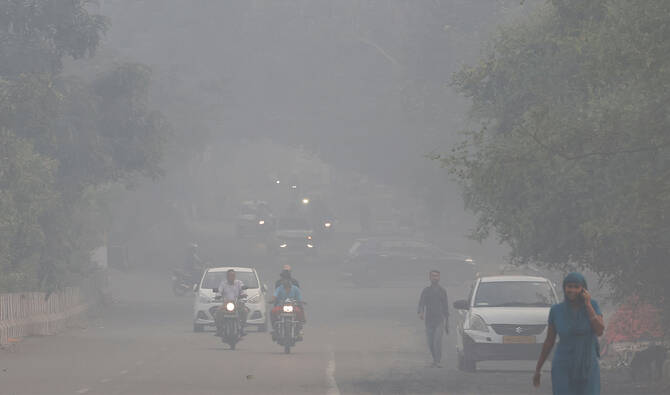
Delhi continues to struggle with hazardous air quality in the aftermath of Diwali, with multiple monitoring stations recording ‘very poor’ to ‘severe’ pollution levels across the city on Tuesday, October 21, 2025.
According to the latest data, four stations are in the ‘severe’ category: Shadipur (401), Wazirpur (406), Jahangirpuri (404), and Burari Crossing (401). Around 25 other stations, including Pusa (366), Punjabi Bagh (386), North Campus DU (356), Mundka (395), Mandir Marg (331), IGI Airport (328), Ashok Vihar (387), NSIT Dwarka (344), Rohini (382), Chandni Chowk (361), Lodhi Road IITM (346), Lodhi Road IMD (333), ITO (349), Major Dhyan Chand National Stadium (370), Jawaharlal Nehru Stadium (327), Sonia Vihar (369), and others, recorded ‘very poor’ air quality.
A few stations such as DTU (261), Sirifort (267), and Sri Aurobindo Marg (260) remained in the ‘poor’ category. Data for Dwarka-Sector 8 and R.K. Puram were unavailable at the time of reporting.
Compared to Sunday (Diwali day), while peak AQI values in some areas like Wazirpur and Dwarka have slightly decreased, new stations have entered the severe zone, indicating that the air quality remains highly unsafe across the capital.
Health experts have advised residents, particularly children, the elderly, and those with respiratory conditions, to limit outdoor activities. Prolonged exposure to Delhi’s air can cause severe respiratory problems and eye irritation.
The surge in pollution comes after Diwali celebrations, with firecrackers significantly contributing to high particulate matter in the air. Transport emissions contributed roughly 15–16% to Delhi’s pollution, while industrial and other sources accounted for about 23%, according to the Decision Support System (DSS).
The Commission for Air Quality Management (CAQM) had invoked Stage II of the Graded Response Action Plan (GRAP) across Delhi-NCR on Sunday following forecasts by the India Meteorological Department (IMD) and the Indian Institute of Tropical Meteorology (IITM) to control pollution spikes.
The Supreme Court had earlier allowed the sale and bursting of green firecrackers in Delhi-NCR on Diwali eve and the festival day, between 6 a.m. and 7 p.m. and again from 8 p.m. to 10 p.m.

- News Deskhttps://thekashmiriyat.co.uk/author/kashmiriyat/
- News Deskhttps://thekashmiriyat.co.uk/author/kashmiriyat/
- News Deskhttps://thekashmiriyat.co.uk/author/kashmiriyat/
- News Deskhttps://thekashmiriyat.co.uk/author/kashmiriyat/


