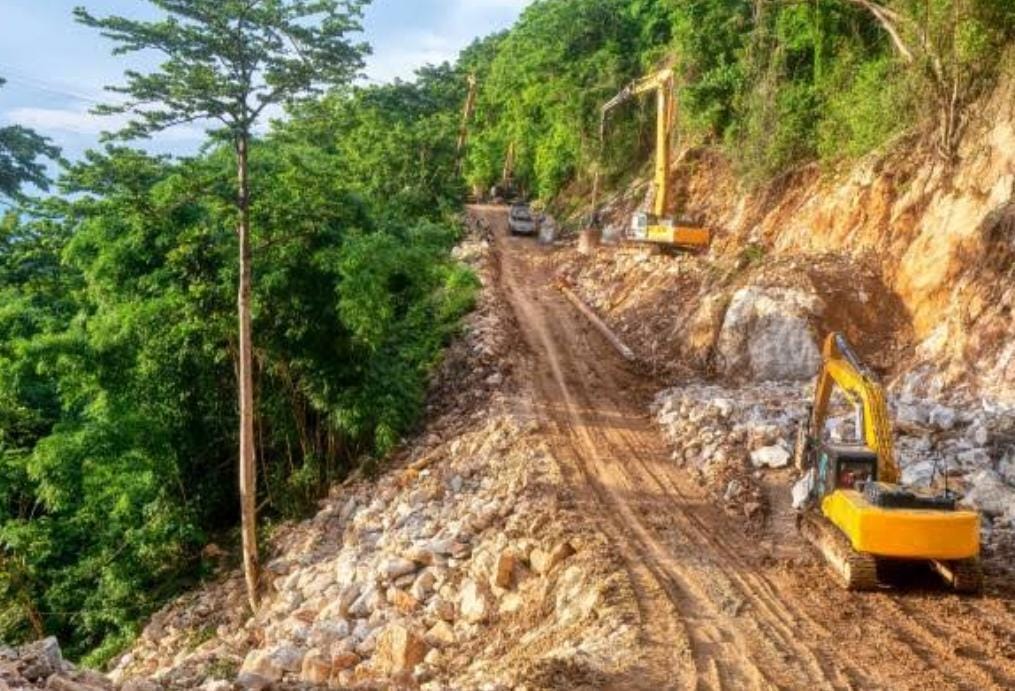
In just over five months, the Indian government has approved the clearing of more than 8,500 hectares of forest land, including parts of tiger reserves and protected areas, for infrastructure and defence projects, despite a Supreme Court order restricting such clearances without safeguards.
Between February and June 16, 2025, the Indian government approved the diversion of 8,518.23 hectares of forest land for various non-forest activities, as per Down to Earth.
This clearance includes land from ecologically sensitive areas such as tiger reserves, national parks, wildlife sanctuaries, and eco-sensitive zones.
The forest land, equal to nearly 12,000 football fields, was cleared across India for construction projects like roads, railways, power lines, quarries, mobile towers, irrigation works, and defence infrastructure.
Of the total land diverted, 348.96 hectares were approved by the Regional Empowered Committees (RECs), 4,711.91 hectares by the Forest Advisory Committee (FAC), and 3,457.37 hectares by the National Board for Wildlife (NBWL).
The RECs handle smaller projects up to 40 hectares. In 2025, they reviewed 394.71 hectares and cleared most of it, much of it on degraded or unclassed forest land marked for compensatory afforestation.
The FAC held three meetings and reviewed 67 proposals seeking to divert over 8,300 hectares.
It approved 44 projects, totaling 4,711.91 hectares, again allowing plantations on low-value forest areas as compensation.
The NBWL, which clears projects in protected areas, approved more than 3,400 hectares for diversion. Of the total forest cleared in this period, 329 hectares were for defence projects; mainly in Leh-Ladakh and Sikkim.
In comparison, 28,880 hectares were cleared in 2023–24, and 17,381 hectares in 2022–23.
While the government claims afforestation offsets the damage, most of the new green cover has come from commercial plantations on non-forest land, offering little ecological value.

- News Deskhttps://thekashmiriyat.co.uk/author/kashmiriyat/

- News Deskhttps://thekashmiriyat.co.uk/author/kashmiriyat/

- News Deskhttps://thekashmiriyat.co.uk/author/kashmiriyat/
- News Deskhttps://thekashmiriyat.co.uk/author/kashmiriyat/
