


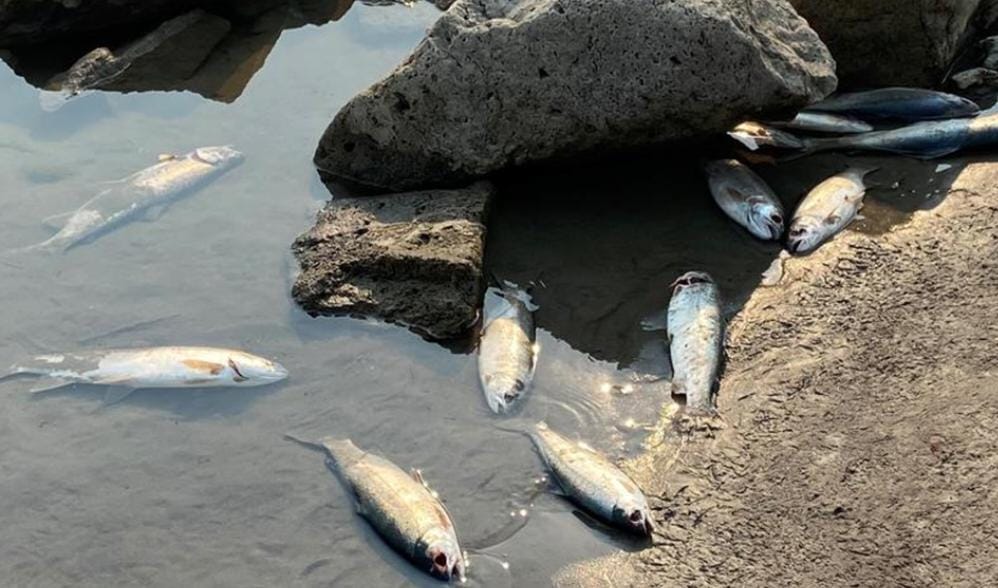
Kashmir has recorded its hottest June since 1978, with average maximum temperatures in Srinagar touching 33°C — nearly three degrees above normal — amid a worsening dry spell and a 50 percent rainfall deficit.
The intense and sustained heatwave has raised alarms among meteorologists and environmentalists alike, with many pointing to long-term climatic shifts and rapid environmental degradation as key drivers.
According to the Meteorological Department, Srinagar witnessed ten consecutive days with maximum temperatures above 34°C.
The highest, 36°C, was recorded twice, on June 20 and 24. Independent forecaster Faizan Arif confirmed that June 2025 is now officially the second hottest June in Srinagar since record-keeping began in 1892.
“This June closely resembled the heat of 1978, though what makes this year more alarming is the lack of any cooling spells throughout the month,” said Mukhtar Ahmad, Director of the Meteorological Department.
The pattern was no different in other parts of the Valley. Qazigund in south Kashmir registered an average temperature of 23.2°C — the highest since 1973 — leaving locals grappling with water scarcity and failed irrigation cycles.
But for many, the current crisis is not just a result of shifting atmospheric patterns, but also of what Kashmir has lost in terms of green cover and ecological stewardship.
“Climate change isn’t new to Kashmir. We faced a similar crisis in the late 1970s. But what’s different now is the absence of the kind of state response we once had,” said Ghulam Muhammad Dar, an environmentalist from Kulgam.
He was referring to the period after 1975, when Sheikh Mohammad Abdullah returned to power and undertook a series of climate-conscious initiatives. Under his leadership, the state promoted social forestry programs, afforestation drives, and established agricultural research institutions such as the Sher-e-Kashmir University of Agricultural Sciences and Technology (SKUAST).
“These were long-term investments in ecological balance. Sheikh Sahib didn’t wait for international climate summits or court orders. His government encouraged community-led plantation efforts, promoted forest preservation, and laid the groundwork for scientific farming and horticulture,” he said.
While the details of the plantation drives remain sparsely documented, historians agree that Sheikh Abdullah’s administration made a deliberate push for green policy, seeing environmental protection as essential to agricultural prosperity and water security.
Now, nearly five decades later, Kashmir finds itself battling the consequences of both global climate change and years of neglected environmental planning. Streams have dried up, irrigation canals lie cracked and barren, and in many villages, drinking water has become scarce.
Farmers across the Valley, especially in south Kashmir, are on the edge. “We are watching our crops wither in front of our eyes. The canals are dry, and there’s not a drop to irrigate the paddy,” said Ghulam Rasool, a farmer from Kulgam.
Experts now warn that unless urgent steps are taken to restore Kashmir’s ecological balance — from reforestation to sustainable water management — the Valley may witness even more extreme weather events in the coming years.
“We should’ve learned from 1978. Instead, we’re letting history repeat itself — only this time, we’re less prepared,” Ghulam Muhammad said.


- News Deskhttps://thekashmiriyat.co.uk/author/kashmiriyat/
- News Deskhttps://thekashmiriyat.co.uk/author/kashmiriyat/
- News Deskhttps://thekashmiriyat.co.uk/author/kashmiriyat/
- News Deskhttps://thekashmiriyat.co.uk/author/kashmiriyat/


