Shah Shahid
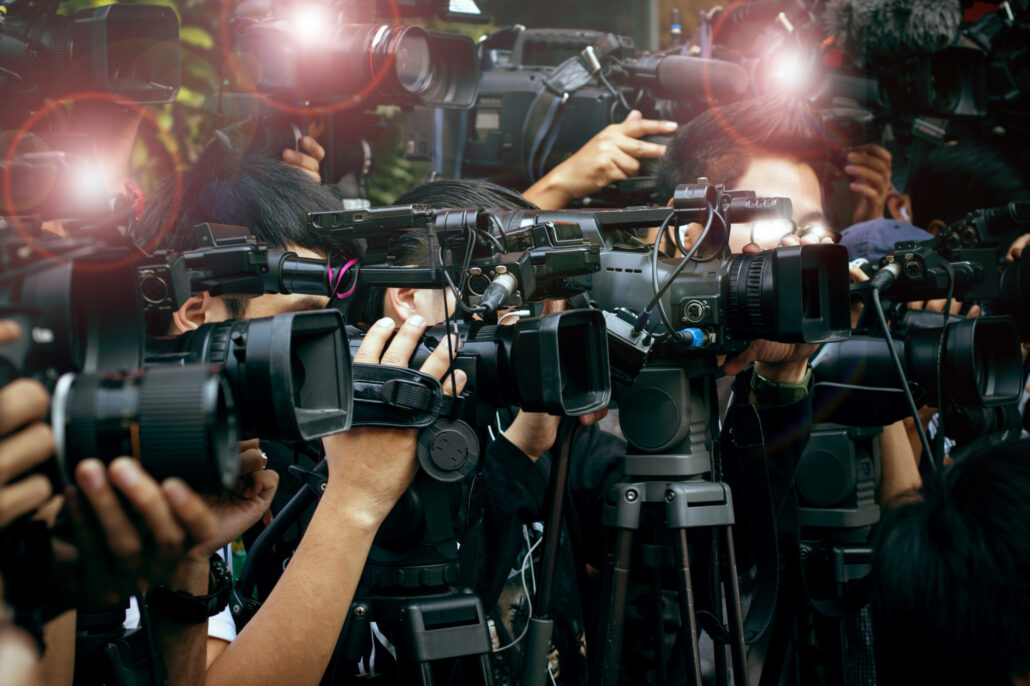
As Chief Minister Omar Abdullah completes one year in office, the government marked the day with a grand press conference in Jammu, a celebration of continuity, perhaps of control. Cameras flashed, microphones crowded the table, and journalists stood ready with their rehearsed curiosity.
It was a busy day for the media, a “good day,” as some would call it, where newsrooms came alive, and timelines filled with cheerful selfies from the venue.
The event had all the spectacle one expects from modern-day politics, where performance too often replaces accountability.
But in that crowded room, amid the hum of recorders and polite laughter, something essential was missing, questions that matter to most people in Jammu Kashmir.
Our journalists are not elite, but they are products of a system, a society that conditions them to believe that some issues are more “noble” to ask about than others.
The press today, in large part, has been trained to look upward, not outward. This indoctrination runs deep: we are taught to speak about statehood, reservations, manifestos, and political promises, the vocabulary of power, but not about poverty, agriculture, or hunger, the vocabulary of the people.
During the press conference, the questions reflected this hierarchy. Reservation came up more than once, asked earnestly by reporters in sharp dresses, carrying the weight of trending hashtags.
There were questions about political alliances, about the opposition’s stance, about the government’s performance and its manifestos. Someone mentioned flood relief, briefly breaking the monotony of political gossip.
But nobody asked about agriculture, the sector that employs nearly 75 percent of Jammu Kashmir’s population. Not one journalist raised a question about schemes to revive a struggling agrarian economy, about the loss of crops to unseasonal rain or drought, or about the government’s plan for an MSP or alternative market intervention to protect farmers from exploitation.
Nobody asked about climate change, though every orchardist and farmer in the Valley has been witnessing its wrath, from apple blooms appearing in autumn to untimely snowfalls that destroy harvests.
In a region already facing ecological fragility, not a single voice in that hall asked the Chief Minister what his administration plans to do to safeguard the environment or prepare for the crises ahead.
Instead, the press seemed caught in the comfort of questions that please both the audience and the government. Urban debates, about symbolism, slogans, and power games, dominate both newspapers, mobile screens and press interactions. The rural, the poor, the silent, they no longer fit the language of “development.”
This silence is not incidental; it is the product of classism and aspirational journalism.
The modern journalist, especially in Kashmir, is often someone climbing out of poverty and insecurity, now anxious to be seen as part of the rich class.
In this process, they begin to mirror the priorities of those in power, valuing access over integrity, photo-ops over facts. To ask about the poor, the farmers, the ration shortages, or the rising power bills is seen as unfashionable, even impolite.
Nobody asked about the street vendors being evicted from city centers in the name of decongestion. Nobody asked about the hundreds protesting the shortage of ration rice. Nobody brought up the smart meter installations, which continue to fuel anger across Kashmir, the same policy Omar Abdullah once opposed before assuming office. These absences are not minor; they are moral failures.
And so, this letter is not just to the Chief Minister, though he must answer, but equally to the media.
Journalism, when it becomes too comfortable with power, ceases to be journalism. It becomes public relations. The media’s job is not to flatter governments but to question them on behalf of those who cannot enter press conferences or afford microphones.
If this is a democracy, if the return of statehood is truly meant to restore dignity, then both government and media must remember who they serve. The farmer whose land cracks in drought; the vendor whose cart is seized; the family that cannot afford electricity under a “smart” regime; the young journalist who still dares to ask questions that won’t trend.
One year of this government is not about what was promised or what was performed on stage. It is about what was ignored, and who was left behind.
So, let these questions stand, since they were not asked when they should have been:
What is being done to secure the livelihoods of farmers?
What environmental safeguards are being put in place as climate patterns grow harsher? How much research has been done to check what causes such catastrophes including land sinking, landslides?
How is the government addressing the widening gap between rich and poor, between Srinagar’s city lights and the dark villages beyond?
And will the voices of those without visibility, the rural, the poor, the powerless, ever be restored to the center of public policy and public conversation?
Until those questions are answered, the speeches and celebrations mean little.
For true accountability begins not with a press conference, but with the courage to ask what others have chosen to ignore.
Shah Shahid is a political science student at Aligarh Muslim University. Views expressed are his own.
- News Deskhttps://thekashmiriyat.co.uk/author/kashmiriyat/

- News Deskhttps://thekashmiriyat.co.uk/author/kashmiriyat/

- News Deskhttps://thekashmiriyat.co.uk/author/kashmiriyat/
- News Deskhttps://thekashmiriyat.co.uk/author/kashmiriyat/
