
Firdous Qadri
In the ward of a Jammu hospital, Rameez Khan lies weak and battered, his body marked by wounds from a brutal shelling that devastated his home in Poonch.
Despite the pain and the haze of medication, his mind is consumed by one desperate plea, “Where are Zoya and Zain? I want to see my children.” Unaware that his twin 12-year-old children were killed in the shelling, Rameez calls out their names, his voice breaking with sorrow and confusion.
Rameez Khan, a library assistant and a devoted father, had moved his family to Poonch seeking better education and a safer future for his children. Zoya and Zain, twins born minutes apart, were his pride and joy — bright students attending Class 5 at Christ School, inseparable and full of life. Their laughter once filled their modest rented home, a fresh start for the family.
But on May 10, their dreams were shattered.
The peaceful life in Poonch was torn apart as cross-border tensions between India and Pakistan escalated. Following a deadly terror attack in Pahalgam, India launched Operation Sindoor — which India said was “a calculated strike against terror camps across the Line of Control”. In retaliation, Pakistani forces intensified shelling in border districts, including Poonch, targeting civilian areas with indiscriminate mortar and artillery fire.
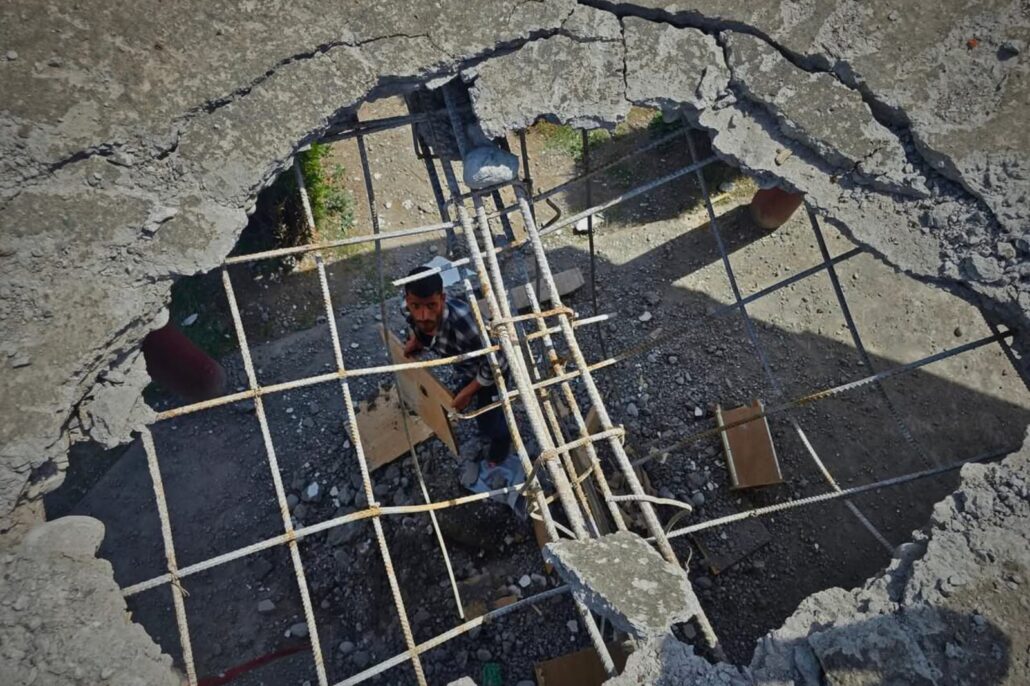
It was during one of these deadly shelling barrages that a shell struck the home of Rameez Khan. In the blast, Zoya and Zain were killed instantly, while Rameez himself suffered critical injuries. He was rushed to the hospital, unconscious and unaware that his children’s lives had been cut short in the very house he had hoped would protect them.
The shelling in Poonch is not an isolated incident but part of a tragic pattern of violence that has once again engulfed the region. Over 400 structures have been damaged or destroyed — including homes, schools, mosques, and cowsheds — leaving families displaced and communities in ruin.
More than a dozen civilians have lost their lives in this renewed conflict, and the toll extends beyond humans: dozens of cattle, the lifeblood of many border villages, have perished, unable to escape the relentless bombardment.
The psychological scars are as deep as the physical ones.
Villagers who fled the area during the shelling have only recently begun returning, walking cautiously through shattered streets littered with ordnance and debris. The trauma of loss, fear, and displacement weighs heavily on the local residents.
The government has promised compensation for those affected, but for a grieving father like Rameez Khan, money is cold comfort. His uncle, speaking to The Kashmiriyat, reflected on the unbearable pain: “What does compensation mean to a father who is barely holding onto life, who keeps asking for his children? How do you put a price on a father’s broken heart?”
The uncle, a witness to the harrowing events of that night, shared his painful memories. “The twins called me repeatedly, pleading for help. I told them to hide inside the house because the shelling was too intense. When the bombardment finally stopped, all we could do was retrieve their lifeless bodies. My brother was critically injured. We couldn’t save them.”
Despite her own grief and injuries, the twins’ mother, Urusa Khan, displayed extraordinary courage. Alone and devastated, she performed the heart-wrenching task of burying her children in their ancestral village of Kalaani Chakthru.
Locals say that many families lost their young ones in the shelling, and often there was no one else to give these “tiny flowers” a proper farewell.
A local resident mourned, “This was a blooming garden that vanished in the blink of an eye. Their father had dreams for them; their mother had hopes and plans. But someone cruelly plucked these fragile fruits from the tree.”
Voices from the border areas resonate with a universal desire — a plea for peace. “We don’t want war,” a villager said. “Those who call for conflict have never lived through its horrors. We just want to live in peace, to raise our children safely.”
The recent ceasefire brokered between India and Pakistan has allowed some calm, but the wounds run deep. Villagers returning to their homes face the grim task of rebuilding amidst ruins and the constant fear that the violence could erupt again.
“The loss of life, homes, livelihoods, and the toll on mental health remain stark reminders of the human cost behind geopolitical struggles,” a local teacher, Mohammed Hussain told The Kashmiriyat.
For Rameez Khan and many like him in Poonch, the future feels uncertain and fragile. But through their grief, a powerful message emerges — one of urgent hope and a call to end the cycle of violence before more innocent lives are lost.

- News Deskhttps://thekashmiriyat.co.uk/author/kashmiriyat/

- News Deskhttps://thekashmiriyat.co.uk/author/kashmiriyat/

- News Deskhttps://thekashmiriyat.co.uk/author/kashmiriyat/
- News Deskhttps://thekashmiriyat.co.uk/author/kashmiriyat/
