

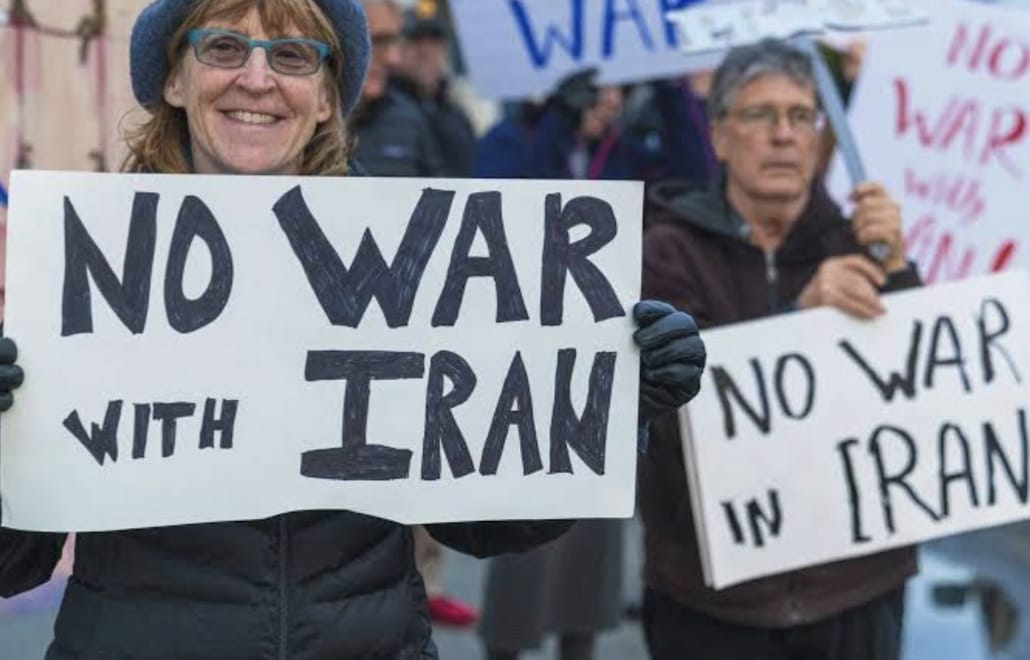
On April 10, 2025, former U.S. President Donald Trump announced plans to engage in nuclear talks with Iran for the first time in years. This initiative follows a period of heightened tensions, including Iran’s direct retaliation against Israel for an airstrike on its diplomatic compound in Damascus—a rare and overt confrontation that brought the region close to a broader conflict.
Trump emphasized a preference for diplomacy but warned that failure to reach an agreement would lead to severe consequences for Iran.
The proposed talks are centered on Iran’s nuclear program, which has been under intense scrutiny since the U.S. unilaterally withdrew from the Joint Comprehensive Plan of Action (JCPOA) in 2018.
Since then, Iran has expanded its nuclear capabilities, enriching uranium to 60% purity—still below weapons-grade but sufficient to raise alarms in Washington and Tel Aviv. Trump had set a two-month deadline for reaching a new nuclear deal, signaling that failure to do so could prompt military action by the U.S. or Israel.
That possibility turned real on June 13, when Israel launched a major airstrike deep inside Iranian territory, targeting nuclear sites, air-defense systems, and residences of senior military leaders.
Over 200 aircraft reportedly struck more than 100 locations, including the Natanz nuclear facility. The assault marked one of the most direct and sweeping Israeli military actions against Iran to date.
Among those reportedly killed in the strikes were top IRGC commanders and nuclear scientists, prompting fears of escalation across the region. Iran responded by launching over 100 drones toward Israel, many of which were intercepted by regional allies and U.S. defenses. The United Nations has warned that the region stands “on the brink of war.”
The crisis is further compounded by Iran’s recent threats to expel International Atomic Energy Agency (IAEA) inspectors and its warning against the reimposition of U.N. sanctions, which could lead to a reassessment of its nuclear doctrine.
Meanwhile, the U.S. has bolstered its military presence in the region, relocating a Patriot air defense battalion from the Pacific to the Middle East and deploying additional air assets, including B-2 bombers and fighter jets, in response to escalating tensions with Iran and regional actors like the Houthi rebels in Yemen.
European allies have expressed concern over being sidelined in the U.S.-Iran nuclear talks, despite holding the authority to trigger the “snapback” mechanism to reimpose U.N. sanctions on Iran. The lack of coordination has led to reduced trust and fears that military conflict may become more likely.
As the situation unfolds, the Middle East remains on edge, with the potential for either a diplomatic breakthrough or a descent into wider conflict.
The coming weeks will be critical in determining whether the parties can navigate the complex landscape of international diplomacy to achieve a peaceful resolution.
The talks are centered around Iran’s nuclear program, which has been under intense scrutiny ever since the U.S. unilaterally pulled out of the Joint Comprehensive Plan of Action (JCPOA) in 2018 — the landmark deal that had limited Iran’s uranium enrichment in exchange for lifting sanctions.
Since then, Iran has expanded its nuclear capabilities, enriching uranium to 60% purity — still below the weapons-grade threshold, but enough to trigger fears in Washington and Tel Aviv.
Israeli Prime Minister Benjamin Netanyahu responded to Trump’s proposal with alarm. “We go in, blow up the facilities, and dismantle all the equipment,” he said, insisting on a total elimination of Iran’s nuclear capability — a position far more rigid than the one floated by Trump, who hinted at compromise.
The divergence revealed the fault lines between the U.S. and its most loyal Middle Eastern ally: while America wants a new deal on its terms, Israel demands absolute Iranian capitulation.
But the current crisis — with Trump threatening war and Israel now carrying out strikes that have killed high-ranking Iranian officials — is only the tip of a much deeper iceberg.
A Pattern of Power and Punishment
For decades, the U.S. has justified military interventions in the name of global security and non-proliferation. But critics — including scholars, activists, and a growing number of governments — argue that these justifications often mask an effort to preserve American global dominance. Iran, for all its faults, has become a symbol of defiance against that dominance.
Iran’s nuclear program is not just a technical issue — it is symbolic. Tehran insists its goals are civilian: energy, medicine, research. It is a signatory to the Nuclear Non-Proliferation Treaty (NPT), which allows such activities. But since revelations of undeclared facilities in 2002, Iran has faced relentless suspicion and sanction. In contrast, Israel — which has never signed the NPT and is widely believed to possess nuclear weapons — is never asked to disclose, disarm, or submit to inspections.
This double standard underscores a fundamental truth: the issue is not nuclear weapons themselves, but who is allowed to have power.
Since the 1979 Islamic Revolution, Iran has constructed a system distinct from the Western-backed monarchies of the Gulf. It refuses to align with the U.S., builds independent regional alliances, and promotes a cultural model that rejects Westernization. This makes Iran one of the only major nations to resist integration into the U.S.-led liberal economic and military order.
Despite enduring some of the harshest sanctions in modern history, Iran has not collapsed. In fact, it has innovated.
It possesses a domestic pharmaceutical industry, an arms sector that exports to countries across Asia and Africa, and a tech-savvy youth population driving advancements in AI and robotics. It is the only country in West Asia to launch its own satellites into orbit and is now a leader in drone warfare. Its GDP (PPP) ranks among the top 25 globally, despite its isolation.
This success — under pressure — is precisely what threatens Washington.
The U.S. has a long history of dismantling systems it cannot control. In Iraq, Saddam Hussein was vilified over nonexistent weapons of mass destruction. In Libya, Muammar Gaddafi was bombed after surrendering his nuclear ambitions. In Syria, Bashar al-Assad faced years of war fueled by foreign intervention. In each case, the states were weakened or destroyed, and the region further destabilized. The pattern is chillingly familiar.
Iran, however, has resisted that fate. And it is precisely this resilience — and refusal to bow — that has placed it in Washington and Tel Aviv’s crosshairs.
Israel’s Role and the Question of Security
Israel frames Iran as an existential threat. It points to Iran’s support for Hezbollah in Lebanon, its backing of Palestinian factions, and its refusal to recognize Israel’s right to exist. But Tehran argues that its opposition is rooted in Israel’s ongoing violations of international law — from illegal settlements in the West Bank to the decades-long blockade of Gaza.
While most countries issue condemnations, Iran is one of the few that acts — diplomatically, financially, and, at times, militarily — in support of Palestine. Whether one sees this as destabilization or principled resistance depends on perspective. But what is clear is that Iran has become a rallying point for those in the Global South who view the U.S. and its allies as selective enforcers of international norms.
In the latest crisis, Israel’s bombing of Iran’s consulate in Syria — a violation of diplomatic protections — crossed a red line. Iran’s retaliation marked a dramatic shift.
And now, with Israel openly striking Iranian territory and assassinating nuclear scientists, the era of proxy war may be giving way to open confrontation. While both sides continue to signal that they do not want all-out war, the margin for miscalculation is narrowing dangerously.
A Broader Struggle
At its core, this is a struggle over global order. The U.S. and Israel seek to preserve a system where military and economic supremacy guarantees security and influence. Iran, by rejecting this model, presents an alternative — one that champions regional sovereignty, resists foreign bases and military presence, and calls out what it sees as Western hypocrisy.
Any serious analysis must ask why a nation that has not invaded another in centuries, that abides by nuclear treaties more faithfully than its accusers, and that has developed under immense pressure, is so relentlessly targeted.
What if the issue isn’t what Iran is doing — but what it represents?


- News Deskhttps://thekashmiriyat.co.uk/author/kashmiriyat/

- News Deskhttps://thekashmiriyat.co.uk/author/kashmiriyat/

- News Deskhttps://thekashmiriyat.co.uk/author/kashmiriyat/
- News Deskhttps://thekashmiriyat.co.uk/author/kashmiriyat/

